
https://triblive.com/business/auroras-driverless-trucks-soon-to-be-a-common-sight-across-the-sun-belt/
Aurora’s driverless trucks soon to be a common sight across the Sun Belt

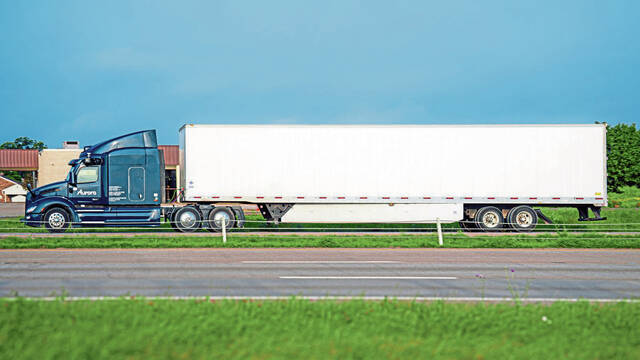
Aurora Innovation plans to have more than 200 driverless tractor-trailers on the road by the end of the year as part of a rapid expansion across the Sun Belt.
The anticipated growth would mark a new era of commercialization for the company, which is headquartered in Pittsburgh’s Strip District, after almost a decade of testing and development. Aurora only grew its fleet to roughly 10 trucks last year.
“We expect 2026 to mark the inflection point where the market recognizes self-driving trucks have arrived and are quickly becoming a permanent fixture in our transportation landscape,” Aurora CEO Chris Urmson said on a call with analysts Wednesday.
Vehicles equipped with Aurora’s technology (it does not manufacture the truck, itself) started regular driverless deliveries in April between Dallas and Houston.
Since then, Aurora has confirmed its system works safely on several other routes in the region, including a more than 1,000-mile span between Fort Worth and Phoenix.
This route highlights the potential of driverless trucking, the company says, because it exceeds the federally mandated 11-hour limit on how long human truckers can drive before receiving a 10-hour break. For customers, that means faster deliveries.
Aurora also hopes to roll out a Dallas-to-Laredo connection this quarter, which would bring empty cabs to a critical freight artery between U.S. and Mexico. Laredo is the nation’s largest international trade gateway, according to the U.S. Department of Commerce.
Hirschbach Motor Lines has started hauling berries for Driscoll’s along this route using Aurora technology, albeit with an observer on board.
The focus on the Sun Belt reflects the region’s immense commercial opportunity, but also its favorable regulatory environment and mild weather. Aurora’s trucks can handle some types of inclement weather, including rain, fog and heavy wind, but not snow.
Across their more than 250,000 miles traveled, Aurora’s trucks have not been blamed for any traffic collisions, according to the firm.
Consultancy McKinsey & Co. projects that by 2035, 13% of heavy-duty trucks on U.S. roads will be self-driving. Aurora is poised to make up much of that market as its competitors lag behind — if not in technology, at least in deployment.
“We see a near future in which tens of thousands of Aurora Driver-powered trucks deliver freight across the U.S., and ultimately, globally,” said Urmson said.
Financial results from the past, though, underscore the massive work ahead for Aurora.
The company took a $901 million operating loss last year. Revenue reached $3 million — the highest ever, but still slightly below analysts projections.
Aurora expects revenue to outpace expenses starting in 2028.
Copyright ©2026— Trib Total Media, LLC (TribLIVE.com)