Every December, I scrutinize the biggest losers in the stock market year-to-date. My thought is there might be gold in the rubble.
In 2025, here are the five worst performers (through Dec. 12) among all U.S. stocks with a market value of at least $5 billion.
• Trade Desk Inc. (TTD) fared the worst, dropping 69%.
• Fiserv Inc. (FISV) did almost as badly, down 67%.
• Cava Group Inc. (CAVA) has suffered a 53% loss.
• Gartner Inc. (IT) has lost 52%.
• Deckers Outdoor Corp. (DECK) has declined 50%.
Of these five flattened stocks, I recommend two: Fiserv and Deckers.
Fiserv
Fiserv, based in Milwaukee, Wis., processes transactions for banks and merchants. Over the past decade, the company has grown its earnings at a pace of better than 18% a year. Investors pushed the stock up steadily in 2023 and 2024, with the stock price peaking at about $238 early this year.
At that price, which was 44 times earnings, everything had to go right. It didn’t. Earnings growth slowed in the past four quarters to about 8% — respectable, but nothing like what investors wanted.
Analysts fled to the hills. Only 13 of them recommend the stock today, compared to 30 three months ago.
At $68.75, the stock sells for 11 times earnings, and eight times analysts’ estimate of 2026 earnings. Those are my kind of multiples. I recommend Fiserv stock.
Deckers
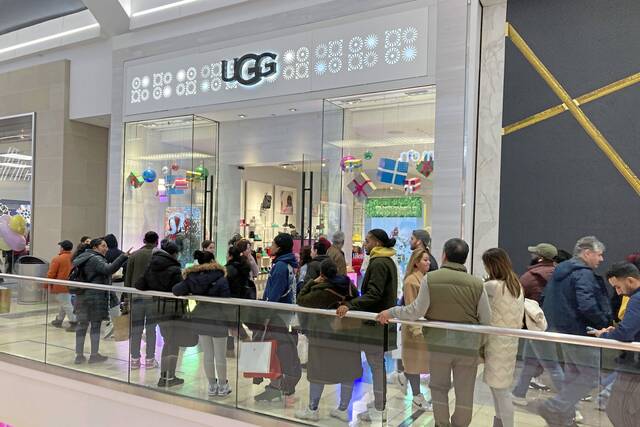
Deckers makes Ugg boots and Hoka shoes. A lot of its shoes are made in Vietnam; hence it has a tariff problem. But there are a lot of things to like about this company. I recommended it in November as a “January Bounce” candidate, and I haven’t changed my mind.
Deckers has relatively little debt, and has four dollars in cash for each dollar of debt. Over the past decade, it has increased its profit more than 25% a year. Even last year, despite the tariff troubles, it managed an increase in earnings.
The other three big decliners don’t quite do it for me.
Trade Desk
Trade Desk, based in Venture, Calif., operates a platform to help advertisers buy digital ads. Many analysts who cover it think it’s due for a rebound: Out of 38 analysts, 22 recommend it.
I disagree with the majority. The stock seems too expensive to me, at more than six times revenue and close to seven times book value (corporate net worth).
Cava
Mediterranean fast-casual is the specialty at Cava Group’s restaurants. The chain, headquartered in Washington, D.C., doubled its earnings in 2024. Growth slowed this year, yanking the rug out from under the stock.
Most analysts seem to think that was a temporary setback. They like the company’s ambition to expand to 1,000 restaurants by 2032. I’m a skeptic. The restaurant business is treacherous, and Cava posted losses in eight of the past 10 years. Moreover, the stock is expensive, selling for 45 times earnings.
Gartner
Based in Stamford, Conn., Gartner Inc. is a leading consultant in the technology field. From spring 2020 to November 2024, the stock quintupled, rising well above $500 a share.
This year it’s been cut in half, and trades now at $233. In light of the company’s consistent earnings history (profits in 28 of the past 30 years), I’m tempted to recommend it. But the company’s debt (nearly five times stockholders’ equity) gives me pause.
Performance
Each year since 2011, I have found one or more stocks to recommend among those with titanic stock-price drops.
A year ago, I recommended three of the market’s five biggest losers: Intel Corp. (INTC), Moderna Inc. (MRNA) and Walgreen’s Boots Alliance Inc. (WBA). Intel did best, shooting up 81% as it attracted investments from Nvidia Corp. (NVDA) and the U.S. government.
Walgreens was bought out by Sycamore Partners and gained 18%. Moderna, however, continue to descend, dropping nearly 30%.
As a group, my picks advanced 23.2% from Dec. 16, 2024, through Dec. 12, 2025. That beats the Standard & Poor’s 500 Total Return Index, which rose 13.8%.
Today’s column is the 15th I’ve written trying to cherry-pick the future winners among the year’s biggest losers. On average, my picks have returned 21.1%, versus 16.6% for the index.
Bear in mind that my column results are hypothetical and shouldn’t be confused with results I obtain for clients. Also, past performance doesn’t predict the future.
Disclosure: I own Intel for some clients and call options on Intel in a hedge fund I run. I own Moderna and Nvidia for one or more clients.