
https://triblive.com/business/john-dorfman-defense-stocks-could-explode-upward-again/
John Dorfman: Defense stocks could explode upward again

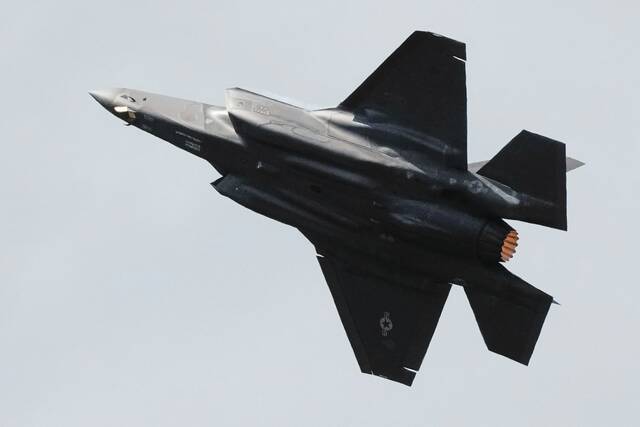
Even if armed hostilities in Iran and Ukraine stop in 2026, three things still will be true.
• Iran will still hate the United States.
• Vladimir Putin’s vision for Russia will be expansionist.
• Members of NATO will feel uneasy about the strength of their alliance with the United States.
To me, this implies that military spending will increase in 2027 and 2028 — in the U.S. and Europe. Most European nations have pledged to spend about 5% of gross domestic product on defense by 2035. That dwarfs the recent spending level, which has been less than 2%.
I think it makes sense for investors to include at least one defense stock in their portfolios. For many of my clients, four of the 25 portfolio slots are in the defense industry.
Here’s a rundown on the “big five” U.S. defense contractors, plus a few in Europe.
Lockheed Martin
Lockheed Martin Corp. (LMT) is the largest U.S. defense contractor and the proprietor of the famous “skunk works” where a lot of secret research takes place.
On the plus side, Lockheed is extremely profitable. The main negative to me is it carries a lot of debt — more than three times stockholders’ equity.
RTX
You may remember a time when RTX Corp. (RTX) was Raytheon Co. It took its present name in 2023, three years after Raytheon merged with United Technologies Corp. It’s a major producer of missiles, military electronics and jet engines. Most years, a little over half its sales are to the U.S. military.
I like RTX stock because I think missiles and military electronics are extremely important in modern warfare. The balance sheet looks good to me, but the stock is expensive, at almost 40 times earnings.
Northrop Grumman
Drones, military aircraft, missile-launch systems for submarines and ammunition are among the many products Northrop Grumman produces. More than 90% of its sales are military, mostly to the US. government but also to some other countries.
The debt-to-equity ratio is better than Lockheed’s but not as good as RTX’s. The stock sells for a medium valuation, 24 times earnings.
General Dynamics
If I could own only one defense stock, I would choose General Dynamics. It covers a fairly broad swath of defense territory, making tanks, submarines and military electronics. It has been consistently profitable, exceeding a 15% return on equity in 14 of the past 15 years.
The balance sheet is stronger than many of its peers, with debt at 38% of equity. And the stock price seems pretty reasonable, at 22 times earnings.
Boeing
Boeing Co. (BA) is the number-five defense contractor, but less than half its business comes from defense. You own this stock if you believe in its commercial aircraft business. That business has been plagued by safety concerns, and the stock has lost about 19% of its value over the past five years.
European defense companies
Dassault Aviation SA (traded in the U.S. under the symbol DUAVF) is one of the larger defense contractors in France. It makes Mirage and Rafale fighter jets, and it also owns about 26% of Thales, a major defense-electronics company.
Dassault has been spotty, hitting my desired level (a 15% return on equity) only four times in the past 10 years. But the company should benefit if France hikes defense spending. Revenue turned up sharply last year.
BAE Systems Plc (BAESY) is the largest defense contractor in Britain and also sells equipment to the U.S., Australia and Saudi Arabia. It has a broad product line, with strength in shipbuilding and electronics. The stock has quadrupled in the past five years and is up 43% in the past year.
Babcock International Plc (BCKIY), also based in Britain, services nuclear installations, including those on nuclear submarines. About two thirds of its business is military.
Performance
I’ve written one previous column about defense stocks, in June 2023. In it, I recommended purchase of General Dynamics, Northrop Grumman, Lockheed Martin, Ducommun Inc. (DCO), Leonardo S.p.A. (FINMY) and BAE Systems.
Since then, five of the six have beaten the Standard & Poor’s 500 Total Return Index. Leonardo returned 561%, Ducommun 176%, BAE Systems 166%, General Dynamics 72% and Northrop Grumman 65%. The index return was 56%. Only Lockheed Martin trailed, at 49%.
Even after this strong performance, I think the defense group will continue to post above-average gains.
Bear in mind that my column results are hypothetical and shouldn’t be confused with results I obtain for clients. Also, past performance doesn’t predict the future.
Disclosure: I own General Dynamics, Babcock International and Dassault Aviation personally and for almost all of my clients. I own BAE Systems for most clients, and RTX and Leonardo for one or more clients.
Copyright ©2026— Trib Total Media, LLC (TribLIVE.com)