
https://triblive.com/business/technology/how-instagrams-pg-13-branding-for-teens-unraveled/
How Instagram’s ‘PG-13’ branding for teens unraveled

Last fall, as Instagram faced scrutiny over child safety, the social media company introduced a new approach that it hoped would ease parents’ minds.
New content restrictions for teenage users would be guided by the PG-13 rating long used by the film industry. In other words, teenagers should only be exposed to the kind of content allowed in movies like “Barbie” or “Superman.”
The plan soon hit a snag. The Motion Picture Association, which operates the film ratings system and owns a trademark to the PG-13 label, pushed back vigorously against its use and signaled that it was considering filing a lawsuit against Meta.
After months of simmering tensions between two of the major players in Hollywood and Big Tech, the Motion Picture Association announced in a news release Tuesday that Instagram had backed away from its PG-13 branding.
The release includes a statement from Meta, the owner of Instagram, in which the company said it was “pleased to have reached an agreement with the MPA.”
As part of the agreement, Instagram will be adding a disclaimer to its marketing materials making clear that it had not collaborated with the film industry in formulating its restrictions.
“We didn’t work with the MPA when updating our content settings,” the disclaimer reads, “and they’re not rating any content on Instagram, and they’re not endorsing or approving our content settings in any way.”
Rather, it says, Instagram “drew inspiration” from movie ratings.
The retreat is the latest setback for Meta as it seeks to defend itself against criticisms over child safety. In March, a jury in New Mexico found that the company had misled consumers about the safety of its platforms for users younger than 18. The next day, a jury in California found that it had pushed addictive technologies that helped lead to a young user’s anxiety and depression.
Meta has maintained that it has worked hard over the years to establish protections for teenagers and limit what they see while scrolling to “age-appropriate content.”
But the company has acknowledged something of a messaging problem.
After Instagram reviewed feedback from parents, Adam Mosseri, its CEO, said in October that his company had room to improve in clearly explaining what “age-appropriate content” meant.
So the social media giant looked to the MPA, Hollywood’s top lobbying group, and a more time-tested peer in the entertainment industry — one that began facing scrutiny well before the internet era over how its product could influence young minds.
A Familiar Marker
The MPA introduced the PG-13 rating in 1984, after decades of debate over how much the film industry should restrict sexual and violent content for young moviegoers.
Intended to “strongly caution” parents of children younger than 13, the rating became shorthand for a movie that could have a bit of sexuality and nudity (“The Notebook,” for example) and allows some violence without it getting too graphic (think “M3gan,” not “Saw”). Over the years, it has become well established that PG-13 movies have wider commercial appeal, giving filmmakers an economic incentive to hew to the MPA’s limitations.
The ratings system has weathered its own controversies over the years. Some view it as prudish and creatively stifling, others overly permissive. But it has endured, even as the internet has transformed children’s media consumption.
For Instagram, the main draw of the PG-13 rating was its broad name recognition.
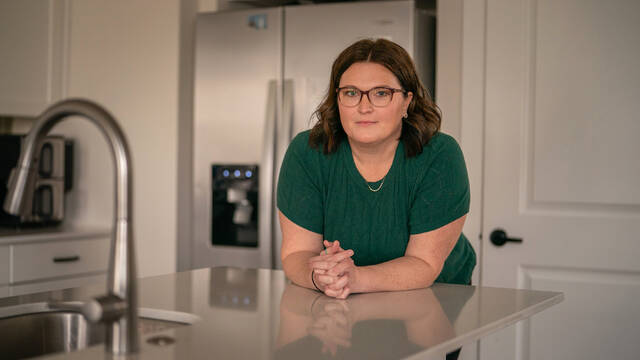
“I think it’s vocabulary that we’re familiar with, and so it makes us feel more comfortable — whether we should be or not,” said Nicole Coates, 39, a mother of three who lives near Boise, Idaho.
Her 16-year-old son has one of Instagram’s Teen Accounts, which the company introduced in 2024 in an overhaul meant to beef up privacy and address concerns about inappropriate content for teenage users.
Coates remembers how much control her own parents used to have over her media consumption. It was a big deal when she was first allowed to watch “Titanic,” when she was about 13.
Now, as a parent, she said she often feels overwhelmed by the sheer volume of media that parents today are expected to learn about, monitor and restrict appropriately. “The internet is a big, scary place,” she said.
Seeking to ease the minds of parents like Coates, Instagram set out to shape its teenage content settings to PG-13 movie standards.
In some areas, Instagram’s standards were already strict, Instagram officials have said. It was already company policy to hide content from teenagers that showed near-nudity, sexually suggestive poses or violence — all of which can be found in a PG-13 movie.
One area that Instagram had to grapple with was crude language. It looked to a longtime rule maintained by the film ratings board, in which a PG-13 movie can generally have one use of the word “fuck.”
But that rule, instituted for movies typically 90 minutes to two hours long, would need to be adapted to a medium of short clips. Should each Instagram Reel, which can be as short as a few seconds, be allowed one use of the word? Should that kind of swearing be hidden entirely?
“We landed on a middle ground,” Liz Arcamona, Instagram’s product policy director, said in an interview last year, around the time that the company was rolling out the new policy.
Teen Accounts would not completely hide content that contains strong swear words, she said, but would avoid recommending it to users.
Arcamona and her colleagues also considered whether teenagers should be allowed to see videos of what they call “risky stunts.” In movies, stunts like Tom Cruise driving his motorcycle off a cliff are considered PG-13. But when a video is more situated in reality, resembling an amateur trick that a teenager might want to mimic, parents tend to be more concerned. Instagram decided to avoid recommending that sort of content to teenage users.
To identify those who may be trying to circumvent the system, Instagram officials have said, the app uses age prediction models to assess whether a user is a teenager; the app will then ask that user to verify their age.
Although some parents felt reassured by the policy that was introduced last fall, others saw a marketing tactic.
Abraham Naldjian, 41, who prohibited his daughter from downloading Instagram until she turned 16, said that while he viewed the comparison to movie ratings as a smart play by the social media company, he was not convinced it would make the app safer.
“It’s more like they’re trying to ride the coattails off of what the movie industry does,” he said.
Old Media vs. New Media
Instagram’s PG-13 rollout last October included a promotional event in New York and sponsored posts by parenting influencers; one compared the app’s content restrictions to a father covering his son’s eyes during a movie. A glossy Instagram ad featured two teenagers in a movie theater, sharing a bowl of popcorn and a smartphone.
And Ipsos published the results of a Meta-commissioned survey of 1,000 American parents, which said 90% of those surveyed found that the PG-13 descriptor made it easier for them to understand the type of content their teenager would likely see on Instagram.
“My first thought was, ‘Did they talk to the MPA about that?’” said Betsy Bozdech, the editorial director at Common Sense Media, which uses its own ratings system for television and movies. “It turns out, they didn’t.”
Not long after the rollout, the MPA — whose members include major film studios such as Universal, Disney and Sony — sent Meta a cease-and-desist letter in which it demanded that the company “immediately and permanently disassociate” its content restriction tools with the PG-13 rating.
It was clear from the letter that Hollywood had no interest in being associated with a tech company’s policies that were under fire on multiple fronts.
The letter cited a 2025 report that criticized the efficacy of Instagram’s content restriction tools, saying that during researchers’ testing of Teen Accounts, some sexual content slipped through the cracks, as did content related to eating disorders or self-harm, and videos of graphic injuries. A Meta spokesperson said at the time of the report’s release that it “repeatedly misrepresents our efforts to empower parents and protect teens.”
The letter from the MPA also sought to separate Instagram’s use of artificial intelligence with the practices of its ratings board, which employs 10 parents who watch the movies and vote on a rating between G and NC-17. That kind of system is not viable in the vast world of user-generated content.
“Any dissatisfaction with Meta’s automated classification will inevitably cause the public to question the integrity of the MPA’s rating system,” wrote Naresh Kilaru, a lawyer for the organization.
At first, Meta pushed back. In a statement to various media outlets, the company said it had never claimed that its content restriction tools were certified by the MPA.
Meta officials have also pointed out that although its tools do rely on artificial intelligence — in addition to human review — the company had also surveyed tens of thousands of parents around the world, asking them to view Instagram content and decide whether it was appropriate for teenagers.
But Meta was looking at the possibility of another high-profile lawsuit. By late December, it had started to scrub language referring to PG-13 from its website.
Legal teams for each organization negotiated the issue over several months and, in February, participated in a session led by a third-party mediator, said two people familiar with the talks who were not authorized to speak about them publicly.
The two sides reached a resolution in March that involved Meta distancing itself from the PG-13 label.
“While we welcome efforts to protect kids from content that may not be appropriate for them, this agreement helps ensure that parents do not conflate the two systems — which operate in very different contexts,” Charles Rivkin, the chair and CEO of the MPA, said in the news release Tuesday.
A statement from Meta in the release said the agreement would not alter its content policies, which were “rigorously reviewed” against movie ratings criteria.
“While that’s not changing,” the statement said, “we’ve taken the MPA’s feedback on how we talk about that work.”
Copyright ©2026— Trib Total Media, LLC (TribLIVE.com)