




Like many people, Spencer Herbst finds choosing wines in restaurants to be stressful. He likes wine, he said, but considers himself relatively uninformed.
“It feels like a quiz you didn’t prepare for,” he said.
So, six months ago, Herbst, who builds artificial intelligence capabilities at PricewaterhouseCoopers in New York, did what comes naturally to him. He consulted AI.
He took photos of the wine list, uploaded the images to ChatGPT, and asked it to recommend some bottles that would go with the food and be good values. He said he’s now done this a half dozen times.
At restaurants without a sommelier, he said, it helps to prevent him from making a clueless choice. And at restaurants with wine experts, AI has given him useful talking points.
“It helps me have a better conversation with the somm,” Herbst said. “If you’re starting with an idea, they can help you explore. That’s probably better than just starting from scratch.”
Artificial intelligence is infiltrating all aspects of American life, including wine. Restaurants from coast to coast are seeing guests consult AI chatbots like ChatGPT, Claude and Gemini as an aid, or perhaps a crutch, in the often anxiety-provoking chore of selecting a bottle.
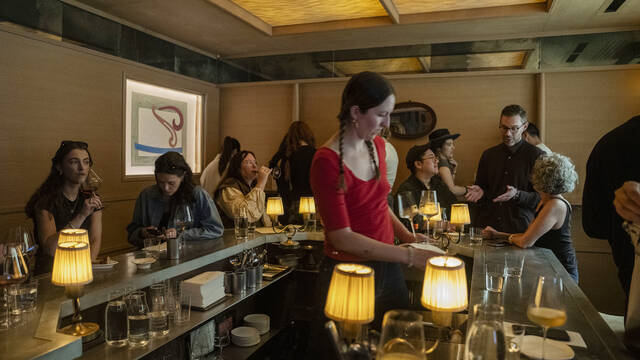
Chase Sinzer said he hasn’t seen guests using AI at his New York City restaurants Claud and Penny and his wine bar Stars, but he can tell they are from the questions they ask.
“I have zero doubt,” he said. “We’ve run situations through ChatGPT and Claude trying to prepare ourselves for the questions. We’ve actually done classes with the somms for each scenario.”
Sinzer likened guests using AI to people consulting with friends before going out to eat.
“For us, the only thing that matters is to deal with whatever people bring to the table and make it a hospitality situation,” he said. “It’s just another challenge and an opportunity.”
While the rise of AI in wine has often elicited nightmarish scenarios of technology replacing sommeliers or, God forbid, wine writers, so far it has largely proven to be a useful tool rather than a fearsome Frankenstein’s monster.
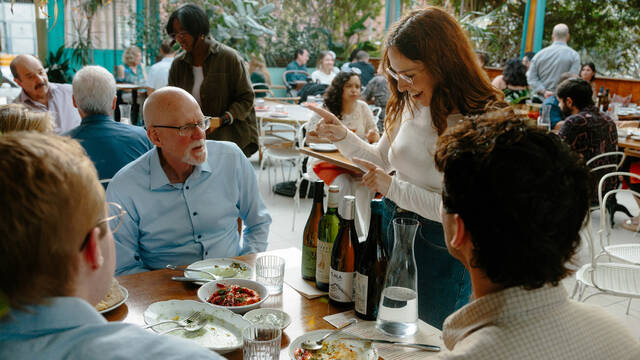
At Bavel in Los Angeles, a Middle Eastern restaurant with a deep and varied wine list, Claudia Rosellini, the wine director, likes to bring several bottles to a table for a sort of show-and-tell situation. She encourages her sommeliers to have conversations with each table, so that the wine-selection process feels adventurous and experiential rather than transactional.
While it’s conceivable that AI could diminish these exchanges between guests and sommeliers, Rosellini has found instead that it’s been an enhancement.
“People making the conscious effort with AI, it means they’re curious, and that makes me happy,” she said.
“It’s always just a starting point,” she said. “It becomes a more specific conversation. We can get into a lot more things when we have a starting point already, instead of me playing 21 questions.”
Even with AI, she said, the human element can’t be replaced. No place that truly cares about wine would try.
“Wine’s such a contextual product, it’s a human, cultural product, it differs year to year, it’s ever-changing, that’s what a somm can bring to the table,” she said. “AI will never be able to understand the mood at a table, the vibe. But if it boosts confidence of somebody that doesn’t know about wine, I think that’s great.”
I’ve tried several hypothetical scenarios with ChatGPT, and I can’t fault its logic. It makes sound, reasoned choices. For example, I uploaded a photo of the sparkling wine choices (excluding Champagne) on the wine list at Lei, the excellent wine bar in New York City’s Chinatown in Manhattan, and asked it for the best value selection.
It suggested the 2023 blanc de blancs from Raventós i Blanc for $60, a superb Spanish sparkling wine that I’ve recommended myself numerous times. But it didn’t stop there. It asked me whether I would like to know what a sommelier geek pick might be? Of course, I said, and it offered up a nonvintage Montbourgeau Crémant du Jura Brut Zero for $70, another terrific wine that I have recommended.
It also provided a cult sparkling pick, the nonvintage Keller Grande Cuvée No. 002 Brut Nature, a German sekt, for $220. Strangely, it also commented that the Keller was overpriced and that, for the money, most sommeliers would rather drink grower Champagne.
Given that the Keller retails for $150 or more, it’s in fact a great value on Lei’s list, and honestly, who knows what sommeliers would pick in their free time? So, this was a questionable call by ChatGPT. What’s more, while I love both the Raventós i Blanc and the Montbourgeau, I would have chosen a wine ChatGPT never mentioned, Moritz Kissinger Winzersekt No. 3, another nonvintage German sekt, for $100. It’s more difficult to find and, as it retails for $50 to $60, it was a good value on the wine list.
My hypotheticals with all the chatbots came up with similarly layered answers. I liked that they give ranges of sensible wine suggestions without implying that only one right bottle exists for any situation. And yet, if you are knowledgeable about wine, AI in my experience will not surprise you. It thinks inside the box. As they say with athletes, its floor is high, but its ceiling is low.
For many people, that makes it a useful tool, provided they do not rely on AI alone. Herbst, who uses AI to give him something to discuss with the human wine expert, has the right idea. Listening to AI is like reading a recipe. If you are inexperienced or insecure, you follow the directions closely. If you are a confident cook, the recipe is a starting point.
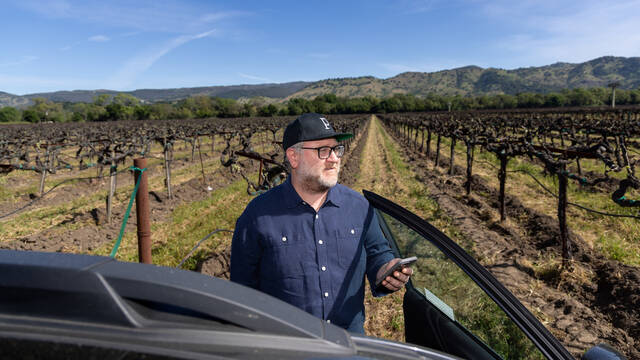
“It may not be the perfect answer, but it can be a confidence builder,” said Dan Petroski, proprietor of Massican Wines in California’s Napa Valley. Petroski not only makes great wines, he is one of the most tech-savvy people I know in wine. He likened AI to librarians who have read every book on the shelves.
“They may not remember everything perfectly, but they are right nine out of 10 times,” he said.
Petroski uses AI as a tool in managing winemaking. He said he put 17 years of Massican winemaking history into a spreadsheet and fed it to ChatGPT, or more specifically, Sophia, as he named the AI character he created on ChatGPT.
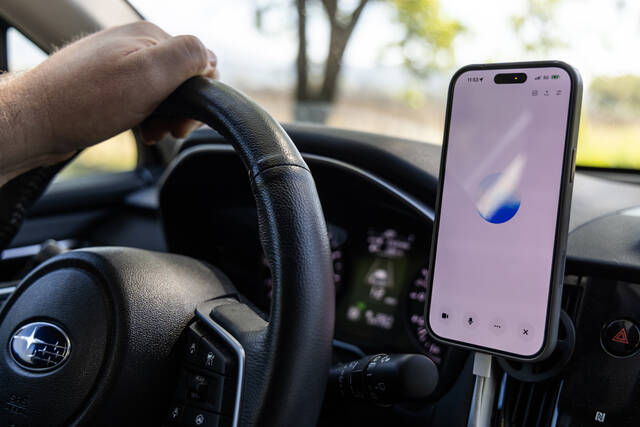
“Now, when I get a general sense of whether a vintage looks like a specific past vintage, it talks back to me, ‘This is what you experienced, this is what you did,’” he said. “It gives me insights instantaneously. I could be driving and talking to Sophia, I don’t have to sit at home at night on the computer for two hours.”
Petroski sees other, more material ways that artificial intelligence will be beneficial to wine. He believes the wealth it is generating around the Bay Area and elsewhere will fuel a new generation of wine lovers — those whose spending on wine will rejuvenate an industry that has recently been in the doldrums.
“From the mid-’90s through 2017, the amount of wineries doubled and the amount of wine produced almost tripled,” he said. “I’m anticipating in the next three to five years — ChatGPT launched in 2023 — money will flow back in a meaningful way.”
As for the more immediate use of AI in restaurants, Sinzer, like Rosellini, believes the human connection will prove stronger than anything chatbots might contribute. He remembers, as do I, when guests were routinely suspicious of sommeliers, expecting snobbery and pressure to buy more expensive bottles than they would want.
“We’ve seen a real embrace of sommelier culture,” he said. “AI is just a new challenge to that.”
He believes that the technology will take on many tiresome tasks, but won’t be able to supply the human touch.
“AI is not a charismatic somm,” he said. “It hasn’t come close to putting smiles on people’s faces.”