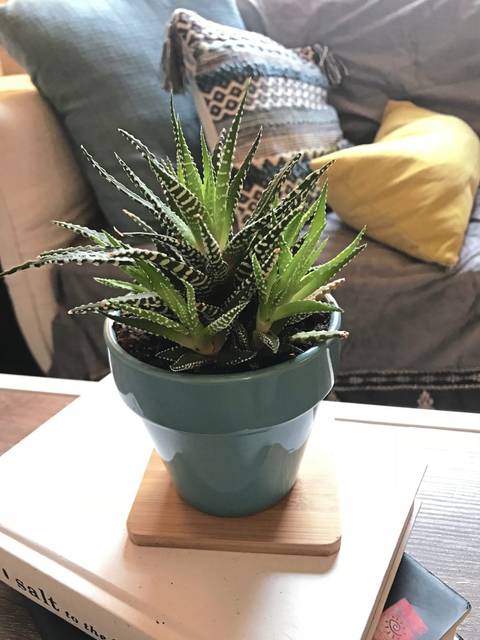
Among the most popular houseplants today is the fairy washboard (Haworthia limifolia). This compact succulent plant stays small, making it a great choice for a windowsill, desk or bedside table.
The plant reaches about 4 inches in height and width. Its ease of care is another endearing factor, along with its cute looks and fun common name.
The fairy washboard gets its name from the ridges running across its squat, strap-like leaves, much like a tiny, old-fashioned washboard. Haworthia is native to South Africa, and it’s been grown as a houseplant for decades. However, this plant is now more popular than ever.
Haworthias are easy to divide, with the central, spiral-forming rosette of leaves often forming “pups” or side shoots just to the side of the main plant. These “pups” are easy to separate from the mother plant, pot up and share with friends. There are many named varieties of fairy washboard, each with its own unique traits. Some have leaves that are thick and stocky, while other varieties have leaves that are slender and more upright. Some varieties are almost curled.
To grow fairy washboards, you’ll need a location with bright light but not direct light. An east- or south-facing window is best. Like other succulents, this plant does not do well in low light areas of the home. On the other hand, direct sun can burn the foliage, so keep the plant out of the blasting afternoon sun of a window with western exposure. If the leaves of your Haworthia turn brown or they appear pale and bleached out, the plant may be getting too much sun.
Because Haworthia is a succulent, its leaves have evolved to hold a large amount of moisture that’s released as the plant needs it. Desert plants like these require less irrigation than houseplants that hail from tropical climates. Water your fairy washboard only after the soil has fully dried out. When watering, try to keep the foliage dry and apply the water only to the soil. Water collecting and sitting on the foliage of this plant can cause it to rot.
Haworthia require very little in terms of fertilizer, but they do prefer to be potted in a well-draining soil mix formulated specifically for cacti and other succulents. The gritty texture of these soils allow for ample drainage. If your Haworthia is potted in standard potting mix, you may want to transplant it, using a cacti-specific soil mix instead.
In the summertime, move your fairy washboard outdoors if you’d like, but be sure to bring it back indoors well in advance of fall’s first frost. Choose a site with afternoon shade and water the plant more frequently during the heat of summer.
Fairy washboards are unique houseplants well worth growing, as long as your home receives enough sunlight.