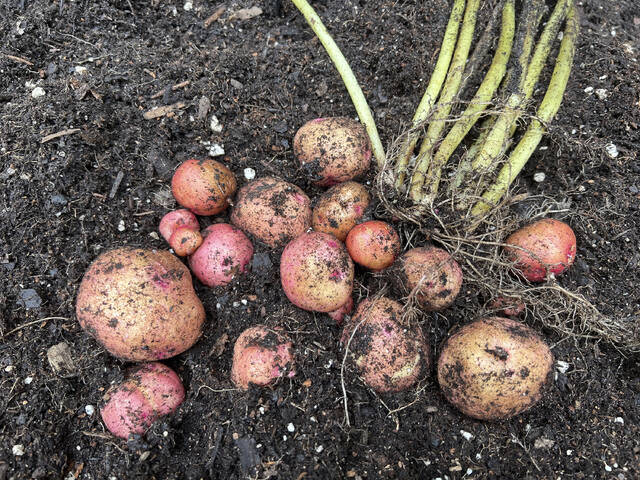


I’ve been getting a lot of questions lately about harvesting potatoes, as a lot of gardeners aren’t quite sure when, exactly, to dig them up. And who could blame them? Size, scent and firmness inform the maturity of most fruits and vegetables, but our senses can’t help us here.
Dig potatoes too early, and you’ll harvest a measly crop of minuscule tubers. You’ll also risk stressing the plant and its precious root system, so although you could try replanting it, the plant might not thrive.
Wait too long, and your potatoes may get damaged by frost, or begin to sprout, crack or rot underground. It’s enough to drive you starch-raving mad!
To find the sweet spot, examine the above-ground portion of your plant. Stop watering when at least half of its leaves have turned yellow. This will typically occur between 60 and 120 days from planting, depending on potato variety and, to some extent, the weather.
Cutting the plants to soil level at this time will aid tuber maturation, especially in wet climates, but this is optional. Either way, potatoes will be ready to harvest in two weeks, and if left standing, plants will have died back completely.
If you’re still uncertain about the timing, you can check for readiness by carefully digging into the soil beside a sample plant and snatching a potato from the outer portion of its root system. The skin of a mature potato will not wipe off when rubbed with your fingers. If it does, refill the hole and check again in a week or so.
To avoid accidentally cutting or piercing potatoes, use a digging or spading fork instead of a spade or shovel to remove them from the ground. Deeply insert the tool 6 to 12 inches from the row or individual plant’s perimeter. Rock it back and forth to lift the roots and unearth the potatoes, working your way in a circle around each plant. Afterward, sift through the soil to ensure no good spud is left behind.
You can cook and eat some right away, but potatoes intended for storage need to be cured. Lay them in a single layer on newspaper or cardboard and place them in a dark, cool (50- to 60-degree) spot for two weeks. This will seal wounds and toughen and thicken skins, which extends shelf life.
After curing, store potatoes in a cooler area, like a cellar, that’s well-ventilated, dark and roughly 38-40 degrees. Cured and stored correctly, they can be expected to last six to eight months. Avoid refrigeration, which concentrates sugars and alters their flavor. Bruised or damaged potatoes won’t keep as well, so use them first.
New potatoes can be harvested earlier in the season, right after plants flower. But don’t confuse them with the small-but-mature potatoes labeled “new potatoes” at the grocery store; those are simply small, usually red, varieties. True new potatoes are young, thin-skinned tubers harvested from immature, green plants. They’re prized for their low starch and high moisture content, but they don’t cure, store or travel well, so they should be consumed soon after harvesting.
This year, I tried growing potatoes in fabric grow bags. My plants thrived, reached full size and remained healthy without the excess supplemental irrigation I had anticipated. Hilling — mounding soil up as plants grew — simply meant adding more soil to the bags.
Determining maturity was as easy as rolling back the Velcro-affixed potato-viewing “window” to inspect tubers without disturbing them. And harvesting involved dumping rather than digging, so my back is as happy as my stomach. And that’s no small potato.