

In the shadow of a behemoth commercial event raking in millions while christening new millionaires from a grand stage, on Friday afternoon, a group of 40 minority business owners was just looking to make ends meet in a relatively empty nearby North Side park.
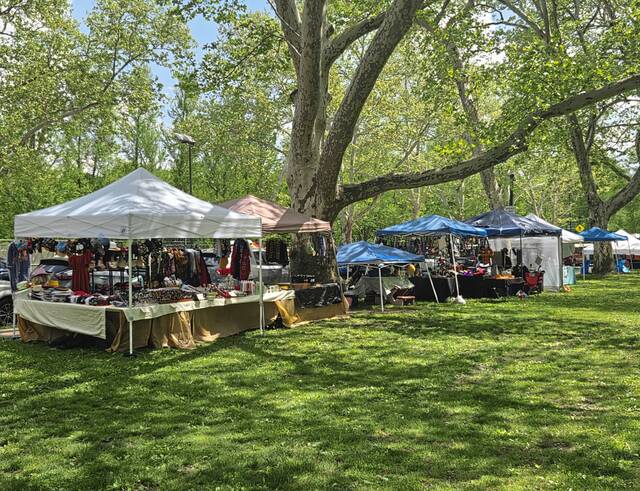
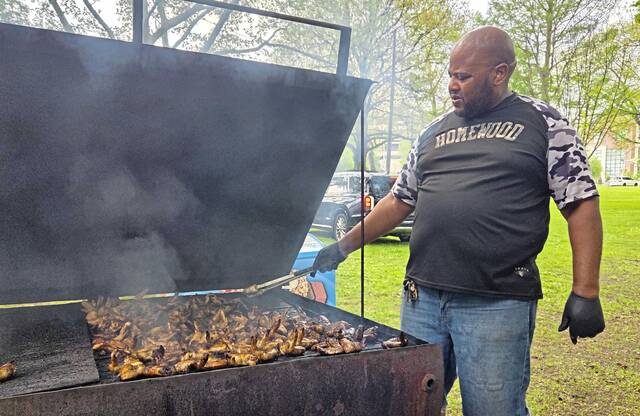
The picturesque scene at day two of event producer William “B” Marshall’s Draft Bash — tucked into the southwest corner of Allegheny Commons Park West — was pleasant enough with the spring sun shining down, plumes of grill smoke carrying savory smells on a peaceful breeze and the sound of hip-hop and R&B bumping across the vibrant and shaded green lawn.
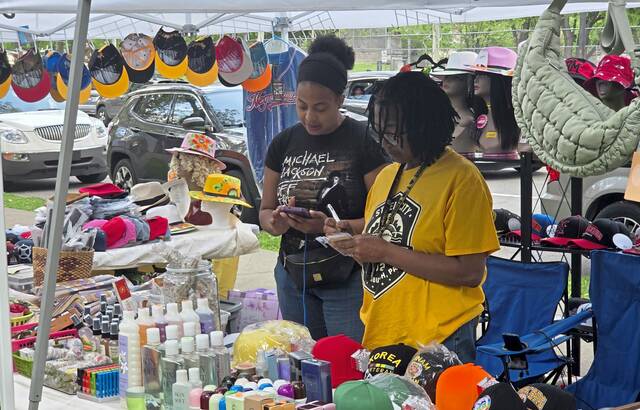
But even amid the friendly conversations and kids joyously blowing bubbles, the three-day market’s food, art and merchandise vendors — most of them minority business owners hailing from across Western Pa. — offered tones of optimism and disappointment.
Despite Marshall having applied for an event permit in October to hold the event on Liberty Avenue and Market Square — where he and many vendors believe would have more readily captured foot traffic from the NFL Draft — the market that Marshall conceptualized upon realizing local vendors wouldn’t be able to participate directly in the Draft windfall was finally granted a permit just days ago after a change-of-venue agreement last week.
The city blacked out event permits for certain areas near the draft, including those Marshall had initially requested for all event promoters.
“I thought it was essential for minority and Black business owners to also make some money going to the NFL Draft. We found out it’s like over 150 businesses between Downtown Pittsburgh and the North Shore that are brick-and-mortars, but not one of them is a Black-owned business,” Marshall. “So it was crucial for our vendors to be out here trying to sell their items through the Draft. They said over 700,000 people were going to come the first day. So just imagine if we would have been able to set up Downtown at our first place that we were trying to get.
“But we had to settle for this location, and we’re just trying to make the best of it.”
Marshall estimated the first day of the Bash — originally designed to host 100 vendors instead of 40 before the last-minute permit approval led Marshall to downsize — drew 300-400 people, with about 20% of that number being Draft foot traffic.
Marshall said he’d been hoping for thousands.
“Some of the vendors made some money yesterday. A lot of them didn’t, but they’re sticking with it. They’re resilient. They want to make sure they stay here the whole weekend,” said Marshall. “But it was, overall, a good experience the first day.”
Marshall claimed the event received its health department go-ahead just days ago.
“It was grueling, but we put it together. We made it work,” he said.
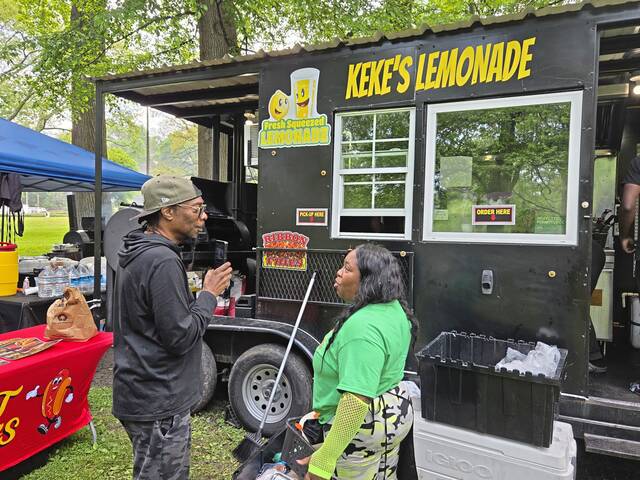
Duquesne entrepreneur Keisha Bryant, 47, was on hand to dish out drinks and food through her food truck, Keke’s Lemonade, which she converted from a lemonade stand a year ago.
‘Things are going good. Not as good if we were down in the main event,” Bryant said with a knowing smile. “I did register with the NFL Draft at the very beginning, so I was a little bit disappointed all of the things that you have to go through.
“I’m a minority business owner, but I’m not registered. So being a Black woman already as a minority and a small business owner, I think sometimes it would be helpful for the city to have some programs to teach us how to register as a minority business.”
As she spoke, she and a skeleton crew hustled in and out of the truck to prep the operation for the day.
“Despite that, we’re here,” she said. “ … We’re open and we’re ready to roll. “
Marshall’s events, she said, were crucial in helping her build her business.
“Without the small-registration events, I wouldn’t be able to flourish as much as a business owner,” Bryant said. “I think it’s very important for us to support one another and to support the community.”
As they continued about their daily tasks, a small group of Steelers fans who’d traveled all the way from Arizona for the Draft strode across the green space that, at least as of early Friday afternoon, was largely devoid of shoppers.
“The food is better here [than at the Draft],” said Brad Nall, 50, with a laugh, explaining why they’d made the trek. “We were walking through and smelled the food, heard the music and everything and thought we’d check it out.
“It’s a cool area. There’s local people, and supporting local people is always good.”
For the participating vendors, Friday was about finding small victories.
Aliquippa Black-culture and history-focused artist Marlon Gist, 54, who had just wrapped up selling a painting to a man from Virginia on the afternoon, characterized the overall traffic as “not enough” before relaying how much Draft-related traffic he thought there had been the day before.
“A little bit, a little bit, nothing overwhelming,” he said. “They’re dripping through here, though. They’re from everywhere. There’s a little bit of people from all around the United States here wearing their jerseys and representing.”
“That’s why I love being out here like this, because there’s always people from around the world walking through Pittsburgh and you don’t even know it. There might be someone who’s like I’m from Singapore and just buy a couple pieces of art. I love just having my art around the world.”
When asked what kind of difference he thought the event’s original planned location might have made in terms of turnout, Gist — who owned Heart and Soul Cafe and Studio on Penn Avenue Downtown for three years — was candid.
“All the difference. This is not where we’re supposed to be at all. This is really out the way and there’s no crazy foot traffic like Downtown. If we were Downtown, it’d be different,” he said. “So I don’t expect to make no money, really. Not the money that I want to.
“If you look like this … you know what I mean? … I don’t want to make it a racial thing, but for a Black person in Pittsburgh, it’s hard.”
Gist said it’s for that reason he’ll be leaving Pittsburgh soon for greener pastures, citing a lack of structural support for Black artists, accepting venues and shows providing legitimate opportunities and an adequate number of customers with the means to consider buying art.
“I’m moving to Atlanta as soon as I can because I can’t stand the way you have to struggle,” he said.
But at least as far as Friday afternoon went, Gist, who said, “It’s hard to be positive in Pittsburgh,” was still trying his best anyway.
“It always comes out as a plus, because I’ll meet somebody and it’ll come back,” he said. “It looks bad, but something always comes out good.”
The market runs from 11 a.m. to 8 p.m. Friday and Saturday.
Marshall will now turn his attention to Juneteenth and Soul Food Festivals, on which he said the City has been supportive.
During planning for previous events, Marshall has clashed with city officials, taking Pittsburgh to court over a permitting dispute ahead of his Juneteenth event last year and suing the city and former Mayor Ed Gainey over allegations the mayor withheld funding and slow-walked permits for his events.