
https://triblive.com/local/black-history-month-display-at-city-county-building-honors-vashon-family/
Black History Month display at City-County Building honors Vashon family

When people think of abolitionists, they probably think of well-known figures like Frederick Douglass, Harriet Tubman or William Lloyd Garrison.
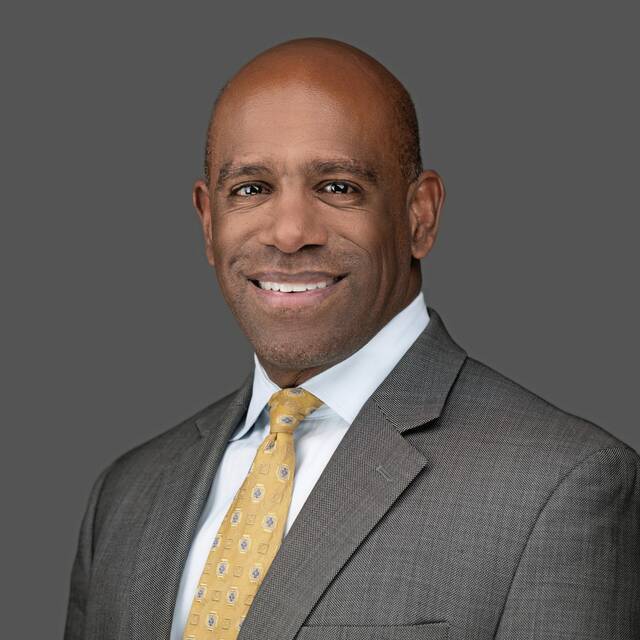
But Paul N.D. Thornell — great-great-grandson of abolitionist John B. Vashon — is striving to ensure his family is remembered in those conversations, too.
“Oftentimes, I think historians and history can conflate the work of a lot of people perhaps just in a few,” Thornell told TribLive. “There are a lot of other people who are also part of that effort. History isn’t always as detailed and precise as it should be.”
Pittsburgh leaders are joining Thornell in honoring his relatives, like John B. Vashon — a War of 1812 veteran, abolitionist and businessman — and George B. Vashon — John’s son, who would become New York’s first Black lawyer. Both lived part of their lives in Pittsburgh.
Thornell joined Mayor Corey O’Connor in the lobby of the City-County Building on Friday to unveil a display honoring the Vashon family. People can visit to learn about their legacy throughout Black History Month.
“A lot of people probably don’t know this history,” O’Connor said. “But John Vashon was clearly a pioneer.”
Displays in the City-County Building’s lobby portrayed images of the Vashon family, timelines and snippets of family history.
Thornell hopes that such efforts to share his family’s story will help provide “a more complete story” of the abolitionist movement, one that narrows in on key local figures, not just a few of the most famous names.
Thornell can trace his roots back 300 years to Ireland, generations before his family would become involved in the Underground Railroad or abolitionist newspapers. His ancestor, Simon Vashon, was mayor of an Irish town called Waterford. Thornell visited with his family last year, taking note of the Vashon name memorialized in the town’s city hall.
His family tree crossed the Atlantic in the 1740s, said Vashon, who has uncovered ancestors who fought in the Revolutionary War and the War of 1812.
Capt. George Vashon, a War of 1812 veteran, was white. His relationship with Fanny Vashon eventually would produce his Black abolitionist heirs.
Thornell tracked Fanny down in an 1810 census record. Fanny, he said, was a freed slave.
George and Fanny’s son, John B. Vashon, also served in the War of 1812. He spent two years as a prisoner of war before he eventually was traded for a white British soldier.
John B. Vashon later moved to Pittsburgh. A barber and a businessman, he ran a bathhouse near Third Avenue and Market Street in Downtown Pittsburgh.
Vashon was an abolitionist, helping to fund the famed weekly newspaper, The Liberator, an influential antislavery publication. He was a conductor on the Underground Railroad, helping enslaved people escape to freedom.
Thornell said his ancestor was “regularly shuttering escaped slaves through his home and his business,” even enlisting his son to help in the efforts.
He also started a school for Black youths.
His son would follow in his footsteps. In 1844, George B. Vashon became the first Black graduate of Oberlin College.
After graduating from Oberlin, Vashon returned to Pittsburgh, studying under former U.S. Secretary of the Treasury Walter Forward in hopes of joining the Pennsylvania Bar. But the commonwealth denied him admission to the bar — not because he was unqualified to become a lawyer, but because of his skin color.
Vashon instead became New York’s first Black lawyer, opening a law practice in Syracuse.
In an interview Thursday with TribLive, Thornell rattled off a comprehensive history of his trailblazing relatives. He knows many details of their lives, like the fact that George B. Vashon spoke eight languages, including Latin, and that he fell victim to a yellow fever epidemic in 1878.
The television series “Roots,” which debuted in 1977, sparked his interest in learning more about his family’s story.
A few weeks after watching the show for the first time, he visited his grandmother in her New Jersey home. Sitting at her kitchen table, Thornell asked his grandmother — Frances Vashon — what she knew about the family’s earlier generations.
She knew a lot.
Frances Vashon, recognizing Thornell as a “kindred spirit” who would bond with her over a shared appreciation for the family’s legacy, produced files tracking the family’s history back to Capt. George Vashon.
Thornell has since devoted himself to filling in the blanks in the information his grandmother had compiled. He dug deeper, seeking relatives further back than his grandmother had traced, including those in Ireland.
“It’s a detective hunt, it really is,” he said of tracking down more knowledge of his family. “They leave a bit of evidence. They leave a trail.”
Thornell recalled that his grandmother was “my first phone call” when he discovered ancestor Simon Vashon’s will, dated to 1777.
Sometimes, he would find a reference to a Vashon relative because of their proximity to more famous figures like Martin Delany, a well-known Black abolitionist who was closely acquainted with the Vashon family in Pittsburgh.
Thornell wants his family to get recognition not just for being in more famous people’s orbits, but for their own accomplishments.
“In my mind, they should get their own spotlight on them for their accomplishments and their achievements,” he said.
The family this month is spotlighted at the City-County Building. Among the displays is a nod to Thornell’s grandmother, the relative with whom he bonded over family history. In 1946, she co-founded The Links Incorporated, a nonprofit committed to “enriching, sustaining and ensuring the culture and economic survival of African Americans and other people of African ancestry,” according to its website.
Kanika Capel, president of the organization’s Pittsburgh Chapter, said Thornell’s grandmother also authored the organization’s official song and served as the fourth president of the Philadelphia chapter.
Later this year, the commonwealth will install a blue historic marker in honor of George B. Vashon near the one that recognizes Delaney near PPG Plaza, Downtown.
Thornell said he is eager to have a lasting commemoration for his family.
“It helps me leave a trail for those who are going to come after me,” he said. “I think it is an appropriate moment to be intentional about shining a light on some of those figures who weren’t previously known. I don’t pretend everybody is enthusiastic or excited about family history, but sometimes it’s as easy as sitting down with the oldest person in your family.”
Copyright ©2026— Trib Total Media, LLC (TribLIVE.com)