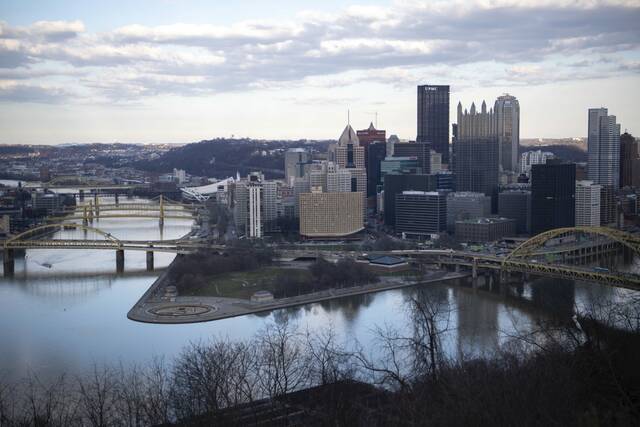
Pittsburgh officials spent much of 2025 arguing about how grim the city’s financial situation was.
Year-end figures released by the Office of Management and Budget this week revealed the city ended 2025 with an $8.6 million operating deficit.
“The financial situation was much more dire than I think we even appreciated,” Councilwoman Erika Strassburger, D-Squirrel Hill, told TribLive Wednesday.
Then-Mayor Ed Gainey’s administration had predicted the city would end 2025 with a $3.2 million surplus.
The Gainey administration had maintained the city’s financial position was stable, even if margins were slim. But Pittsburgh Controller Rachael Heisler and City Council members increasingly raised alarms that Pittsburgh was facing serious financial woes.
The deficit — combined with the estimated $44 million Pittsburgh drained from its reserve day fund last year — represents a “dangerous trend,” Heisler said in a statement.
“We are spending more than we are bringing in, and it’s no surprise: the previous budget was, from the beginning, unrealistic,” Heisler continued.
Heisler raised concerns throughout 2025 that the city was on pace to outspend its budget, particularly on overtime expenses.
Getting a grasp
In total, the city spent nearly $59 million in premium pay costs last year, almost $21 million over budget.
The EMS bureau spent more than twice its $3.6 million premium pay budget. Police blew by their $15 million overtime budget, racking up an extra $6.2 million in those costs last year. The fire bureau surpassed its $16.5 million overtime budget by more than $7 million.
“We’ve got to get a grasp on it,” Councilman Anthony Coghill, D-Beechview, said. “Premium pay is skyrocketing.”
Coghill, who chairs council’s public safety committee, said he’s hopeful that recruiting additional personnel for public safety bureaus would eventually reduce the extra overtime expenses.
Currently, staffing shortages force officials to mandate overtime, particularly in the police bureau.
Council made few revisions to the 2025 budget, despite concerns some had flagged before approving the spending plan.
They largely rewrote the 2026 budget, however, adding a 20% tax increase to ensure the city could afford to cover overtime, utility bills and much-needed vehicle upgrades.
Strassburger, who heads council’s finance committee, said the 2025 deficit underscores why officials had to raise taxes.
Had they not done so, she said, “We would’ve been in a far, far more dire situation financially.”
Even with the tax hike, “The budget is incredibly tight,” Councilman Bob Charland, D-South Side, said.
‘We plugged the dam’
Councilwoman Barb Warwick, D-Greenfield, led the push to increase property tax rates.
She told TribLive Wednesday the city now needs to find additional ways to increase revenue, like soliciting payments in lieu of taxes from nonprofits or taxing certain forms of unearned income like capital gains, dividends or income from estates and trusts.
“It costs a lot to run a city,” Warwick said. “I feel like we plugged the dam with the tax increase.”
Strassburger echoed Warwick’s sentiment that the city needs to find additional ways to bring in money.
She said she hoped to build on the successes of a combined $12 million contribution from UPMC and the PNC Foundation to pay for ambulances and snowplows.
More transparency
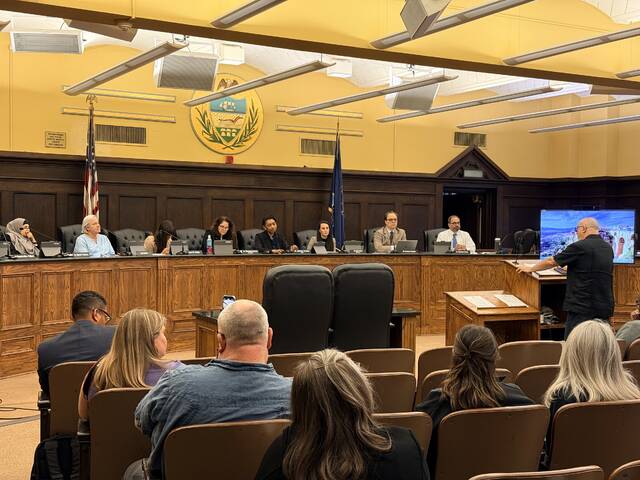
After the city ended last year with a deficit, Strassburger said, she wants to ensure elected officials and the public have a clear understanding of the city’s finances.
“I think the most disappointing part is we just weren’t presented with all the figures accurately,” Strassburger said.
To ensure transparency about the city’s finances moving forward, Strassburger intends to host public meetings after each quarterly financial report is released.
“I think a key takeaway is… what can we do as council to be better at being a check and balance throughout the year?” Strassburger said.