

Duquesne University is working with the Housing Authority of the City of Pittsburgh (HACP) and Live Well Allegheny to narrow the health care gap between white and Black people in the Steel City.
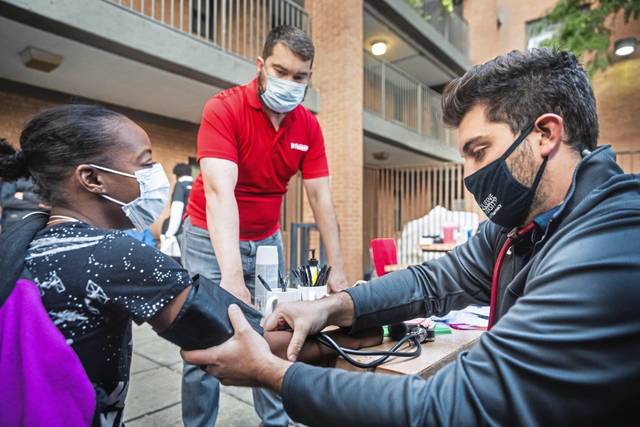
They are offering health care services to underserved communities during the covid-19 pandemic. The team is providing free chronic disease screenings for diabetes and cardiovascular risk as well as disease management programs at all housing authority locations, including 10 high rise buildings and five family communities.
“Because of the pandemic, some individuals are forgoing needed health care, which can lead to serious complications down the road,” said Dr. Jennifer Elliott, director of Duquesne’s Center for Integrative Health and associate professor of pharmacy practice.
“We’ve seen such a drastic rise in the use of telemedicine during the pandemic. This has allowed providers to deliver care to patients in their homes and help to limit the spread of covid-19,” Elliott said. “But we know that there are major gaps in technology access and use among some groups of patients, particularly low income patients who have limited access to the needed technology.”
So, Elliott decided Duquesne needed to work out a plan with the Housing Authority to gain access to all of the senior communities and make sure those residents had access to the health care they need.
Flu immunization clinics have been set up at all HACP sites and in the Woodland Hills School District and Propel Schools through October. Virtual asthma screenings have been implemented and the team is continuing the Duquesne Asthma Clinic in several school districts.
“We determined the best times when the residents would be gathering and we set up pop-up tents outside. The second step was to connect them with the resources that they need,” said Elliott.
Michelle Sandidge, chief community affairs officer for HCAP, said they are using a mobile computer lab to train people to use technology and passing out tablets to a couple thousand residents so that seniors and families can navigate health issues.
“The tablets have apps for health and you can be educated on how to talk to your pharmacist virtually so you can talk about the medication that you are taking.”
The HCAP obtained the money to buy the tablets from CARES Act funding.
“You have to meet people where they are and speak to people directly,” said Sandidge. “You can’t just send people fliers and think that somebody is going to read that and call you.”
Dr. Elliot said she believes that by bringing health care to people where they live and at no cost, they have been able to reduce health care inequities.
“We had many patients who had never received a flu vaccine before for multiple reasons, cost being one of them. So, we were able to provide vaccinations for the first time for lots of residents. And we follow up with our patients and really try to provide that connection to care.”