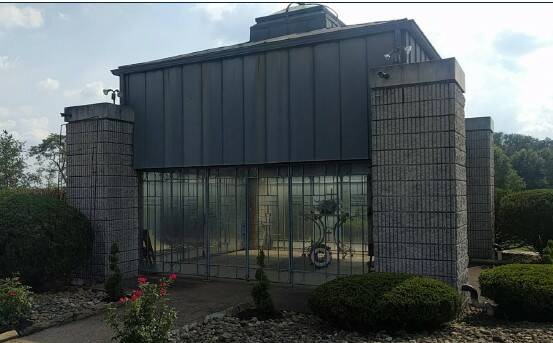
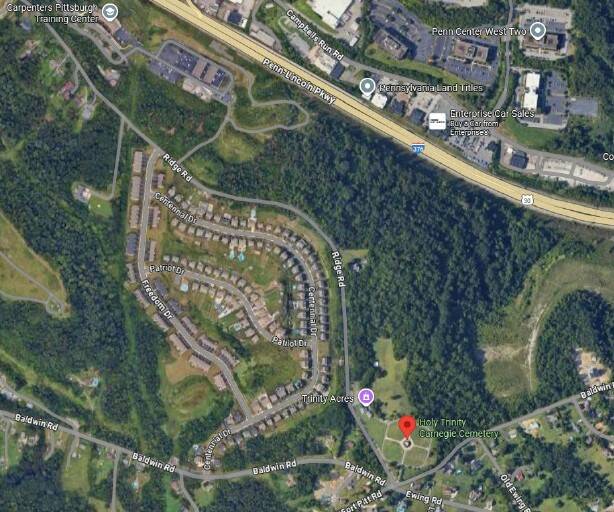
Township officials in Collier say they rejected a proposed shrine for the Holy Trinity Ukrainian Catholic Church because the project lacked the necessary details to justify amending zoning rules for it.
But church officials say the township’s board of commissioners engaged in religious discrimination by rejecting the project.
A federal judge in Pittsburgh on Monday heard testimony and argument on the issue and said she will issue her decision on a preliminary injunction “in due course.”
The church is asking the court to grant an injunction that would allow a zoning change for the property. The church would then move forward with its project through the township’s land-use process.
Attorney Joshua Davey, who represented the church at the hearing, said the township’s zoning ordinances are creating a burden on his client’s ability to exercise religious freedom.
“The church hasn’t been able to do anything with its property,” he said, whether “the shrine, church or even funerals.”
According to a lawsuit filed in U.S. District Court, in 2023, the church began to develop a plan to use a 40.6-acre property it owns at its cemetery in Collier.
Called the Shrine Project, it was to include a 13,000-square-foot chapel, a sanctuary, social hall and retreat center with 18 guest rooms, as well as spires and a bell tower.
As part of its plans, the church submitted an application to rezone 9.4 acres of its property, which is currently zoned residential and as a Planned Economic Development District.
However, the township commissioners rejected the application in September 2024.
The church filed its lawsuit in federal court in January. U.S. District Judge Christy Criswell Wiegand is presiding.
During Monday’s hearing, Robert Caun, Collier’s director of planning, zoning and land development, said the church’s rezoning application was denied because of a lack of information provided with the project.
Caun said the township’s planning commission had concerns about traffic, the length of the project, how it would be financed and the height of the structure.
Initially, he testified, church leadership said the project would be “an attraction” that would draw people “from far and near” and could bring in thousands of people per day.
But information provided later was that traffic would be “not that much,” Caun said.
“We never did get an answer to that question,” he said. “They just couldn’t answer a lot of the concerns that were asked.”
The project, he continued, “was very vague.”
Caun said the church wasn’t just looking to build a shrine, but a cultural center.
“This was an application to amend the entire zoning district,” Caun said. “It had nothing to do with being a Ukrainian Catholic Church.”
But Davey, representing Holy Trinity, disagreed.
He called all of the township’s justifications in denying the application pretextual.
“These kinds of justifications aren’t sufficient,” Davey said.
According to the church’s lawsuit, Collier Township zoning rules prohibit a church from operating in any zone other than a residential one, and even then, it must obtain conditional use approval from the township.
“The zoning scheme violates the Religious Land Use and Institutionalized Persons Act,” Davey said.
Under the law, he continued, the township cannot treat secular businesses more favorably than religious ones.
The church’s lawsuit referenced the nearby Carpenters Union training center, a 19-acre campus consisting of a 93,000-square-foot complex of buildings that frequently serves as host for political rallies.
The church cited that project as an example of favoritism from the township for a secular use.
But Caun said in his testimony that the Carpenters Union facility is a commercial school which is allowable under the Planned Economic Development District zoning designation.
“Being a religious development doesn’t remove you from zoning laws,” said the township’s attorney, Brian Gabriel.
Gabriel also argued the case shouldn’t even be in federal court, saying the church failed to follow the remedies available in local and state law prior to seeking the injunction.
Caun said nothing is stopping the church from resubmitting its application.
But Davey said the law does not require the church to exhaust those options before seeking federal relief.