
https://triblive.com/local/fox-chapel/oharas-proposed-2026-budget-has-no-tax-increase-maintains-all-programs-and-services/
O’Hara’s proposed 2026 budget has no tax increase, maintains all programs and services

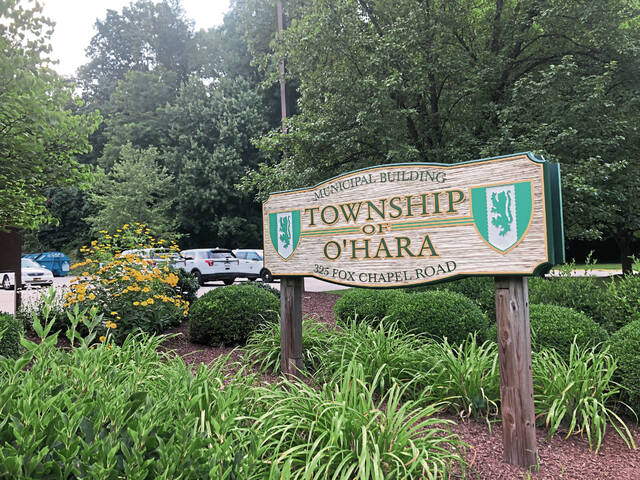
O’Hara officials plan to hold the line on real estate taxes in next year’s budget.
Council and administrators went over the 162-page proposed 2026 spending plan at a special workshop session on Nov. 18.
The proposed budget is available for review at the township office and via the administration section of the township’s website.
Its formal adoption is scheduled for Dec. 9.
Budget documents indicate the millage rate will remain 2.4 mills.
The township raised taxes this year by about 14% from 2.1 mills to its current rate.
Proposed revenues and expenses were listed at about $18.18 million.
Projected income includes about $5.71 million in local tax enabling act money, including earned income taxes, $4.87 million in utility fees, $2.99 million in real estate taxes, $1.27 million in shared revenue and grants, $191,750 in business licenses and permits, $122,350 in interest earnings and $28,500 in fines.
Budget documents show that about $2 million from the township’s unassigned fund balance will be used to help balance the budget.
Projected spending includes about $8.47 million for public service, $3.63 million for capital improvements, $3.13 million for police service, $1.31 million for administration, $552,600 for debt service, $530,800 for fire/ambulance/emergency management, $400,000 for community development and $155,000 for pensions.
Manager Julie Jakubec said she took a very conservative approach when crafting the budget.
A recent ruling by an Allegheny County judge has made it easier for Allegheny County property owners to challenge property assessments.
Pennsylvania counties use the common level ratio to value properties for tax purposes after assessment appeals.
Allegheny County lowered its ratio from 81.1% to 63.5%.
Jakubec explained that a house valued at $200,000 used to be able to be lowered to $162,000. It can now be lowered to $127,00.
Since the start of this year, the township’s assessed value has decreased by about $7.77 million.
It was unclear how much the drop equated to lost revenue. The township has budgeted about $50,000 in real estate tax refunds for next year.
“Council’s been very prudent with the finances,” Jakubec said. “Because of their wisdom, we were able to not increase taxes this year, even with an uncertain real estate tax situation with that court case. … This court case is going to haunt us for a while.”
The township’s earned income tax rate is also expected to remain 0.8%. That has not changed since 2003.
“Conservative budgeting in public service makes sense,” Councilman Rick Hughes said. “It gives us the opportunity to remain healthy financially. If we can fit in the budget for the services we offer the community and keep a conservative budget, we minimize our risk. The biggest pleasant surprise to me is that we were able to still put a hefty budget together and not have to have a tax increase.”
Budget highlights
The township allocated about $1.25 million for road improvements, guiderail improvements and traffic calming devices.
The hope is to repair seven to 12 streets. A list of streets has not been finalized.
About $300,000 is budgeted to upgrade sidewalks along Alpha Drive from Freeport Road to Gamma Drive.
Other highlights include $759,000 for parks and recreation, including rebuilding a trail from the community park to Rockingham Road.
Baseball backstop and fencing replacement, as well as a storm water pond in Woodland Park, trail stabilization and a new retaining wall along Sycamore Run, and play structure replacement at Raymond A. Schafer Jr. Memorial Park are also part of proposed parks upgrades.
About $120,000 is budgeted for two new police vehicles.
There may be some tweaks to the police section of the budget.
The township police department’s current four-year contract expires at the end of this year.
Negotiations are ongoing. There are 19 officers, including three from Blawnox.
Blawnox Police Department merged with O’Hara to start this year. The borough’s contract for police services runs through the end of 2027.
Councilman George Stewart said Jakubec’s budget presentation on Nov. 18 was very thorough.
“Excellent as usual,” Stewart said after that meeting. “No real surprises. This is about the third or fourth time we’ve discussed the budget. The 10-year capital budget, we’ve gone over in detail, is inside the main budget. We rate each individual major item, average out the rating and that’s how we decide some of the things we need to cut. … (Julie) is so good at what she does. She thinks about everything budget-related. We’re good.”
Copyright ©2026— Trib Total Media, LLC (TribLIVE.com)