
https://triblive.com/local/how-a-single-word-caused-a-pittsburgh-homicide-mistrial/
How a single word caused a Pittsburgh homicide mistrial

The witness’s testimony was supposed to be simple.
Pittsburgh police Officer Andrew Dice was expected to describe for jurors an interaction he’d heard at the Allegheny County Jail when dropping off a homicide suspect.
Ambrose Sample Jr., charged with fatally shooting his girlfriend’s ex-boyfriend during a child custody exchange on the North Side, told another inmate he was there because he “caught a body” — slang for killing somebody — according to testimony at his trial.
But when Dice got on the stand, he mistakenly said he heard Sample say he “caught another body.”
Words matter in court. Sometimes even a single word makes a difference.
That little addition by Dice caused an uproar.
Because the policeman’s statement indicated to jurors Sample had previously killed someone, casting the defendant in a bad light, his attorney Ryan Tutera immediately asked for a mistrial.
It was granted and rescheduled for June 15.
Inadvertent slipups like the one by Dice are a prosecutor’s nightmare.
“Nobody wants a mistrial,” said Lisa Pellegrini, a former Allegheny County assistant district attorney and veteran homicide prosecutor. “It’s a huge cost.”
New juries must be selected. Schedules must be redone. And justice is delayed, both for the defendant fighting the charges and the victim’s family and friends.
Bruce Antkowiak, a former federal prosecutor and law professor at Saint Vincent College, said mistrials like the one in Sample’s case are rare. They can also be caused by a hung, or deadlocked, jury.
According to Allegheny County court administration, there have been three mistrials in 2026. There were five last year; seven in 2024 and eight in 2023.
‘Why pile on?’
In Sample’s case, his defense attorney said, the mistrial was entirely avoidable.
Accused of killing Corey Washington, 36, on Dec. 26, 2022, at a Family Dollar, Sample conceded he was the shooter.
Tutera told the jury during his opening statement his client was defending his girlfriend when he pulled the trigger because Washington, her ex-boyfriend, was attacking her.
With Sample admitting his role, nothing about what the police officer heard at the jail was relevant at trial, Tutera said.
“We concede that he shot the guy,” Tutera said. “Why pile on?”
More than that, the prosecution already had called another city police officer, Matthew McShane, who testified as expected about what he claimed to hear Sample say at the jail. He told jurors Sample said he had “caught a body.”
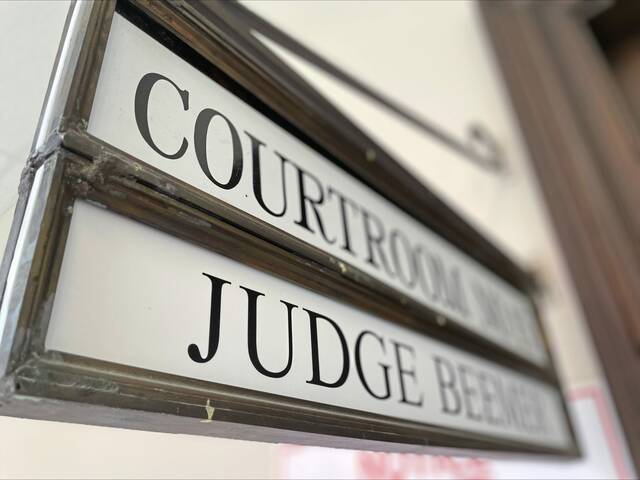
Tutera objected when Dice was called, arguing to Allegheny County Common Pleas Judge Bruce Beemer the officers’ testimony was cumulative and unnecessary.
Beemer disagreed and allowed Dice to testify. But Dice inserted the word “another” in his testimony.
“Where this guy came up with ‘another body,’ I have no idea,” Tutera said.
Court records show Sample was convicted in 1999 of third-degree murder in Westmoreland County, but the jury was not to be told about that information because it is so highly prejudicial.
Although he was happy to win the mistrial, Tutera was frustrated, too.
He believed he had chosen a good, thoughtful, attentive jury and expected to prevail at trial.
Instead, they now have to start over.
Neither the Pittsburgh police nor district attorney’s office responded to a request for comment.
Taboo subject
Saint Vincent’s Antkowiak said prosecutors have to be careful.
“You can’t assume an officer knows in advance what to say or what not to,” he said. “You have to brief them as to what to stay way from.”
But Pellegrini said sometimes mistakes like that can’t be prevented.
“If (a witness) blurts something different out on the stand, that’s not something you can control,” she said.
Pellegrini said patrol officers should be prepped especially well because they don’t testify as often as detectives.
But even seasoned detectives can make mistakes.
Pellegrini, who spent 20 years trying homicide cases in Allegheny County, has one mistrial that stands out.
John H. Ford was accused of killing his ex, Katrice Lester, who went missing in 2002 and was found in an abandoned house in Clairton eight months later.
During Ford’s first trial, a detective on the stand mistakenly testified Ford had asked for a lawyer when he was questioned by police — a taboo subject in front of a jury because it could imply guilt.
“It was not malicious,” Pellegrini said.
The defense requested a mistrial, and the judge granted it.
Pellegrini retried the case in 2006 and got a third-degree murder conviction.
No control
While law enforcement officers can cause a mistrial by misspeaking during their testimony, “civilians are notorious for it,” Pellegrini said.
In 2023, Stephie Ramaley, a former deputy district attorney, was trying a case involving the shooting death of an off-duty Pittsburgh police officer.
Christian Bey was charged with homicide for killing Calvin Hall on July 14, 2019, in Homewood.
On the second day of trial, Ramaley asked a witness who lived on the same street where the shooting occurred how she knew the defendant.
The witness responded she met Bey when he moved in across the street after he got out of prison.
Immediately, Bey’s defense attorneys asked to approach the bench. They requested a mistrial, arguing that no instruction the judge could provide would remedy the fact that the jury now knew their client had a previous criminal record.
Ramaley consented.
“Sometimes you can’t control what comes out of a witness’ mouth,” she said. “That’s why they say you never ask a question you don’t know the answer to.”
Emotional drain
The ramifications of a mistrial are many.
“It’s horrible because the resources and preparation on both sides of the case are so great,” said Ramaley, who now works as a defense attorney.
The court system must bring in another panel of jurors for selection, and prosecutors might have to pay travel costs a second time for out-of-town witnesses, or additional expert witness fees.
They also will have to do another round of trial prep for their witnesses.
And that’s not to mention the emotional toll it can take on the participants in the trial and their loved ones.
“When there’s a verdict, the families and victims can put that away and continue healing,” Pellegrini said. “By having to do this a second time, it makes them relive the worst day of their life. They’re devastated. They’re frustrated, mad, and it takes a little while to re-earn their trust.”
Once a mistrial has been declared, the prosecution has 120 days to retry the case.
Defendants, if they are incarcerated pretrial, might have to stay longer in jail, and they may have to pay additional fees for their lawyers to try the case again.
‘It’s draining for both sides,” Ramaley said.
Preparation is key
In addition to the potential expense of having to retry a case, if the action that led to the mistrial in the first place was intentional or reckless, a court could choose to dismiss the case with prejudice — prohibiting the prosecution from trying it again, Antkowiak said, though he noted that scenario is rare.
“A prosecutor really and truly has to be on guard,” Antkowiak said. “The key is prep. The key is sitting down with each witness beforehand and going over their testimony.”
Often, he continued, defense attorneys will view a mistrial as a victory.
That’s particularly true if the prosecution loses a critical witness the second time around — whether through death or cold feet.
In the first Bey trial, one of the eyewitnesses who had already testified refused to come to court the second time, Ramaley said.
While that could have negatively impacted the prosecution’s case, the judge allowed her to have the witness’s testimony from the first trial read into the record in the second.
Bey was convicted of first-degree murder.
Sometimes, Antkowiak said, a mistrial late in a case benefits the prosecution.
“The common thinking is a second trial advantage goes to the prosecution because they’ve seen (the defense) case, and they can adjust accordingly,” he said.
Ramaley thinks a mistrial can benefit everyone by teaching them what to avoid on the second go-around.
“Both sides will learn stuff they won’t do the next time.”
Copyright ©2026— Trib Total Media, LLC (TribLIVE.com)