
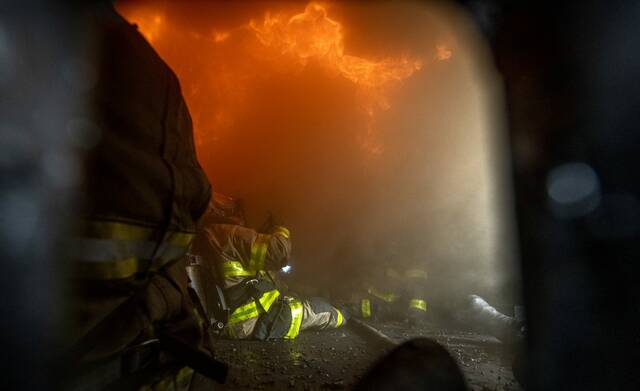
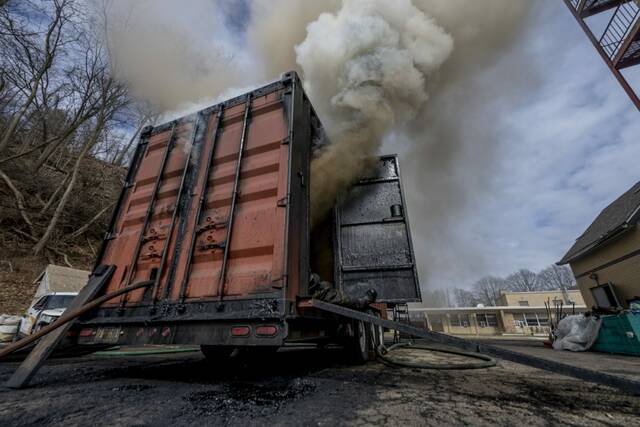
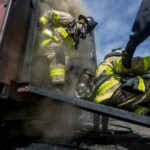
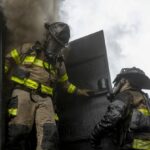
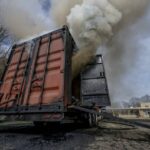
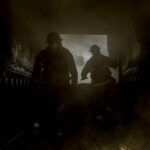
Pittsburgh fire Capt. Brian Tarbuck watched smoke billow from a rust-red shipping container as he described how the first responders training inside could spot the telltale signs of an impending “flashover” — the deadly near-simultaneous ignition of all combustible materials in an enclosed space.
When room temperatures top 1,000 degrees, the smoke thickens and turns brown as a flashover nears, Tarbuck said. Visibility deteriorates. Superheated gas begins rippling above a choking layer of smoke.
“Then, everything in the room — the furniture, the walls, the paint, everything, you! — reaches ignition temperatures and it just goes ‘WHOOSH!’,” Tarbuck said. “The flashover happens in an instant. So, unless you’re near a door, you don’t stand a chance.”
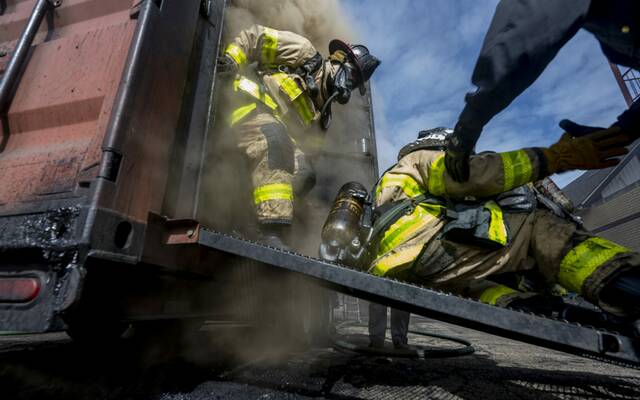
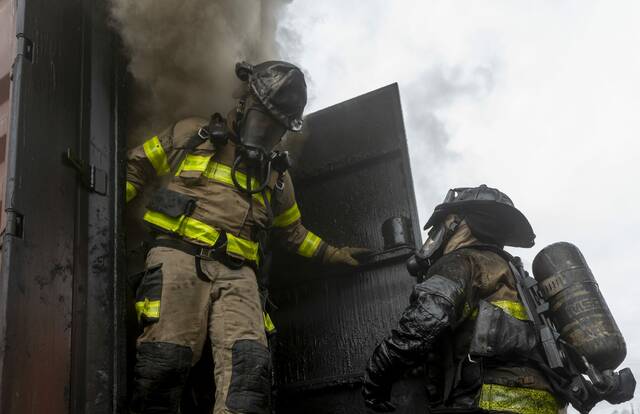
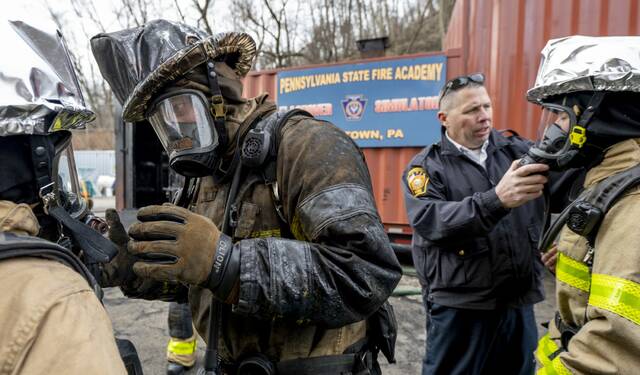
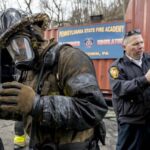
More than 700 Pittsburgh firefighters trained this month in Pennsylvania State Fire Academy’s Flashover Simulator, an adapted, tractor-trailer-length metal shipping container officials parked near the city’s fire training center.
Instructors like Tarbuck led four “burns” a day, up to six days a week, right in Highland Park — the first time the training has occurred within city limits in decades.
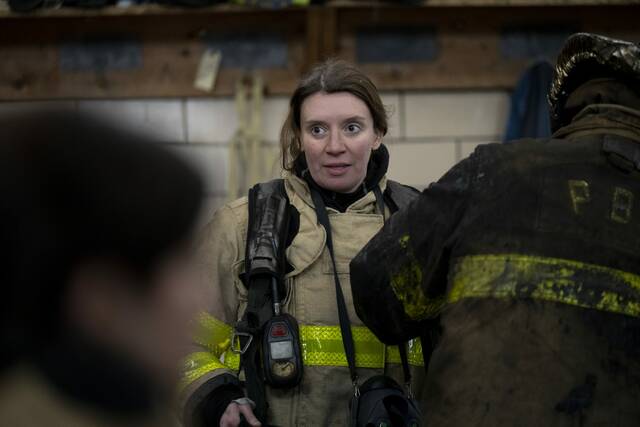
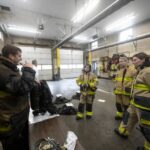
Nearly a dozen firefighters took part in the real-world flashover training Thursday morning. They were joined by City Controller Rachael Heisler, the firefighters union president and a public safety spokeswoman.
Pittsburgh fire Chief Darryl Jones called the training, previously offered for bureau firefighters in North Park and elsewhere, “essential” to recognizing the warning signs of a flashover, which marks the transition from a growing fire to an uncontrollable blaze.
“Our protective gear will not protect us,” Jones told reporters. “If I am in a room when it flashes over … I probably won’t survive.”
Sixty-two firefighters died in the line of the duty nationwide in 2024, the most recent National Fire Protection Association data shows. While it’s hard to calculate flashover-related deaths, the number of overall firefighter deaths has more than halved since 1980.
Rotisserie chicken
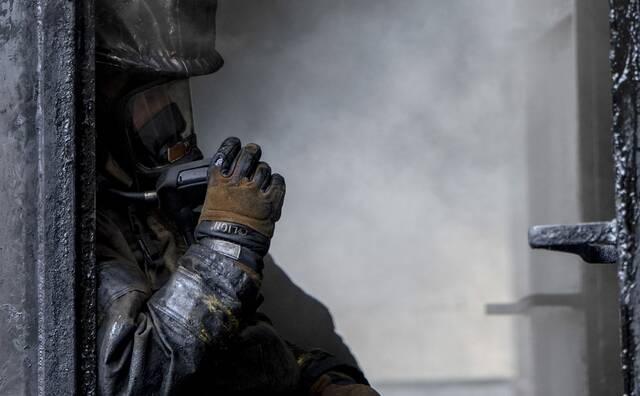
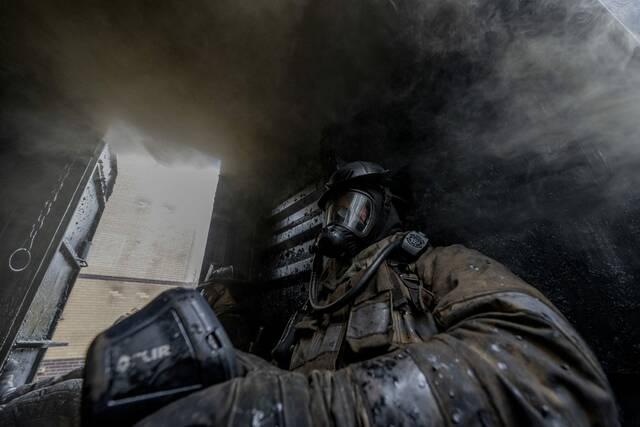
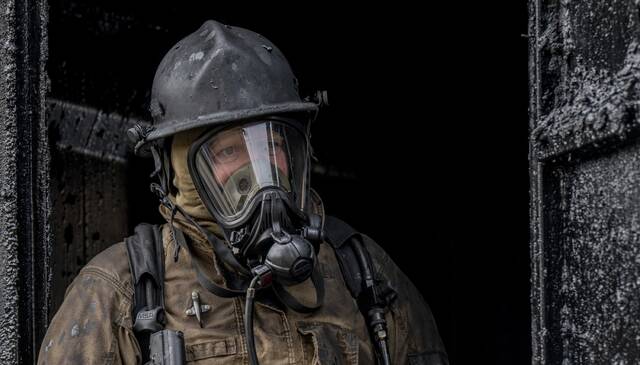
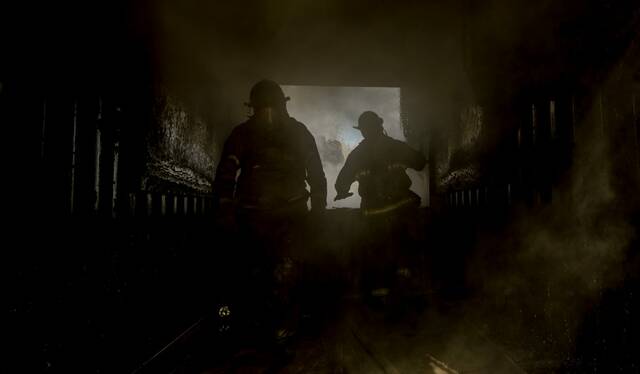
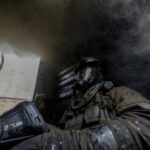
Around 9:30 a.m., after a series of safety briefings, instructor Tom Leiter stepped inside the container and ignited what he simply called “the fuel”: a 55-gallon metal drum stacked like a Jenga puzzle with four pallets of wood. The floor and walls around him were coated in oily layers of soot; blackened flakes hung like stalactites or bats from the ceiling.
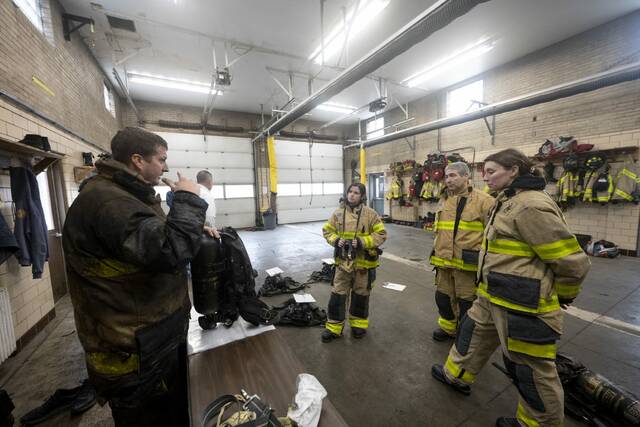
A group of 10 firefighters, each carrying about 80 pounds of gear, sat on the floor of the container, legs extended outward. Everyone waited — and watched. Some carried temperature monitors. Others tried to film the training.
“This is the real world — even though it’s a simulation, when cameras come in here, they fail,” Leiter told the firefighters. “There’s been many attempts. But very few were successful.”
Within 10 minutes, smoke — first thin and gray, then increasingly yellowish and brown — billowed aggressively out of the container’s seams and door frames. Instructors opened and closed metal doors, ushering in oxygen to feed the flames inside or shutting it out to suppress them.
“Now you know what a rotisserie chicken feels like,” an instructor quipped.
Smoke often grew thick, sometimes cloaking much of the paved lot near Pittsburgh police’s Zone 5 station like a shroud of fog. Occasionally, a door swung open for just enough time to glimpse the container’s ceiling consumed with a surge of flames.
Pittsburgh firefighters battled 184 structural fires last year — from stovetop fires to blazes that gutted homes. Most times, they arrived on scene after a flashover had triggered a stubborn blaze.
“I believe this is something everybody in the state who does interior firefighting should do,” Anson Bloom, the deputy director of the Pennsylvania State Fire Academy, said before training began Thursday. “It’s vital to (a firefighter’s) survival that they recognize these conditions as they’re deteriorating.”
‘How long was I in there?’
Firefighter training is personal for Heisler, the city controller.
In 2018, her colleague, Ed Lorenzen, at a Washington, D.C.-based nonprofit was killed in a house fire in Rhode Island. Lorenzen, a policy analyst for the Committee for a Responsible Federal Budget, was 47; his son Michael, 4.
Heisler first took part in firefighter training in Pittsburgh last year.
“This is just another opportunity to see what our first responders go through,” she told reporters.
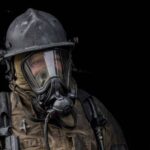
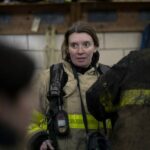
Around 10:55 a.m., Heisler — clad in full firefighter gear, a 25-pound tank of compressed air on her back and mask over her face — entered the darkened shipping container.
She crawled out 45 minutes later, her cheeks flushed and nose red.
“Oh my God,” Heisler muttered at least five times as an instructor helped to remove her mask and helmet.
“I freaked out — the ceiling just kept getting shorter,” the controller said, referencing the rising smoke as she downed a bottle of Niagara-brand water.
“You didn’t freak out — you knew your limits,” interjected Pittsburgh fire Assistant Chief Mat Davis, who took part in the simulation with Heisler.
Heisler turned to firefighters’ union president Ralph Sicuro, who also was covered head to toe in his turnout gear. “R SICURO” was stitched in yellow and white reflective tape on the lower back of his bulky, beige uniform.
The intensity of the fire awed Heisler.
“Do you have to be able to stay in that?” she asked Sicuro.
“No, the point is you shouldn’t stay in that,” Sicuro responded. “The point here is to recognize it, then get out.”
“That was just a very heavy experience,” Heisler added. “How long was I in there — two days?”
As Heisler walked inside the training center to take off her gear, Tarbuck, the instructor, stayed behind near the still-smoking container. He lifted a large, green firehose and doused the flaming metal ignition drum a firefighter had removed from the simulator.
Tarbuck, who started his firefighting career in Wilkinsburg in 1994, was not as overwhelmed. For weeks now, he has watched firefighters tackle the simulator.
“This allows them to bring a lot of what they see in fires into training — it really brings it all together,” he told TribLive.
“And, if you do it right,” he added, “you can teach the students a lot.”