”I hereby declare, on oath, that I absolutely and entirely renounce and abjure all allegiance and fidelity to any foreign prince, potentate, state, or sovereignty, of whom or which I have heretofore been a subject or citizen; that I will support and defend the Constitution and laws of the United States of America against all enemies, foreign and domestic; that I will bear true faith and allegiance to the same; that I will bear arms on behalf of the United States when required by the law; that I will perform noncombatant service in the Armed Forces of the United States when required by the law; that I will perform work of national importance under civilian direction when required by the law; and that I take this obligation freely, without any mental reservation or purpose of evasion; so help me God.” — Oath of Allegiance to the United States of America
They came from 18 nations across Latin America, Asia, Europe and the Middle East.
Their backgrounds, cultures and languages were diverse.
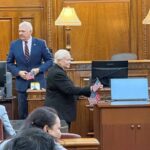
But on Friday morning, they all swore the same oath of allegiance to the United States inside the federal courthouse in Downtown Pittsburgh.
With their vow, the 28 immigrants were naturalized, becoming the newest American citizens.
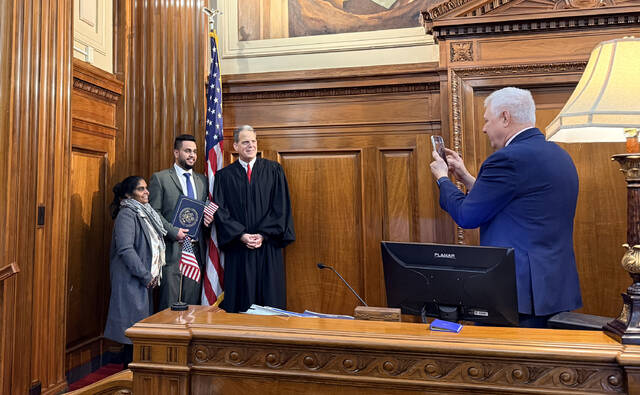
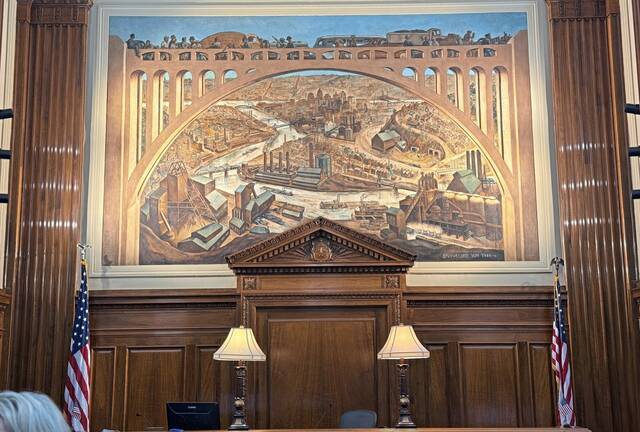
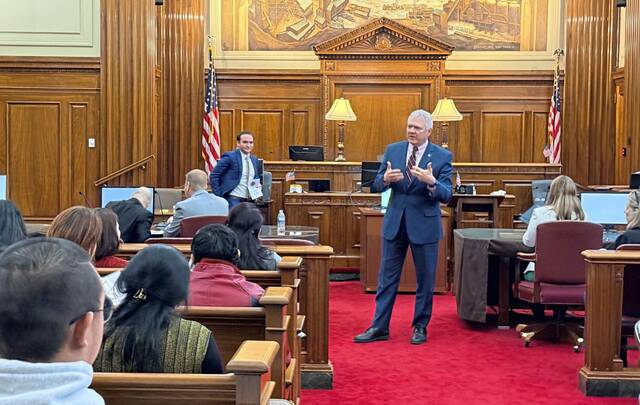
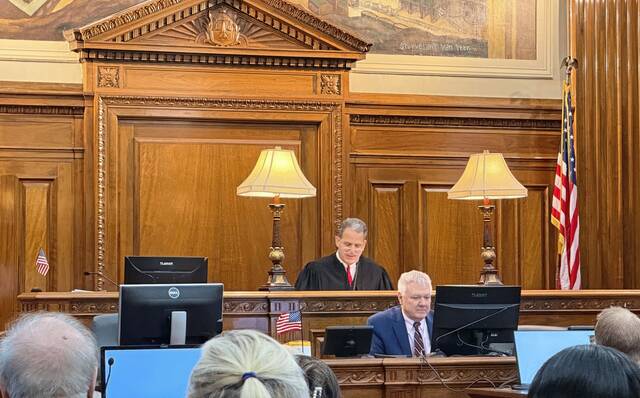
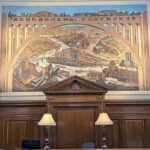
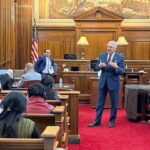
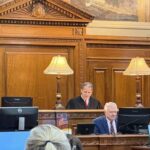
Chief U.S. Bankruptcy Judge Gregory Taddonio of the Western District of Pennsylvania welcomed the group beneath a large mural of the industrial Mon Valley steel works, largely staffed by waves of immigrants at the turn of the 20th century.
“Today, we celebrate the vibrancy of our country and the freedoms it affords,” Taddonio said.
Friday’s ceremony provided a joyous contrast to the fear, unease and distrust being experienced among immigrants across the country as a result of the Trump administration’s immigration crackdown.
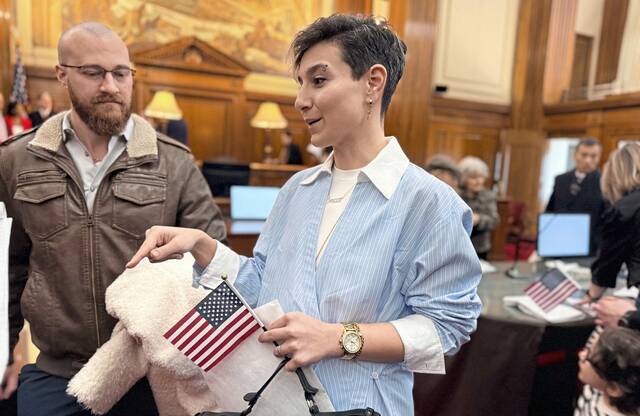
Sandra Viviana Wise-Rosas has been working toward her citizenship since 2009.
Then 18, Wise-Rosas came to the U.S. from Colombia on a student visa to attend St. Mary’s University in San Antonio. She went on to earn a master’s degree in engineering from Dartmouth University.
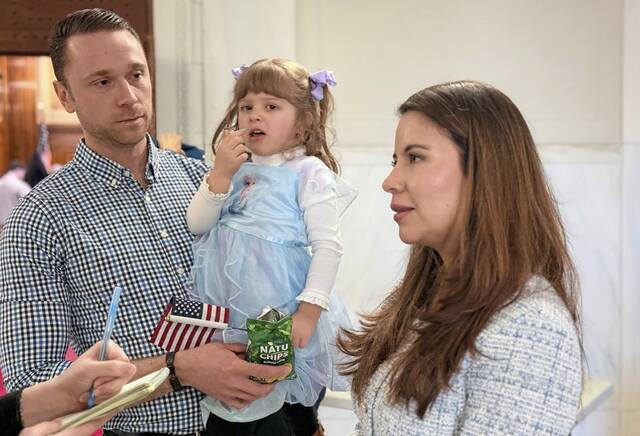
“It was always her parents’ dream for her to work and one day live in the United States,” said Adam Wise, Wise-Rosas’ husband.
Wise-Rosas said her parents began teaching her how to speak English when she was 6 to help her assimilate into the country more easily when she reached the U.S.
After college, she began working for a firm that sponsored her work visa, then green card.
Wise-Rosas’ in-laws and husband sent photos and videos to her parents in Colombia of her naturalization ceremony.
“It feels amazing, almost surreal,” Wise-Rosas said.
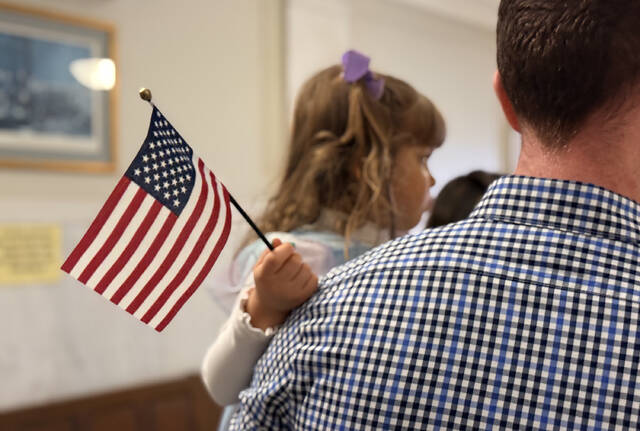
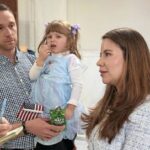
She was joined at the courthouse by her in-laws, her husband and their 4-year-old daughter, Sofia.
She and Wise met in Fort Worth, Texas, in 2015 and married in 2023. They relocated to Washington, Pa., for work.
Wise-Rosas said she’s planning to get her American passport early Monday morning. She said she wants to be able to travel and not worry about being able to get back into the U.S.
She said that, when visiting Niagara Falls a few years ago, her family had to stay on the American side because she would have had to obtain a visa, unlike American passport holders.
“I can’t wait to travel,” Wise-Rosas said.
Smooth sailing
Muhammad Ali, a Robinson resident originally from Pakistan, stuck around after the ceremony to fill out his new voter registration form.
He said he’d been working toward his citizenship for five years after he married his wife, Nabeela, an American citizen.
He said he hadn’t encountered many bumps along the immigration pathway.
“It was a beautiful journey,” Ali said. “Today is a big day of my life.”
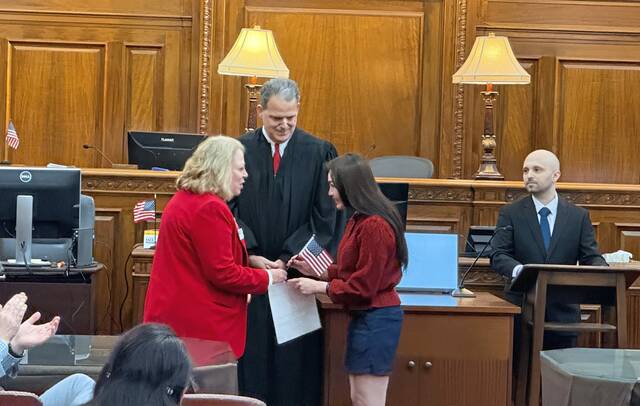
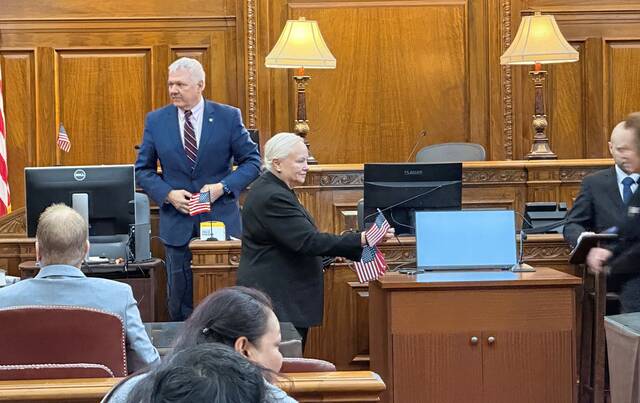
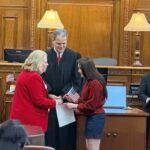
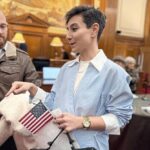
As Rasha Totolos received her naturalization certificate, she grinned and waved a small American flag.
Jordanian by birth, Totolos arrived in the United States to study at Atlantis University in Miami.
After hopping between jobs in New York and California, she met her husband, George, on a Zoom magic show as part of her young cousin’s birthday party.
George sent Totolos a message soon after: “The most magical part of the show was your face.”
The two, already semi-familiar through family connections, married soon after.
Like Ali, Totolos said her immigration process mostly proceeded without difficulty.
In addition to swearing the Oath of Allegiance, the new citizens also recited the Pledge of Allegiance, familiar to schoolchildren across the country who reel it off by rote.
Totolos said the pledge always stirs her.
“It was all very beautiful,” Totolos said.
Before reciting the pledge, the group listened to the national anthem, sung by court employee Eric Sciulli.
‘Jubilation’
Susan Hockenberry and Julie Gatti, volunteers from the Greater Pittsburgh Chapter of the League of Women Voters, sat in on the ceremony to help the new citizens register to vote.
Hockenberry, who’s been to several ceremonies, said they’re “always moving.”
Of the new citizens, Gatti said, 21 had registered.
“You’ve got to build the country,” Gatti said. “These people fought to get here.”
In 2025, judges in the Western District of Pennsylvania naturalized about 900 new citizens, according to Mike Palus, who works for the court.
After the swearing-in, Taddonio said federal judges often vie for the opportunity to preside over naturalization ceremonies.
In a job that often requires upsetting one side, the judge said the ceremonies offer a pervasive “sense of positivity.”
“You get to look them in the eye and just see the jubilation,” Taddonio said.
Taddonio asked the citizens not to forget the immigrants still working toward citizenship as well as the generations of Americans who fought for the freedoms they’ve come to enjoy.
He also requested they not forget their native languages or the cultures that formed them. But Taddonio also urged them to become active in forming the future of their adopted homeland.
“Now,” Taddonio said, “it is your turn.”