Allegheny County’s longest cold case for an unidentified victim has been solved using DNA technology.
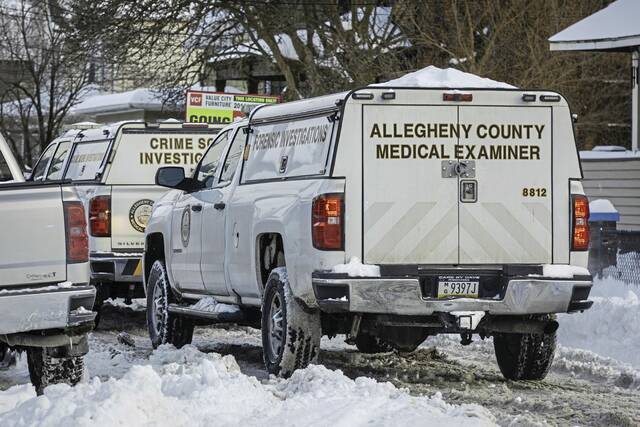
On Wednesday, the Allegheny County Medical Examiner’s Office announced the body of an unknown homicide victim discovered over 30 years ago — described as a 5-foot-10 white male, weighing 175 pounds — was identified as Allan Keener.
Keener’s identity was found using forensic technology from the genetic genealogy company Othram, which used DNA from the victim to build a DNA profile and narrow down possible matching individuals.
Investigators were then able to use the DNA profile to contact potential family members and obtain a DNA sample from a living relative.
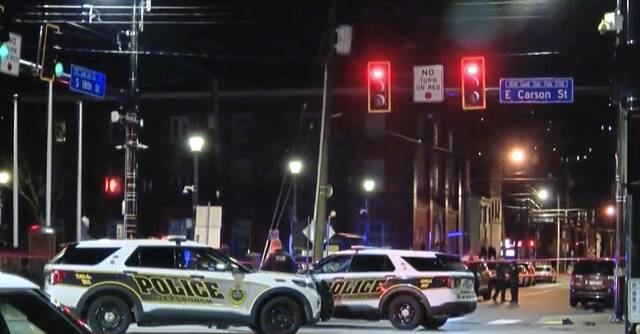
Pittsburgh Police officers and River Rescue recovered Keener’s body between the Sixth Street Bridge and Ninth Street Bridge on the Allegheny River after receiving a 911 call from a witness to an assault in 1992.
“Homicide Detective George Satler pinpointed this cold case as one that could benefit from the application of genetic genealogy to determine the identity of a man who was nameless for far too long,” Pittsburgh Police Chief Jason Lando said in a statement.
The medical examiner’s office determined there were signs of blunt force trauma to Keener’s head, but that his cause of death was ultimately drowning.
Keener was born Feb. 5, 1940, and was originally from Kentucky. The county’s news release said that he had no known address and was believed to be traveling around Pittsburgh and the region.
Even without knowing Keener’s identity, police located and arrested a suspect in his death, a man named Arthur Wiley. He was convicted in 1993 of third-degree murder; Keener was known as “John Doe” during the case.
Wiley has since served his sentence.
The Allegheny County Medical Examiner’s Office has identified remains found in 1992 as Allan Keener, using Othram technology. #dnasolveshttps://t.co/LZ1gOF8PWN
— Othram Inc. (@othram) February 11, 2026
The medical examiner’s office has had a partnership with Othram since 2024, as part of a $100,000 grant provided by the state.
“As long as there is DNA, it doesn’t matter how old a case is, or whether it seemed hopeless in the past, there is technology here today that works and is able to bring answers to families,” said Kristen Mittelman, chief development officer for Othram.