Patients with memory or cognitive deficiencies and their caregivers will have more direction when leaving the hospital, thanks to a new program being offered by the McCandless-Franklin Park Ambulance Authority in collaboration with UPMC.
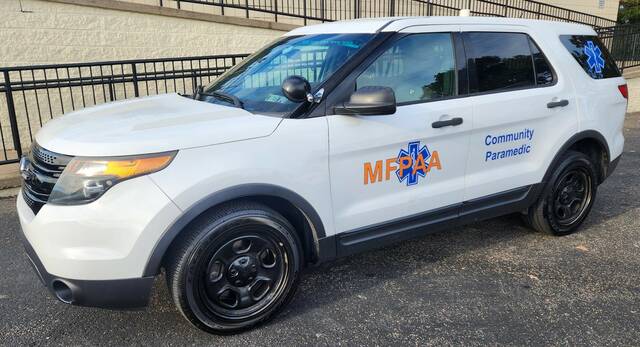
As part of a Community Paramedic-led Transitions Intervention Program, the MFPAA, an emergency services provider in Allegheny County, will be working with UPMC hospitals to offer the optional no-cost service as part of the discharge plan for these patients and their caregivers.
The trained CPTI paramedics will help navigate local health care services with patients’ caregivers during an in-home visit following a hospital discharge.
“CPTI is designed as an after-discharge, no-cost service to provide resources for a patient and their caregiver support system. A trained paramedic will make a one-time home visit, guiding the patient on their post-discharge plan as recommended by the hospital staff,” said Chris Dell, chief of MFPAA.
The goal of this nationwide program is to reduce avoidable returns to emergency departments for these patients.
Emergency Medical Services can be direct partners in the health care plan by receiving referrals from the hospital physicians and nursing staff to make an impactful difference on the life of their patients, according to Dell.
“Often when our paramedics return from the in-home visits, they share how the caregivers are overwhelmed and just needed someone to listen to. They find the visit to be therapeutic, bringing hope, empathy and compassion as they deal with the stress of taking care of a family member,” Dell said.
The trained MFPAA paramedic will consult with the patient/caregiver in their home to review safety concerns, manage medications and provide a packet of local community resources customized to the patient’s needs.
The CPTI program started at UPMC East and UPMC Presbyterian hospitals in late 2025. UPMC Shadyside and UPMC McKeesport hospitals will be added to the CPTI rotation in 2026 to 2027, according to a news release from the MFPAA.
“In our MFPAA region, we have multiple nursing homes with memory care residents that often need our EMS services,” said Michael Wholihan, financial coordinator and emergency medical technician of the MFPAA.
Several of the paramedics at MFPAA have previous community training and clinical training within hospital systems, he said.
EMS crews determine whether a person needs to be transported to an emergency department from a variety of medical issues, according to Wholihan.
The patient then can be evaluated by a physician. EMS crews request the patient’s medical history from a caregiver or staff at a nursing home to relay the information to hospital staff. This ensures the proper transfer of care based upon the patient’s medical history, he said.
Five paramedics and one administrator of the MFPAA will have training in this program.
The CPTI-training process was lengthy, but paramedics selected for the program at MFPAA showed interest in learning more. And there was a lot of support from staff and the authority’s board, according to MFPAA Capt. Norm Prycl.
“It’s our way of showing the region that we are making every effort to provide the highest level of care for each patient and their family,” Prycl said.
Discharging patients living with dementia at home after a visit to an emergency department can be challenging, said Dr. Joe Suyama, a fellow of the American College of Emergency Physicians.
“Being able to provide coaching and assessment of these patients with their families once they get back home can make these difficult transitions much easier to manage,” said Suyama, who also is a professor of emergency medicine at the University of Pittsburgh and an emergency physician at UPMC, chief of emergency services at UPMC Magee-Womens and medical branch director for the UPMC Corporate Emergency Coordination Center.
The 30-day coaching intervention program delivered by community paramedics, such as the MFPAA, leverages evidence-based care transitions intervention and is designed to empower these patients to develop the necessary skills and confidence to actively manage their health, Suyama said.
“In CPTI, community paramedics collaborate with persons living with dementia and their care partners to set goals, build skills and strengthen confidence in areas critical to managing health at home,” Suyama said.
Key features include a home visit from a community paramedic within approximately five days of emergency department discharge and three follow-up phone calls for up to 30 days. It also provides patient-centered coaching focused on improving medication management, ensuring timely outpatient follow-up, responding appropriately to health conditions and enhancing communication with health care providers, according to Suyama.
“These interventions are designed to improve discharge plan implementation to decrease (emergency department) revisits and enhance access to existing and new outpatient resources,” Suyama said.