The organizing committee for the 2026 NFL Draft in Pittsburgh released an environmental and sustainability plan for Allegheny County aimed at minimizing waste and boosting the region after what officials say will be the city’s largest tourism event ever.
The Pittsburgh Local Organizing Committee, made up of government officials as well as business and university leaders, announced the plan on Monday – 45 days ahead of the draft.
“The NFL Draft is more than a three-day event, it’s an opportunity to create lasting, positive impact,” said Jerad Bachar, president and CEO of the city’s tourism group, Visit Pittsburgh, in a news release.
The plan details a series of initiatives tied to the draft, including expanding the area’s urban tree canopy, citywide beautification and food recovery as a half-million visitors are expected for the three-day event.
Planting the draft’s legacy
At the end of the month, Pittsburgh’s Forestry Division will oversee the removal of a limited number of trees in the North Shore to accommodate site preparations for the draft.
The Forestry Division will then oversee the replanting of up to 300 new trees, following the draft.
It was unclear on Monday how many trees will be removed to make room for the draft site and Forestry Division officials did not respond to an immediate request for comment.
The Pittsburgh Local Organizing Committee has also partnered with nonprofits Western Pennsylvania Conservancy and Pittsburgh Parks Conservancy to plant an additional 500 trees across the city and county as a part of the draft’s environmental legacy.
Some of the areas targeted by the initiative include Homewood, Beltzhoover, Hazelwood, Garfield, McKeesport, Clairton and Penn Hills.
Funded by the Heinz Endowments, the Western Pennsylvania Conservancy will plant 400 large caliper trees, which are bare root trees known as a rapid, cost-effective way to green up urban areas, according to environmental organization Alliance for the Chesapeake Bay, the news release said.
Planting will take place between March and spring 2027 and prioritize neighborhoods where canopy gaps are most pronounced – including segments of the Three Rivers Heritage Trail and North Shore Riverfront Park.
In the Strip District, Western Pennsylvania Conservancy plantings will begin as early as March 21 and on March 28 in McKeesport.
Visit Pittsburgh said additional locations will continue through 2027.
“Trees bring so many benefits to communities — cleaner air and water, improved human health and wildlife habitat, cooler temperatures in summer and higher property values in neighborhoods,” said Jeff Bergman, Western Pennsylvania Conservancy’s associate vice president of urban forestry and community greening.
Pittsburgh Parks Conservancy will plant an additional 100 trees as part of a citywide effort focused on neighborhoods that lack tree coverage. Each tree will receive consistent maintenance, watering and care over a two-year period to support long-term growth, the news release said.
Draft-driven beautification
While Visit Pittsburgh plans to plant following the draft, plant-based beautification efforts begin much earlier.
Eden Hall, Laurel and Colcom foundations are supporting efforts to improve gathering spaces.
Western Pennsylvania Conservancy will be installing 400 hanging flower baskets throughout Downtown and across the three Sister Bridges for the spring season, along with the planting of black and yellow pansies in 420 street planters across Downtown.
In Pittsburgh’s North Side, Western Pennsylvania Conservancy will also be planting trees and seasonal plants at the new General Robinson Community Flower Garden.
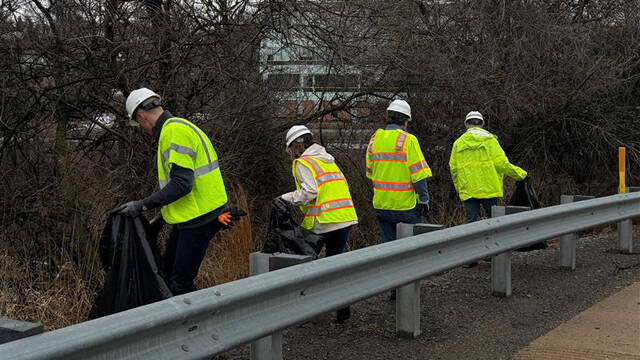
Pittsburgh Local Organizing Committee also partnered with the nonprofit Allegheny CleanWays, as part of its Immaculate Collection initiative, to sponsor and steward a four-mile stretch of roadway from Pittsburgh International Airport into the city.
Allegheny CleanWays did not provide an immediate response to request for comment about the initiative.
Feeding the community
The nonprofit 412 Food Rescue will coordinate volunteers to safely and efficiently redirect surplus food from draft-related events to local nonprofits serving those with food insecurity.
Draft organizers estimate they will be able to redistribute the equivalent of approximately 50,000 meals to people in need.
Since 2015, 412 Food Rescue has redirected more than 39 million pounds of food from landfills in Western Pennsylvania — the equivalent of more than 33 million meals.
By redirecting food rather than sending it to landfills, the initiative will both reduce environmental impact and deliver direct community benefit — transforming potentially 60,000 pounds of food waste into meaningful access for neighbors in need.
“This city is a hub for both technological innovation and community activation. When you put the right tools in the hands of committed volunteers, regular people can turn potential waste into abundance at an extraordinary scale,” said Alyssa Cholodofsky, CEO of 412 Food Rescue, in a statement.