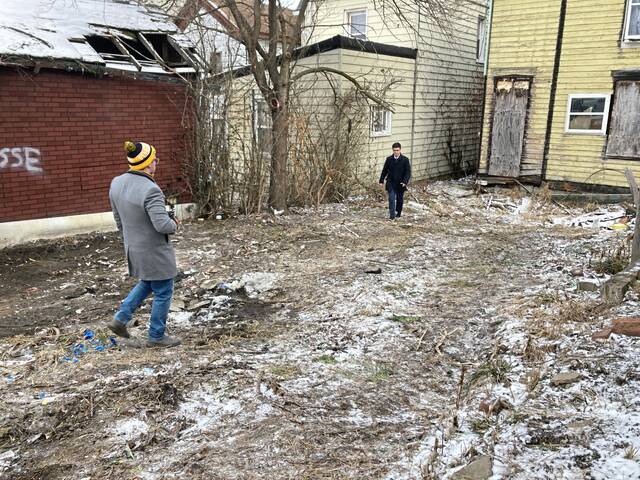
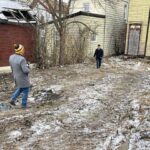
Pittsburgh Mayor Corey O’Connor on a frigid Friday morning stepped over scraps of multicolored wrappers and chunks of concrete in a blighted lot on Dove Way in Knoxville.
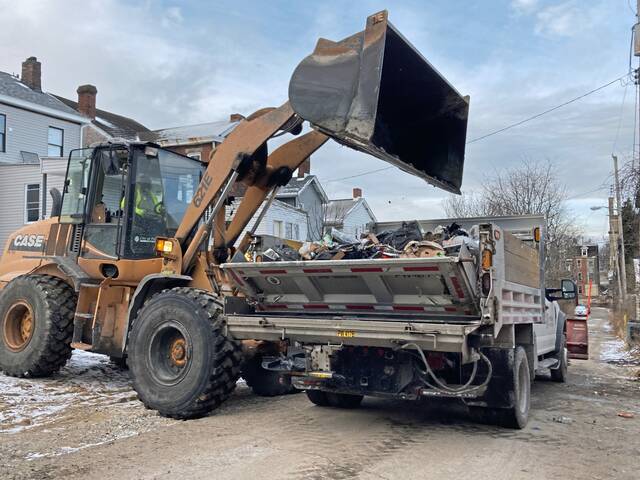
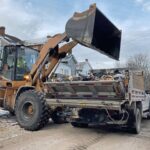
Behind him sat a city dump truck packed full of trash that crews had cleaned from the property that morning: heaps of bulging black garbage bags, crushed cardboard boxes, a cracked gray trash can, a mud-spattered orange construction cone.
Workers had already removed several tires from the yard.
The property in an alley near Bausman Street — which officials said they have to had to clean repeatedly over several years — is one of about 650 privately owned properties that city leaders want to tackle through a program called Clean and Lien.
City crews remove trash, rip out weeds and make the blighted properties more presentable. Then, the city puts a lien on the property that compels the owner to reimburse the city for the cost of the cleanup. If they don’t, the city can take over the property.
Clean and Lien last year tidied up over 520 properties; this year the city expects to spend $425,316 on labor costs for the program.
O’Connor on Friday said he wanted to “do as many as we can this year.”
He also told reporters he wants to be more “aggressive” about seizing control of abandoned properties with liens and getting them back on the tax rolls.
“When we talk about rebuilding neighborhoods, it starts with views and images and making sure people take pride in their community,” O’Connor said.
Fighting blight, the mayor said, is part of that vision.
Crews Friday also cleared the yard around a boarded-up yellow house, one of “countless” properties in Knoxville in need of such work, said Councilman Bob Charland, D-South Side.
“We’ve never had adequate investment in this part of the city,” said Charland, who represents the neighborhood.
Beyond just removing litter, O’Connor wants to invest more in demolishing blighted buildings and focus on getting rid of abandoned, broken-down cars on city streets.
Houses that are abandoned but not in such bad shape that they need to be razed, O’Connor said, could be converted to affordable housing. It would be cheaper, he pointed out, than building new.
O’Connor said he hoped to use the city’s land bank — which acquires properties, wipes out liens and tax delinquencies and sells parcels to buyers who will build things like affordable housing or community gardens — to put some of the properties to a good use.
After a slow start, the land bank in 2023 started successfully moving properties through its system to buyers.
O’Connor said such efforts to clean up the city will work in tandem with his vision for revitalizing neighborhood main streets. The Knoxville site he surveyed Friday morning sits just a couple blocks back from the Brownsville Road business district.
“This is the stuff we have to take care of,” O’Connor said.