Pittsburgh City Council members blamed their budget-drafting woes on a lack of critical information.
The result: a 2026 spending plan crafted by council that the mayor says is underfunded by tens of millions of dollars.
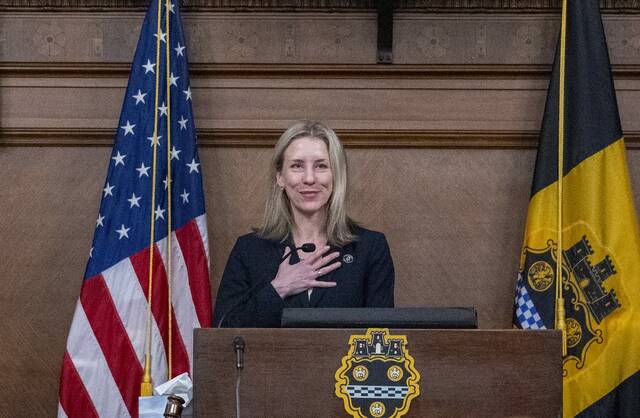
Councilwoman Erika Strassburger, who chairs the finance committee, is hoping to avoid repeating that mistake.
The Squirrel Hill Democrat on Wednesday convened the first in what will become a regular series of meetings with her council colleagues and the mayor’s top budget experts to discuss quarterly financial reports.
During the meeting, she raised the prospect of other measures to ensure officials — and the public — aren’t left in the dark any longer about the city’s finances.
City Council in December rejected then-Mayor Ed Gainey’s 2026 spending plan and revised it. They added a 20% property tax increase in hopes it would cover costs they feared the mayor’s budget underestimated.
But newly elected Mayor Corey O’Connor has said he believes the budget still needs further revision.
He’s pushing a series of amendments that would dip into the city’s reserves and slash empty job positions to ensure there’s adequate money to pay for legal settlements, bridge maintenance and health care costs, among other things.
Council members told TribLive they didn’t have enough detailed information at the time to realize the spending plan they had approved may not fully cover the city’s costs.
And they were unaware that the prior administration had not paid its water bills or some legal settlements last year, totaling millions of dollars that the city was unexpectedly forced to pay in this year’s budget.
Strassburger told TribLive the new quarterly financial conversations are one strategy to ensure council members have enough information to make informed decisions not just during the year-end budget process, but throughout the year.
The meetings are open to the public and streamed on the city’s YouTube channel, like regular council meetings.
“My aim, now and into future months and years, is to daylight as much of this information as possible,” Strassburger said. “It deserves scrutiny.”
Rea Price, O’Connor’s acting director of the Office of Management and Budget, seemed to agree with that approach.
“Forums like this definitely help, and open communication, definitely,” Price said.
No surprises
During Wednesday’s meeting, Strassburger said she wants to ensure council and the Controller’s Office have information about unpaid bills. She suggested that could be mandated through legislation or an internal policy.
Ian Fitzgerald, the city’s deputy director of finance, said Pittsburgh is in the process of getting a new finance software. He said he hoped it could help ensure everyone had access to the data they need.
Specifically addressing the nearly $10 million water bill that went unpaid in 2025, Price said she’s working to transition to quarterly payments to the utility company to avoid “”a giant bill that surprises us at the end of the year.”
Strassburger told TribLive she’s also considering whether there should be an required “explanatory note” on budgets and financial reports that provide details on why some expenses — like overtime pay — are as costly as they are.
Officials during Wednesday’s meeting focused largely on the city’s financial position at the end of last year, saving more robust conversations about changes to the 2026 budget for a special session scheduled for next Tuesday.
The city ended last year with an $8.6 million deficit, according to unaudited year-end data. Price said the last time the city had ended the year with a deficit was 2020, “in the thick of the pandemic.”
Before that, the city had most recently shown a deficit in its year-end reports in 2010, while still under a state-designated status of financial distress.
Price pointed out one of the triggers for Act 47, the state law governing communities in severe financial distress, is three consecutive years of a deficit. The city notched one last year.
Still, Price said she was confident that’s not where the city is heading now.
“We’re not anywhere close to there yet,” she said.
Strassburger told TribLive she believes the city is on a path to a more “transparent and honest budget.”
She said she was “pretty satisfied” with the changes the mayor is proposing, though she said the budget ultimately will not be perfect.
“I’m more confident than I was in December,” the councilwoman said. “We make the best decisions that we can based off the information and the data that we’re provided. We’ve been provided now with many more explanations and much more information than we had.”