

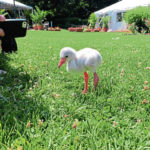
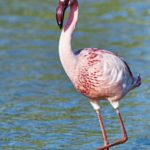
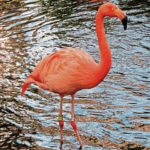
Knowing how to hand-raise flamingos comes in handy when there are 1,800-plus orphaned flamingo chicks of a near-threatened species in South Africa.
A severe drought in late January at Kamfers Dam in the Northern Cape, Cape Town, South Africa, caused one of only three breeding colonies of flamingos to abandon thousands of their chicks, according to Reuters.
It was largest flamingo chick rescue ever, and helping was Teri Grendzinski of Ross Township, supervisor of animal collections at the National Aviary in Pittsburgh.
When word of the rescue efforts reached the aviary, it stepped in and sent Grendzinski to South Africa for 10 days earlier this month.
“It’s overwhelming, exciting, frustrating, fulfilling and a lot of things that my brain hasn’t wrapped around quite yet,” she said Friday, back in Pittsburgh.
Grendzinski is, among other things, an expert in hand-rearing flamingo chicks, as the aviary has a flock.
The South African wildlife organizations recognized the impact of the loss and coordinated rescue efforts, divvying up the chicks to various wildlife rescue centers throughout South Africa, including Sanccob wildlife rescue center in Cape Town South.
“If all these chicks died, that would be devastating to the population,” said Dr. Pilar Fish, director of veterinary medicine at the National Aviary.
National Aviary personnel have been visiting Sanccob for years in partnership for conservation programs such as one for the African penguin, which is critically endangered, and not so coincidentally, the penguin species at the National Aviary, according to Dr. Fish.
There was much to do in South Africa.
Teams of staff, interns and volunteers have been feeding 300 chicks a smoothie of hard boiled egg yolks, prawns, shrimp, fish, baby cereal and vitamins.
There are teams just to make the food, fill 400 syringes for each feeding, and then clean those syringes and do it all again — four times a day.
Then there was making plans for those fast-growing chicks to have ample opportunity to walk to develop those strong lean and long legs.
The experience was gratifying for Grendzinski as it was part of the Aviary’s conservation mission.
“My being there along with other people with expertise in rearing those birds gave them a possible chance of survival,” she said.