
Two Pittsburgh scientists are trying to keep emergency medicine a step ahead in what’s become an opioid arms race.
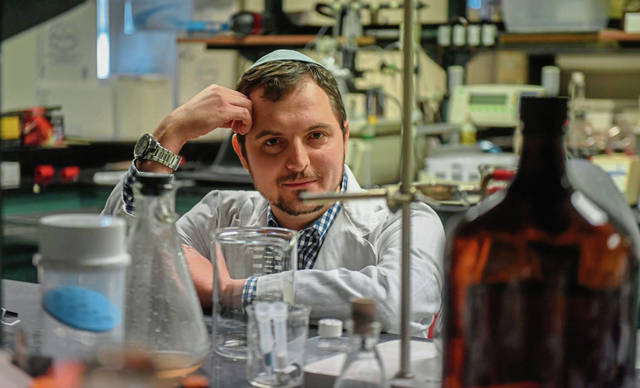
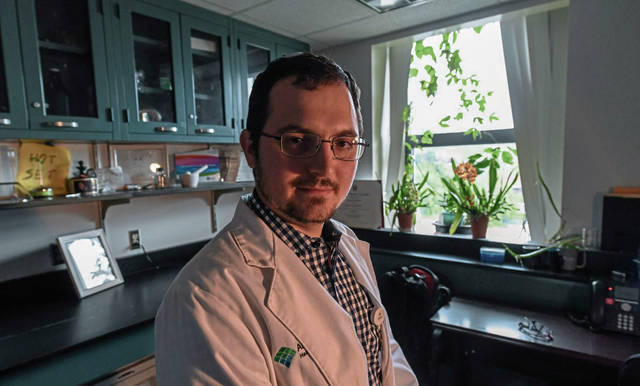
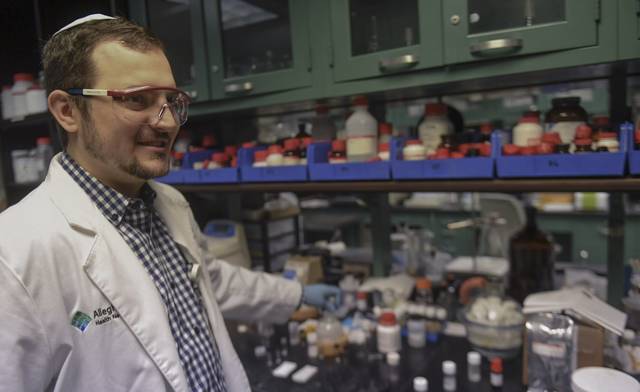
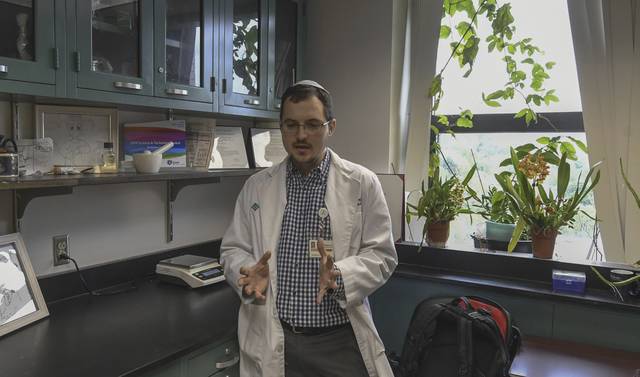
Saadyah Averick, a chemist at the Allegheny Health Network’s Research Institute, and his colleague, Benedict Kolber, a neurobiologist at Duquesne University, are working to develop a type of naloxone that will stay active in an overdose victim’s body for up to two days — far longer than the 45 minutes the drug works in a person’s body now.
Naloxone is the anti-overdose drug more commonly known as Narcan that is used to reverse the effects of opioids such as heroin.
Narcan has been extremely effective in helping to reduce the number of overdose deaths, but synthetic opioids such as fentanyl are forcing doctors and first responders to use multiple doses of Narcan because the synthetics are much more powerful than heroin.
The drug works by turning off receptors in the brain that are activated by opioids. But, said Kolber, Narcan usually is flushed from a person’s body in less than an hour.
Fentanyl, being so much more potent, can outlast traditional Narcan in a patient’s body, making repeated doses of Narcan necessary to prevent an overdose.
“There can be multiple highs because the drugs are so potent and outlast Narcan,” Averick said.
An extended-release Narcan appears to more effectively contend with fentanyl.
“We’re trying to make Narcan longer-acting and, therefore, limit doses to someone who does overdose to avoid overdosing again from drugs that might still be in their system and avoid the constant need for monitoring and more intervention,” Averick said.
Averick and his colleagues are formulating the rescue medicine inside a minute particle, called a nanoparticle, to slowly release Narcan. A slower, consistent release of the medicine doesn’t shock the patient into withdrawal, he said.
“What we wanted to do is make that drug longer-acting because naloxone itself is destroyed, degraded by our livers relatively quickly, and then it’s eliminated,” he said.
When Narcan is dumped into a body soon after an overdose, an addict is often jolted awake. People often wake up in a lot of pain. Eventually, that can prevent them from wanting to go into rehab because of the negative association with taking them off drugs, Averick said.
“By putting it into a nanoparticle, it will allow for the drug to be trapped but then slowly released as the particle degrades over time,” he said.
The nanoparticle is the same material as a dissoluble stitch, Averick said. That substance has already been approved for use by the Food and Drug Administration.
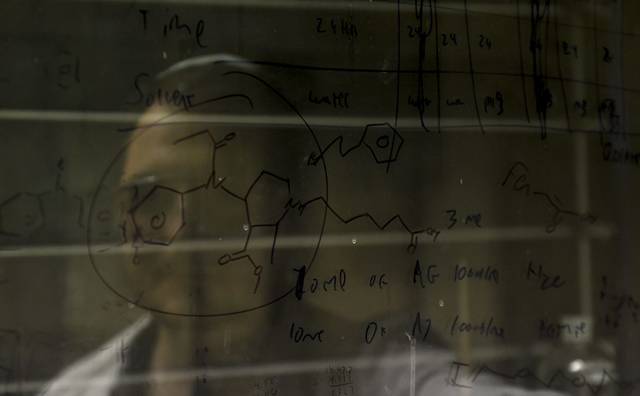
“We have managed to incorporate the naloxone into that material … effectively chemically stapling it to the end of the polymer,” Averick said.
The product will need approval from federal regulators before it can be used on humans. It is not known when the longer-lasting Narcan could be available.
Kolber said the Pittsburgh research is progressing.
“We’re solidly in the middle (of the project) and we’re finding out, yes, it does work,” Kolber said.
“I am aware of the Averick study,” said Dr. Ivan Montoya, who directs a division of the National Institute of Drug Abuse. Montoya said research is encouraged by numerous programs, including one authorized in 2018.
“There are multiple studies under way since money was allocated from Congress in the HEAL program,” he said.
HEAL stands for Helping to End Addiction Long-Term. Among other things, HEAL seeks at least five therapies or medicines annually to send to the FDA for approval to fight addiction or to find better painkillers less likely to lead to addiction, he said.
In the meantime, the Pennsylvania Department of Health will continue to distribute standard Narcan kits throughout the state.
In December, the department handed out 6,000 Narcan kits, said Raphael Barishansky, deputy secretary of health preparedness and community protection.
This year, the department hopes to distribute about 10,000 kits at more than 90 locations during a special event Sept. 25, Barishansky said. He agrees that more Narcan doses may be needed to deal with fentanyl.
Barishansky said the department just learned about the Narcan research under way in Pittsburgh.
“We’re looking forward to the results,” he said.