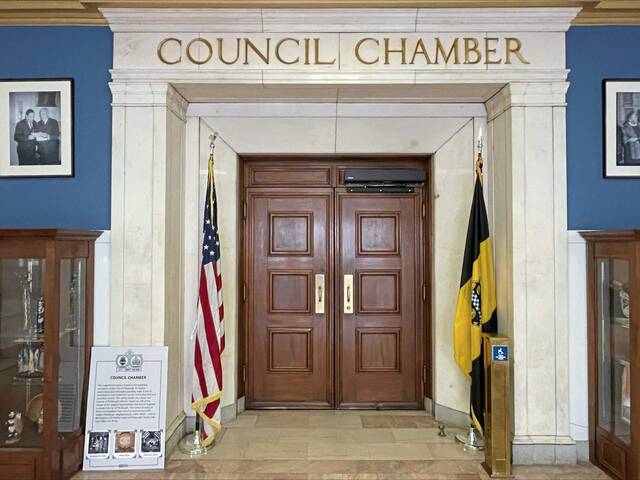

Pittsburgh Councilwoman Barb Warwick dropped a budget bombshell on Monday, proposing a 30% property tax hike to balance what she and her peers see as a disastrous final spending plan by the outgoing mayor.
A tax increase of that magnitude is only path to forward without axing services, Warwick said.
“This is something no elected official wants to do, but it is the responsible thing to do,” Warwick, D-Greenfield, said Monday. “Times are tough for everyone right now, but after 11 years without a tax increase, the city needs additional revenue in order to keep providing the core services that our residents deserve and depend on.”
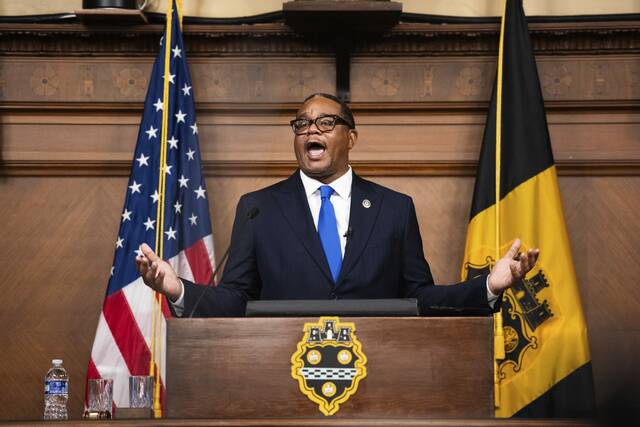
Warwick and her colleagues believe Pittsburgh is in a dire budget crisis, and Mayor Ed Gainey’s budget proposal represents an infeasible path forward.
Gainey did not include a tax hike in the final spending plan of his tenure — but council members complain his budget is unrealistic because it doesn’t account for all of the city’s expenses.
Pittsburgh Controller Rachael Heisler laced into the Gainey administration and council.
“The problems that City Council is dealing with right now did not come out of the blue and did not need to wait until the eleventh hour,” Heisler said. “We have been warning City Council and the Gainey administration about this for nearly two years.”
Heisler warned the current crisis comes on the verge of the city hosting the 2026 NFL Draft in April.
“Now we find ourselves short of revenue just as we head into the most expensive year the city’s ever had with expenses due that don’t even appear in the current budget — both basic things, like our water bill, and unknown costs, like overtime for the 2026 NFL Draft,” Heisler said.
Officials have said they will need to pump up revenues or slash costs — or both — to keep the city afloat next year.
Not all council members support Warwick’s suggested tax hike, which she plans to introduce formally on Tuesday.
Some believe the city should rein in spending before asking taxpayers for more help.
“For a council member to do the back-of-a-napkin calculations and just stick it to homeowners is not the course I think we should be going down,” Councilman Bobby Wilson, D-North Side, said.
Wilson added he’d rather see the Gainey administration come back to council with a more plausible spending plan that involves spending cuts before officials contemplate a tax bump.
Olga George, a Gainey spokeswoman, defended the mayor’s spending plan as “a balanced budget that maintains current tax levels, preserves jobs, and protects core services.”
Warwick’s measure would raise the millage rate to 10.48 from 8.06. A mill represents $1 in taxes for each $1,000 of property value.
The tax hike would generate an estimated $41 million more for the city each year, Warwick said.
A resident whose home is assessed at $100,000 would pay an additional $20.17 a month, Warwick said, or a bit over $242 per year.
Currently, a Pittsburgher living in a home of that value pays about $806 in city real estate taxes annually.
“For years council has had conversations about long-term budget concerns without taking any action to rectify the problem,” Warwick said. “And with our large nonprofits refusing to step up and pay their fair share, we simply can’t put it off any longer.”
‘A lot of fat’
Councilman Anthony Coghill, D-Beechview, said he can’t support a tax hike.
He’s focused instead on finding areas where the city can cut spending. That includes an effort to claw back a portion of the $6 million the city allocated for a controversial comprehensive plan.
“I don’t feel like we’ve earned the right to raise taxes at this point,” Coghill said. “We’re in this position because council, as well as this administration, have made bad decisions in the last four years. And that’s why we’re here.”
He pointed to spending on things like the comprehensive plan and a costly bond to support affordable housing initiatives as examples where officials should have curbed spending.
Coghill would prefer to rely on spending cuts, including possible reductions to the workforce.
“There’s a lot of fat to trim there,” he said.
Councilwoman Theresa Kail-Smith, D-West End, echoed Coghill’s sentiment, calling for “freezes or cutbacks” rather than a tax hike.
“I think that Councilwoman Warwick is doing what she thinks is best, and I’m going to do what I think is best, and I will not vote for a tax increase,” said Kail-Smith, who is stepping down in early January. “I think we need to be good stewards of the public’s dollars.”
Councilwoman Erika Strassburger, D-Squirrel Hill, who chairs council’s finance committee, favors a tax-and-cut approach.
Strassburger acknowledged a tax increase will be unpopular with residents, particularly as costs rise and Pittsburgh Public Schools contemplates its own hike next year.
Allegheny County raised its millage rate this year by 36% but avoided another increase in its 2026 budget.
“I do think that property tax increases have to continue to be on the table,” Strassburger said. “The exact rate we end up agreeing on is still unknown.”
Warwick’s math
Warwick said her proposal would fill a gaping hole in the budget and leave enough “wiggle room” to improve areas where she believes the city now comes up short, like cleaning litter and tearing down blighted buildings.
Her math is based on calculations by Council Budget Director Peter McDevitt that he said show a $20 million-plus deficit in Gainey’s plan.
Warwick tacked on an additional $10 million for investments in the city’s decrepit vehicle fleet. She’s also looking to ensure there’s enough cash to pay utility bills, cover overtime costs for first responders and keep a variety of programs — from swimming pools to senior centers — afloat.
“I recognize that this is frustrating,” Warwick said. “Costs are going up across the board. We’re seeing it at the county, at the school district, everywhere. But the reality is, in order for us to continue to deliver the quality of service that we do, we have got to increase revenue.”
Warwick said the other way to increase revenues would be for the city’s major nonprofits — including health networks and universities — to provide payments in lieu of taxes.
But she acknowledged the city has long struggled to strike such a deal, and officials can’t rely on the possibility that such an agreement will come to fruition.
The councilwoman said she’d like to see the city implement small, annual property tax hikes. Such a move, she said, would eliminate the need for more drastic increases like the one she’s proposing now, after officials haven’t raised millage rates in a decade despite financial pressures in recent years.
“What ends up happening is you get deeper and deeper in a hole, and you find yourself having to do a significant increase that really shocks everyone,” Warwick said.
Council President R. Daniel Lavelle said he does not believe there’s a path to approving the 2026 budget without some level of tax hike.
“I don’t see how we can cut our way out of this,” he told TribLive.
But Lavelle also wants to look at cost-cutting, such as pausing next year an annual $10 million allocation to the Stop the Violence Fund. Its programs would be paid for by money already in the fund.
Lavelle also is asking department directors to suggest where to shave 5% from their budgets. The goal, he said, is to look for trims that are not “council coming in with a hacksaw.”
Will of council
Strassburger said the responsibility falls to council to pass a spending plan that accounts for all of the city’s costs and includes a reserve fund robust enough to absorb unexpected expenses.
She reiterated concerns Monday that the budget Gainey introduced does not realistically account for overtime pay, utility bills or potential refunds for the facility usage fee, a tax on out-of-town professional performers and athletes that the Pennsylvania Supreme Court recently ruled was unconstitutional.
Strassburger on Tuesday plans to introduce a “will of council” that asks the Gainey administration to help amend its spending plan.
The draft document — essentially a position statement — says Gainey’s budget makes “problematic assumptions” leading to shortfalls and “does not represent a spending plan that adequately serves the needs of Pittsburgh residents.”
“While we recognize it’s council’s responsibility to amend and pass a budget — we have the power of the purse strings, certainly — we wanted to, at the very least, in a formal way, give the mayor and his team the opportunity to respond to some of our concerns,” Strassburger said.
George said the Gainey administration remains open to discussing the budget with council.
“It is unclear to us the intent or need for a ‘will of council,’ when we have consistently communicated to council leadership over several months a willingness to review and discuss any questions or concerns that council may have as a body about the budget and have yet to receive anything from them,” George said in a statement.
Strassburger in a November letter to council members and top budget officials within the Gainey administration raised a litany of concerns.
Councilman Bob Charland, D-South Side, said council members are contemplating their own amendments to the budget, even as they ask the Gainey administration to take another crack at reworking its proposal.
He said council members want “to give them an opportunity to correct their mistakes and correct the errors that they’ve made.”
A separate will of council — which Council President R. Daniel Lavelle is set to introduce Tuesday — urges Allegheny County to launch a countywide property reassessment, calling it a “foundational step toward a fairer tax system, stable municipal finances, and long-term community development.”
Abigail Gardner, a county spokeswoman, said reassessments are meant to be “revenue-neutral for local governments. … Additional revenue can only be generated for Pittsburgh by raising taxes.”
A public hearing on the proposed tax increase is scheduled for Dec. 22. Council must approve a budget by the end of the year.