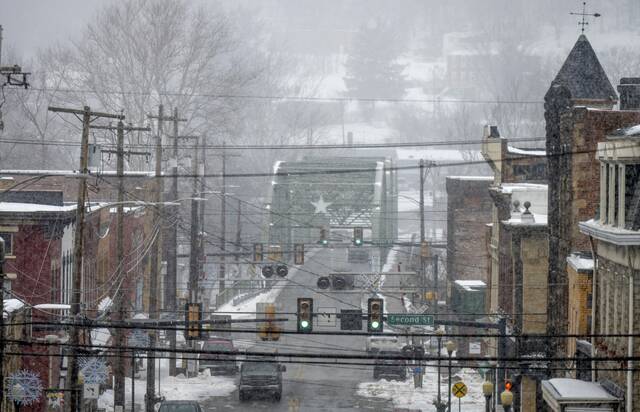
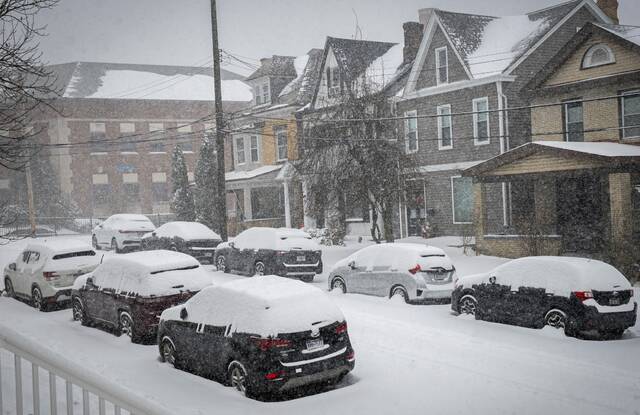

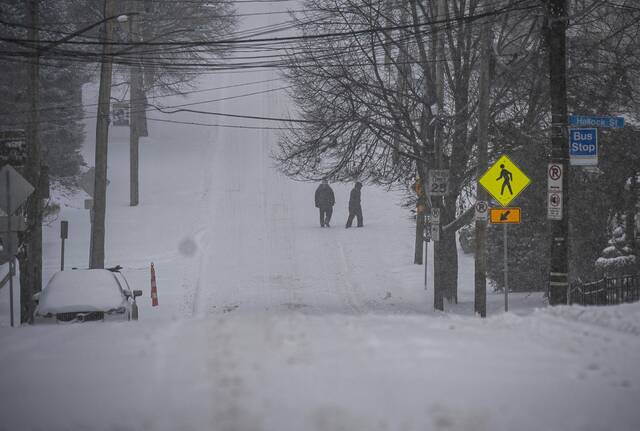

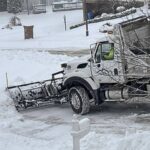
Pittsburgh Mayor Corey O’Connor on Monday declared a state of emergency as the city struggled to clear its streets of roughly a foot of snow with dozens of snowplows out of commission.
Allegheny County Executive Sara Innamorato followed suit several hours later, issuing her own disaster declaration.
The declarations allow the city and county to slash red tape, bypassing normal procedures to bring on additional snow removal crews.
Outside crews will help Pittsburgh treat roads that remain blanketed in a thick layer of snow after a massive snowstorm Sunday dropped up to 14 inches or more in parts of the county.
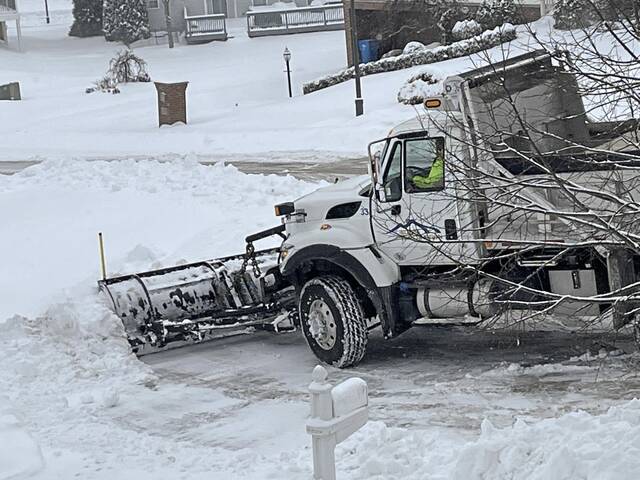
O’Connor said 50 vehicles from outside contractors will be plowing and hauling snow Monday and overnight into Tuesday. They will join 35 city vehicles that also will operate overnight.
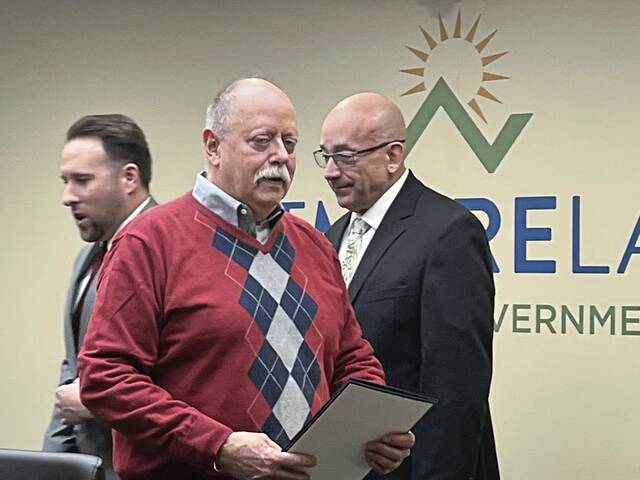
“Safety’s a priority,” O’Connor said during a press conference Downtown from the City-County Building. “That’s the reason we’re doing this. This is about the safety of the residents of the city of Pittsburgh.”
O’Connor said the city’s crews were working around-the-clock and “doing their very best” — but when 37 trucks broke down overnight, officials had no choice but to call in reinforcements.
“We were doing a very good job until we lost a lot of our equipment,” he said.
Last night, we had 37 trucks break down. They’re at the garage & we have 50 out - that’s not enough. I want to get the job done after the biggest single day snowfall since 1994.
— Corey O'Connor (@CoreyOConnorPA) January 26, 2026
I’m declaring a State of Emergency. This lets us to skip red tape & hire contractors to support DPW. pic.twitter.com/OYsouCMtMX
The city started the storm with 95 plows and salt trucks on hand, the mayor said. The city’s maintenance garage is staying open 24 hours a day to work on getting the trucks that are currently out of service back on the roads.
Molly Onufer, a spokeswoman for the mayor, said trucks suffered “general wear and tear” and needed plow blades to be replaced after 36 hours on the road.
City officials have frequently raised concerns about the state of the aging vehicle fleet, which is prone to breakdowns that often require costly repairs.
In addition to plowing roads, the outside contractors the mayor is calling on will also haul snow out of neighborhoods and business districts.
The focus Monday night, O’Connor said, will be clearing roads through business districts and plowing secondary streets. He urged people to avoid parking in business districts if possible to allow crews to clear wider paths through those roads.
Onufer said the city will be hiring from a list of prequalified businesses. They will bring plows and additional equipment, like front loaders, bobcats and skid steerers, she said.
“We understand streets haven’t been touched, and we’re getting to them,” O’Connor said. “But we just ask everyone to be patient.”
O’Connor said he could offer “no time frame” for when all roads would be passable.
The mayor Monday afternoon urged people to be “very cautious over the next couple of days.”
Plow problems
Councilwoman Barb Warwick, D-Greenfield, said the number of plows out of service illustrates the need for better investments in the city’s decrepit fleet.
Warwick last year pushed for a tax hike to ensure there was adequate money for new vehicles, and she is now proposing legislation that would mandate the city invest at least $20 million each year in upgrading vehicles like ambulances, firetrucks and plows.
“It really underscores yet again that, as a city, we need to take the bull by the horns and start adequately investing in our deteriorating fleet,” Warwick told TribLive.
She pointed out the city had similar struggles when a smaller snowfall struck the area in December. Some residents complained it took days for a plow to reach them. Others didn’t see their road conditions improve until the snow naturally melted on the next warm day.
Warwick on Monday urged people to do their part by clearing sidewalks.
Councilman Anthony Coghill, D-Beechview, said some of the primary roads in the neighborhoods he represents were cleared already — but he was heading out Monday morning in his four-wheel-drive pickup to help some neighbors shovel.
The snow is “very, very deep,” he said, which likely contributed to the amount of trucks that have broken down.
“It’s so heavy and, as we all know, the fleet’s not in the best of shape,” Coghill said. “Thirty-something is a little staggering. But I’m not surprised. Trucks go down in this kind of environment when they’re plowing this heavy snow around and working around the clock.”
Coghill said he’s hopeful that some trucks will be “back and running” soon, though he acknowledged it will be a longer-term effort to replace aging vehicles so the fleet is in better condition when future storms strike.
“Let’s just hope we don’t get another big snowfall,” he said. “Hopefully we get a reprieve for a little bit to get some vehicles fixed.”
The city pushed back garbage pickup by two days this week.
Allegheny County impact
There have been 32 disaster declarations covering 35 municipalities, according to Kasey Reigner, a public information officer for the county.
Emergency Services Chief Matthew Brown said such emergency declarations were spurred by salt shortages, staffing struggles or plowing problems.
The county on Monday afternoon issued its own emergency declaration. Allegheny County Executive Sara Innamorato said that will enable to county to immediately deploy all available resources, hire temporary workers, rent equipment and purchase supplies.
The low temperatures, heavy snow and icy roads, Innamorato said in her emergency declaration, “pose a serious threat to the health, safety and welfare of residents and may challenge local and county emergency response capabilities.”
Brown reported “no major surges of 911 calls” during the storm.
“It appears most people are heeding the warning of staying off the roads, staying home,” he told reporters during a virtual press briefing Monday morning.
The county has deployed 26 plows to remove snow from 357 miles of county-maintained roads, Public Works Director Stephen Shanley said. No major crashes were reported on county roads, he said.
Brown urged people to continue to avoid driving if possible. Brown also encouraged people to check on neighbors and be cognizant of the weather when shoveling snow in frigid temperatures. Exposed skin could be susceptible to frostbite in less than 30 minutes, he cautioned.
Suburban impact
Bridgeville offices were open Monday “to address residents’ concerns,” said borough Manager Joe Kauer.
“We will be compiling a list of issues to address as conditions allow,” Kauer said. “Please understand that while we will do the best we can, it is also necessary to allow our crews time to rest and recover following this extended and demanding event.”
As of 11:30 a.m. Monday, a “significant amount of snow” was blocking sidewalks, parking lanes, driveways and mailboxes, Kauer said.
“Road conditions are still not ideal,” he said. “Due to the volume of snow received in such a short period of time, crews had limited options for snow placement.”
Public works crews clocked in at 2 a.m. Sunday and were still working Monday morning to clear roads, Kauer said. He thanked residents who stayed home on Sunday.
“Minimal traffic on the roadways allowed public works crews and emergency responders to operate more safely and effectively,” Kauer said.
Harrison police Chief Brian Turack said his department is frequently called to Burtner Road for motorist assists and hazardous condition calls during serious weather events.
“Burtner Road has always been a challenge,” he said. “Officers make a determination as to whether or not a roadway should be shut down in the interest of public safety. These decisions are made to prevent vehicles from becoming disabled and to reduce the risk of injury to motorists.”
Volunteer fire departments help put up barricades Sunday.
Delmont Public Works Chief Bill Heaps said all of the municipality’s roads were open as of Monday morning.
“It’s a matter of getting some salt on them and then we’ll be in pretty good shape,” he said.
TribLive staff writers Rich Cholodofsky, James Engel, Tawnya Panizzi, Kellen Stepler and Patrick Varine contributed to this report.