
Residents of Plum and Monroeville received notice in March that the Municipal Authority of Westmoreland County (MAWC) violated a treatment technique.
The communities purchase drinking water from MAWC.
“As our customers, you have a right to know what happened, what you should do and what they are doing to correct this situation,” according to the initial notice sent from MAWC that community officials then sent to residents in those communities.
The notice said the violation was not an emergency, and there were no health effects associated with it.
Communities in Westmoreland, Fayette and Armstrong counties are also MAWC customers.
Matthew Junker, a MAWC spokesman, said a “non-specific indicator of water quality” was below federal and state mandates for Total Organic Carbon (TOC) removal, which is set at a ratio of 1.0.
The TOC test is used to remove disinfectant byproducts caused by treating the water with chlorine and other disinfectants.
“Disinfection byproducts are the formation of regulated compounds due to the interaction of the disinfectant (primarily chlorine) and organic materials (TOC),” said Junker in an email.
If those byproducts, such as trihalomethanes and haloacetic acids, are found in excess in drinking water, it can result in liver and kidney problems, nervous system effects and increased risks of getting cancer, said the notice.
Junker said the violation occurred because of the amount of rain the region received throughout 2018.
Western Pennsylvania set a record for the most rainfall ever with 57.53 inches, with more than four inches falling in December, according to the National Weather Service in Moon Township.
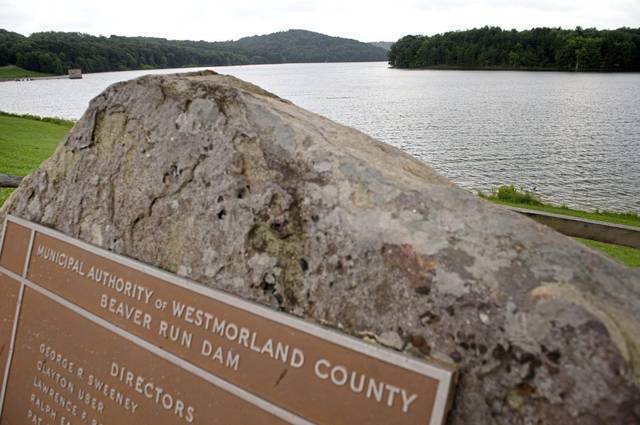
Junker said the violation had nothing to do with fracking that MAWC allows on the Beaver Run Reservoir, which provides drinking water for 130,000 customers in northern Westmoreland County.
Fracking is a technique used to extract oil and gas from rock by injecting high-pressure mixtures of water, sand or gravel and chemicals.
Environmental groups have called for the end of all well drilling and fracking near the water source. The groups have also called for more testing at the reservoir for possible pollutants from shale gas drilling and production.
Junker said there are tests for 179 compounds and indicators – and they all reflect “normal background levels.”
“This issue is due to last year’s excessive rain events,” Junker said.