
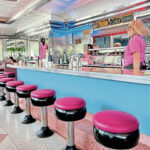
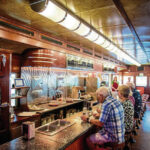
The sizzle of frying potatoes and the scent of fresh coffee and grease. Gleaming chrome fixtures and brightly colored booths. Oldies playing softly in the background. Servers dropping off heaping plates of steaming comfort food.
Welcome to the Western Pennsylvania diner.
Diners peaked in popularity in the mid-20th century, when more than 5,000 of these casual eateries populated the United States.
Rooted in the Industrial Revolution — their history dates to the 1870s in Rhode Island — and shaped by railroads and factory workers, diners once dotted Western Pennsylvania as affordable, 24-hour gathering places for workers and families alike. Though their numbers have dwindled as costs rose and trends shifted, a handful of classic diners continue to preserve the region’s blue-collar culinary heritage.
Brian Butko, director of publications at Heinz History Center, literally wrote the book on “Diners of Pennsylvania.”
“Diners started in New England when the Industrial Revolution brought mills to towns that were spitting out workers at all hours of the day and night,” Butko said.
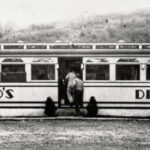
The “diners” of that day were more like wheeled lunch carts that would serve blue-collar workers a bite to eat, even if they were working the night shift and no other option was open.
“As they grew bigger and more popular, towns wanted to regulate them, and so they would settle down onto a corner. A lot of early diners, if you pull back the surrounding decoration, you’d still find the wheels underneath it,” Butko said.
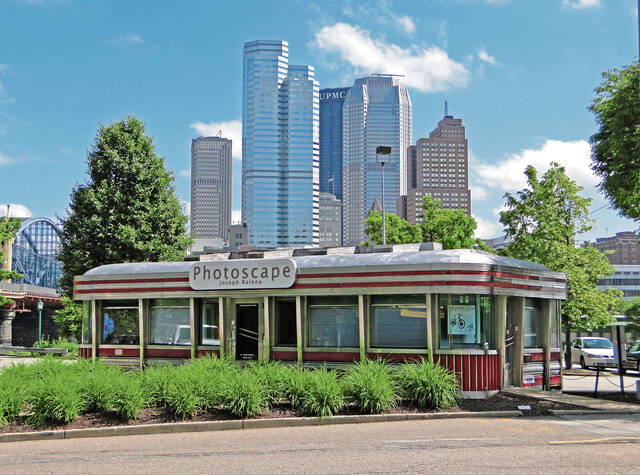
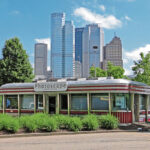
For almost a century, diners maintained the streamlined look of a railway car. They were shipped — often in a couple of pieces — on train flatbeds, so keeping the “railway” look remained prevalent into the 1950s.
Butko said diners would commonly serve items such as hot dogs, hamburgers and sandwiches for 5 or 10 cents apiece, along with other short-order foods that could be thrown on a grill behind their small counters.
While Western Pennsylvania doesn’t have as strong a diner tradition as the eastern half of the state, there was a time when breakfast and lunch were ubiquitous.
“Even Downtown and in the surrounding area, there were probably a good 20 diners at one time. And then (they) just slowly faded away,” Butko said.
Eventually, diners became off-trend and seen as greasy, unhealthy, cheap and “for old people,” Butko said. “In the ’80s, diners … started adding salad bars to try and be healthy, but the reputation was already there.”
There was a momentary diner nostalgia revival in the 1990s, with plenty of exaggerated decoration, stainless steel and glass block, but it didn’t last.
“That was intentional to say, ‘Hey, we’re a diner and you know what to expect, but we’re not that greasy, old-fashioned diner. We’re new and clean and have trendy foods,” Butko said.
Nowadays, he said, businesses would require huge numbers of seats and customers to balance out the cost of running a diner.
“A big diner can be really successful and make lots of money, but someone like you or me, in 1950, we could buy one and set it up, and now we can barely afford the meals.”
While late-night eating and old-school diners aren’t as common as they once were, there are still some holdouts — in one form or another — in Southwestern Pennsylvania. Here are a few.
Serro’s Diner
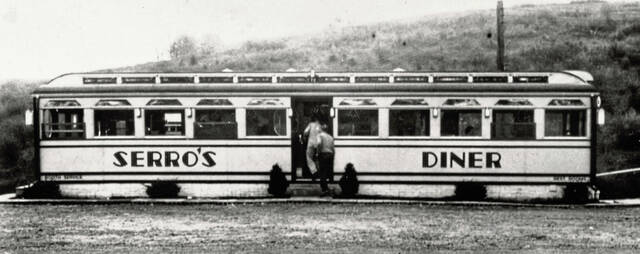
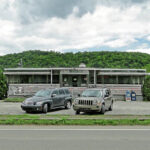
For a full portion of history — with a slice of pie for dessert — head to the Lincoln Highway Experience Museum in Latrobe to see Serro’s Diner.
The diner was founded in 1938 and is now a permanent exhibit at the museum. According to Spencer Simpson, manager of visitor services for the Lincoln Highway Heritage Corridor, the diner was built in Elizabeth, N.J., and purchased brand new by the Serro brothers.
“After it completed the fabrication stage, it moved across the state to its home in Irwin. It operated there under the Serro brothers’ ownership from 1938 to 1958,” Simpson said.
The diner has changed hands several times since. The Serros sold it in 1958 to buy a bigger space, and it was purchased by the Rolka family and moved to Willow Crossing in Hempfield, where it operated until 1992. It was donated to the Western Pennsylvania Historical Society and, eventually, the Lincoln Highway Heritage Corridor in 2003. There it sat in storage — and underwent a thorough restoration — before becoming part of the museum in 2018.
“It was only meant to last 30 years, and it’s lasted 85 at this point,” Simpson said.
Restoring the diner involved raising funds, hiring historical consultants and a delicate hand. Originally, they’d hoped to restore it to a full-service diner, but modern health codes and 1938 specs clashed in the process. Instead, visitors receive a slice of pie and a cup of coffee with the cost of admission to the Lincoln Highway Experience.
Dolly’s Diner
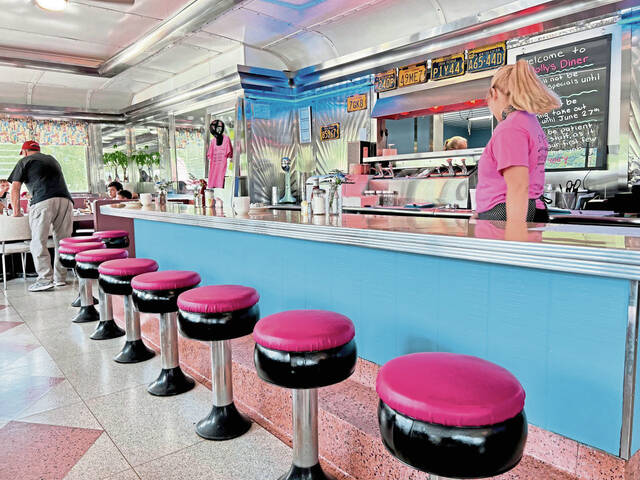
It hasn’t always gone by the same name, but Dolly’s Diner has been kicking around Western Pennsylvania since 1955.
Arlene “Dolly” McCoy and her daughter, Toni Stefanik, reopened Dolly’s Diner 31⁄2 years ago in a new North Apollo location. Like Serro’s, the diner was built by the Jerry O’Mahony Diner Co. in New Jersey and brought to Western Pennsylvania in two pieces.
“It went from New Jersey, where it was built, to New York City for a restaurant and hotel exposition, then back to New Jersey, then someone from Monroeville bought it,” McCoy said.
It was the Gateway Diner in Monroeville until it closed in 1978, when it was moved to Washington Township and eventually opened as a video store. In 1994, it was moved to Apollo and reopened as the Yakkity Yak Diner, then renamed the Yak Diner, and subsequently closed in 2021. That’s when McCoy and her daughter bought the diner and moved it just up the road to reopen as Dolly’s Diner.
“It’s not 100% original because, of course, it was a video store for a while. But we’re trying to keep it as authentic as we can,” McCoy said.
They kept the food traditional, too, with diner staples such as all-day breakfast, burgers, hot dogs, sandwiches, blue plate specials, milkshakes and — of course — homemade pies and cakes for dessert. The chili is homemade by Stefanik, and the homemade meatloaf “sammich” boasts meatloaf between two slices of white bread, either french fries or mashed potatoes and smothered with gravy — quintessential diner fare.
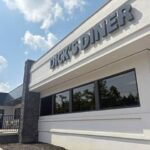
Dick’s Diner
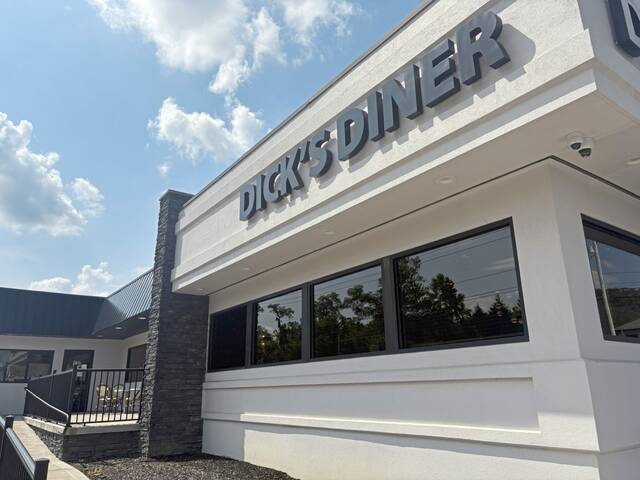
The Murrysville institution has been operating since 1946, another example of the New Jersey “railway car”-style diner — but with some structure added on for extra space.
“The original owners added two additional rooms,” said Erik Retzer, current general manager. “The restaurant has tripled in size. They built up around the original diner.”
In May 2023, Dick’s Diner was purchased by Jim Fox III, of the Fox’s Pizza chain, and it has stayed operational with its traditional diner menu — and its original name, which came from founder Richard Snyder.
“They made sure that when it was sold, everybody knew it was Dick’s Diner. He didn’t want to call it Jimmy’s Place or anything,” Retzer said.
The only dishes that may look unfamiliar to longtime patrons are breakfast foods, including biscuits and gravy and waffles.
“A lot of people were asking about waffles,” Retzer said.
While Dick’s Diner has retained much of its older customer base — locals who have come out for breakfast or lunch for decades — it’s also taken steps to appeal to the next generation. For example, you can now find them on delivery apps such as DoorDash and Uber Eats.
Clearly, the new owner’s efforts to update this classic eatery are working. This summer, Dick’s Diner was featured by media and marketing company America’s Best Restaurants as part of their “ABR Roadshow” web series.
Retzer’s personal favorite thing to eat at Dick’s is the hot turkey platter: turkey with gravy, homemade stuffing and mashed potatoes, served with soup or a salad.
“It’s like Thanksgiving all year round,” he said.
Johnny’s Diner
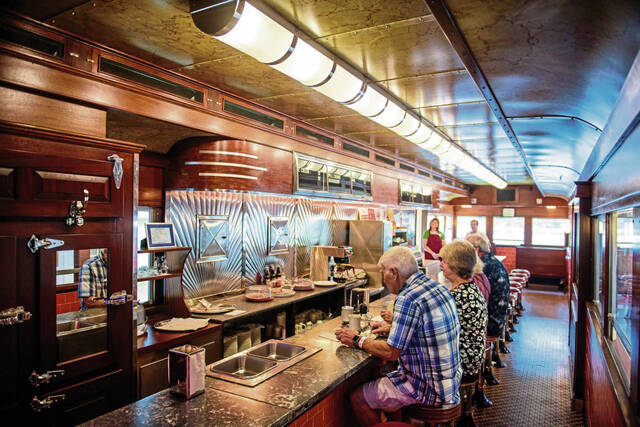
Considered Pittsburgh’s oldest diner, Johnny’s is situated in Pittsburgh’s West End and has been there since it was moved there in 1954. Another rail-car diner that likely dates to the 1920s, Johnny’s has been known by many names: Eve’s, Bell’s, Marie’s and more. Before the current owners, Kathy Elliott and her husband, bought it 16 years ago, it had been Pip’s since 1988 and Irene’s before that.
According to Elliott, the diner was built up and remodeled over the years from its original Tierney prefabricated design.
“The original is there, the counter and everything is still there,” she said.
For Elliott, purchasing Johnny’s was a family affair.
“My daughter worked here for the longest time. … We knew the owner, and my sister-in-law worked here, my brother-in-law worked here. It was in the family for a long time,” she said. “The price came to where we wanted to buy it. My daughter’s not here anymore, but my granddaughter, my daughter-in-law and her aunt’s here. It’s all family. We work as a family.”
Elliott is happy to keep to the “greasy spoon” fare that made diners so prevalent.
“I don’t add all that fancy stuff. Every once in a while on a weekend, I’ll have a waffle with strawberries or whatever, but we’re mainly homemade soups, homemade lunches and breakfast.”
She also sources many ingredients from local small businesses. Johnny’s keeps things interesting by offering daily specials. Her regulars show up early and often, and the diner even attracts plenty of out-of-towners.
“I open up at 7 a.m. Guys come through the back door, and they sit at their seats until seven o’clock. They’re all regulars,” Elliott said.
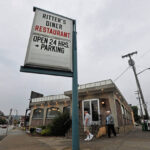
Ritter’s Diner
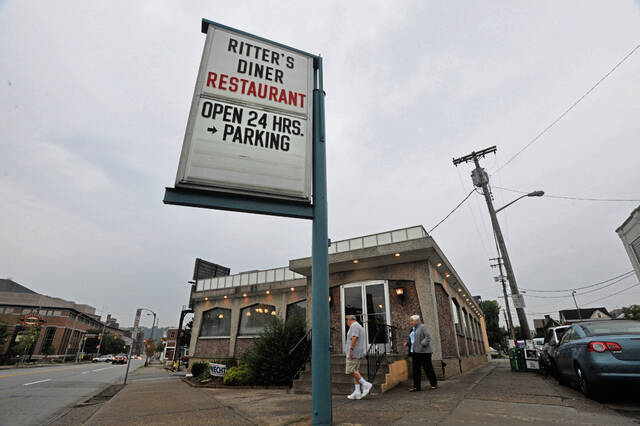
Ritter’s Diner opened in 1951 in Bloomfield, but its original building was moved to Station Square for storage, where it remained until it traveled to sit next to the Lamp Theatre in Irwin in 2017. The Velisaris family acquired the diner in 1966, and Ritter’s moved to its current location across the street in Bloomfield in 1975, a three-piece rail car building made by Fodero in New Jersey. The family added on another room in 1983 to accommodate their bustling business.
For decades, the family has served up diner classics, Greek food and pure comfort to families, college students late at night and even celebrities.
Part-owner John Velisaris has worked in the diner full-time since 1999, but like many of his other family members, his history with the business goes back much further.
“I basically started when I was 14, 15 years old,” he said.
While they still dish up the classics such as meatloaf and hot roast beef, Ritter’s has evolved over time.
“Sixty percent of our business is breakfast items,” Velisaris noted, adding that they’ve become more burger- and omelet-focused in recent years. “It’s changed, but that’s nature. That’s how it goes.”
While Ritter’s isn’t open 24 hours anymore, you can still get a taste seven days a week from 7 a.m. to 8 p.m.
And plenty of people do.
“We have folks that eat all their meals here,” Velisaris said. “The folks that sit at the counter, they all know each other.”