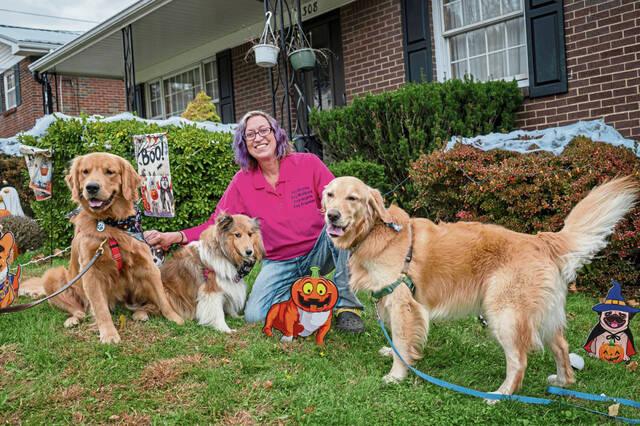

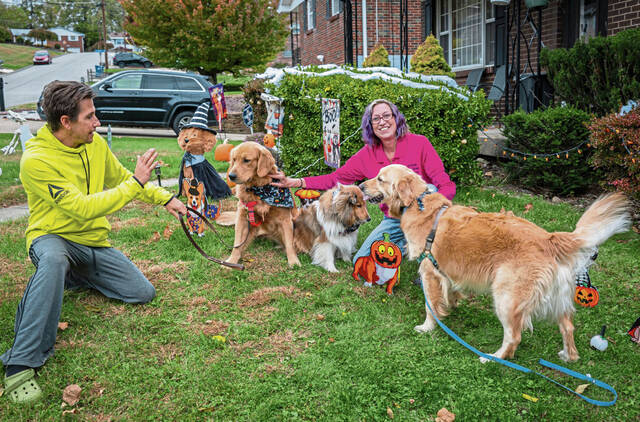

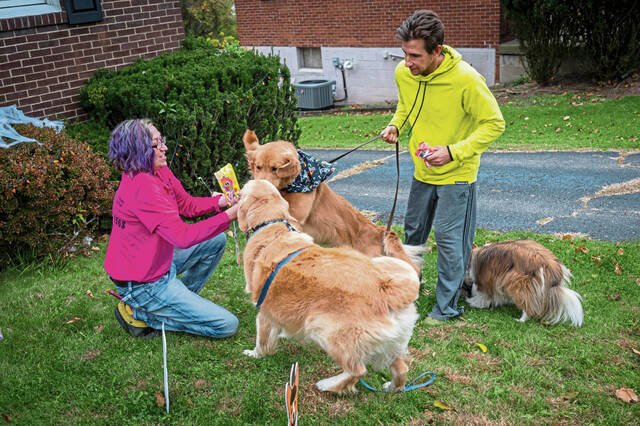
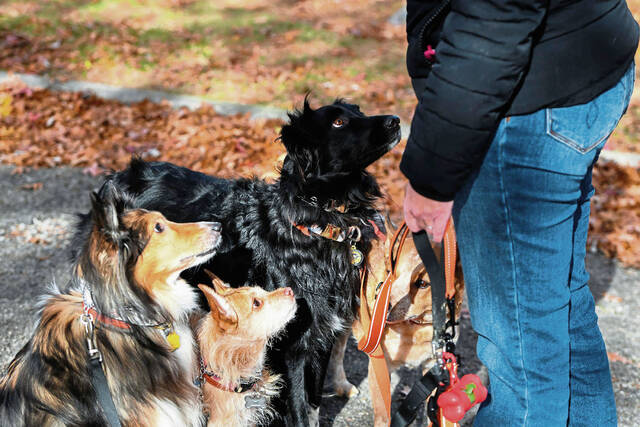
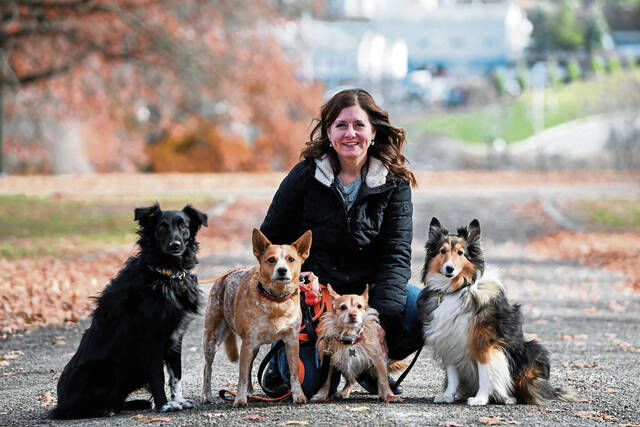
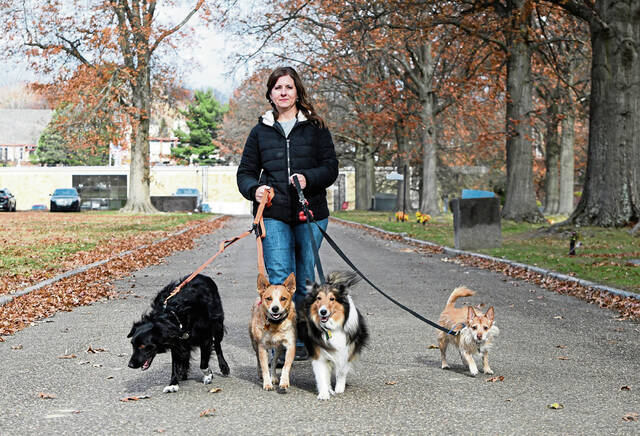
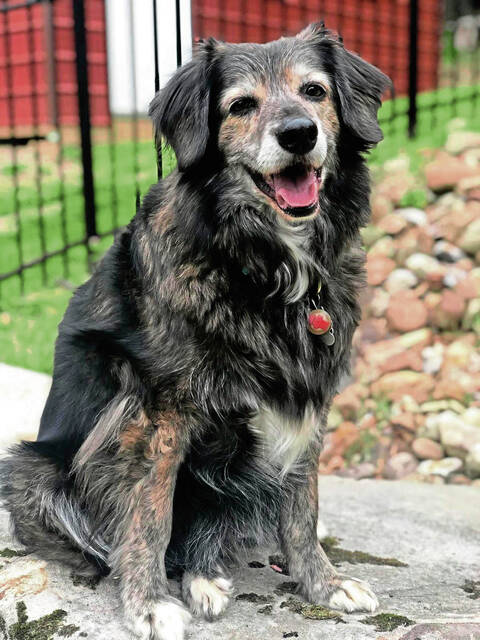







Jennifer Sybol keeps a cherished urn with her beloved dog Jasmine’s ashes on display in the dog room of her Penn Hills home.
Sybol said Jasmine developed health complications after receiving too many vaccines when she was 5. Her white blood cell count “went way up” and began working against the red blood cells in her body — the diagnosis was Immune-Mediated Hemolytic Anemia (IMHA), the most common autoimmune disease in dogs. The website PetMD.com notes the cause can be genetic or stem from infection, cancer, an inflammatory condition, toxins or vaccines.
Jasmine died at 10.
“(IMHA) just kind of changed her whole body around,” Sybol said.
Much like some humans have become increasingly skeptical about vaccines, Sybol said some pet owners are applying the same concerns to their four-legged family members.
But, while vaccine reactions can occur, veterinary organizations emphasize they are rare, and vaccines remain essential for preventing serious diseases.
Sybol now spaces out her dogs’ vaccinations, giving puppy shots one at a time and waiting a few weeks between them to monitor for any signs of reaction.
She said her veterinarian is willing to work with her on her concerns.
“My vet works with me on this because if they have a reaction to the vaccine, then you know which one caused a reaction,” Sybol said. “Sometimes the vets want to get lots of shots done at once and out of the way.”
Sybol owns Comfort at Home Pet Services, covering a 10-mile radius of the Penn Hills area, including Murrysville, Plum, Oakmont, Forest Hills and Verona. She is a certified instructor in pet first aid and CPR through Pet Tech and advocates for spreading awareness about the potential side effects when numerous vaccines are simultaneously administered to a pet.
Core vaccinations and titer testing
Dr. Kara Miller of Kittanning Veterinary Hospital said vaccine benefits far outweigh the risks.
“True vaccine reactions are very rare in my experience. Significant reactions occur far less than 1% of the time,” she said. “Overall, the risk of disease remains much higher than the risk of a reaction. For example, it makes me sad to think of all the puppies who died of parvo, who most likely would still be alive if they were just given a vaccine.”
According to the American Animal Hospital Association, core vaccines for dogs include rabies, distemper, parainfluenza, leptospira and parvovirus. Noncore vaccines include those for Lyme disease, canine influenza and Bordetella (kennel cough). For cats, core vaccines include rabies, distemper and feline leukemia.
Titer testing measures antibody levels by analyzing a blood sample and can determine whether an animal still has immunity to specific diseases.
Titer testing costs vary based on the number of vaccines evaluated. At Werntz Memorial Animal Hospital in Penn Hills, prices range from $150 to $300. A representative said all tests are processed at two national veterinary diagnostic labs: Michigan State University and Kansas State University. Results take several weeks.
In Pennsylvania, rabies is the only vaccine legally required for dogs and cats.
Sybol had titer testing done for her late dog, Cheerio, to measure rabies immunity. The results showed Cheerio had three times the acceptable level of antibodies.
Veterinarian advice
Dr. Melanie Young of O’Hara said many clients choose to separate their pet’s vaccines to minimize soreness or tiredness afterward.
“This is just as effective as doing them together and, medically, I have no problem with it,” Young said.
She noted anaphylactic reactions are rare.
“I probably see one to three per year out of the thousands of pets I vaccinate,” Young said. “Soreness and tiredness are the most common side effects, just like we see with humans.”
Young said she hasn’t noticed a major shift in how many clients request fewer vaccines.
“There have always been some, but the majority of the owners at my practice give core vaccines on schedule,” she said.
Side effects in cats and dogs may include itching, swelling at the injection site, lethargy, diarrhea and even paralysis.
Dr. Bimal Giri of Rainbow Veterinary Hospital in Harrison confirmed that cats and dogs receive the same dose regardless of weight, breed or size.
“We trust the science and research,” he said.
Miller further explained: “A four-pound kitten and a 150-pound Newfoundland dog each have immune systems that require the same amount of antigen to recognize a disease and build protective immunity,” she said.
Individual decisions
Lenore Wossidlo, 66, of Swissvale has six indoor cats and takes an inquisitive approach to feline vaccines.
“I ask my vet that I’ve been going to since 1987. I advocate for the cats, and I always ask questions,” she said. “My nickname is the cat whisperer.”
Her late cat, Jumper, once had a negative reaction to a rabies vaccine but recovered and lived 11 more years. The reaction included foaming at the mouth and several days of lethargy.
“It was very scary and I feel it was the vaccine, and the vet also concurred with me,” Wossidlo said. “I would like to see people be more informed. That’s how I handled the vaccines with my kids and even do it now for myself.”
Wossidlo takes her cats to Norwin Veterinary Hospital in North Huntingdon and said her vet is receptive to questions.
“It’s your pet’s body, and the medical provider should encourage questions of their clients,” she said. “I think some people just trust the medical provider. My vet answers me truthfully, and he has cats, too.”
Norwin Veterinary Hospital declined to comment for this story.
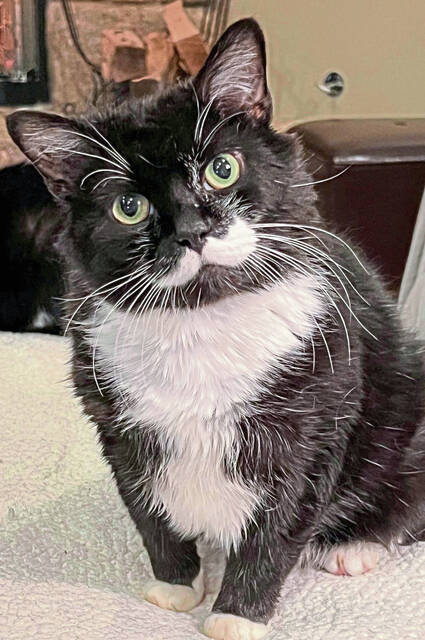
Michelle Czekalski Bradley of Penn Township has four cats — Tony, Vinny, Mikey and Joey — nicknamed the “cat mafia” for their black-and-white markings. Another cat, Louie, died last year after a yearslong battle with an unexplained illness.
“He did not have any vaccines after that and we took him to lots of doctors, including a cat dermatologist,” Bradley said. “He was the one we had to take to a holistic vet.”
Bradley said she tailors vaccination decisions to each pet.
“Each pet is different and has different needs, especially when it comes to vaccinations. I don’t blindly follow vaccination recommendations, but I do trust that veterinarians are the experts. I discuss vaccines with them and make decisions based on what’s appropriate for each individual pet.”