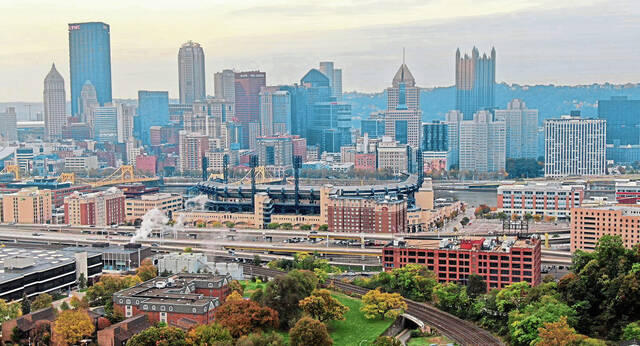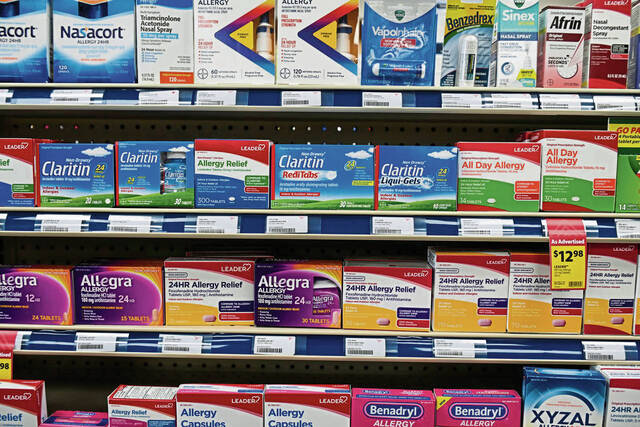
Allergy season in Pittsburgh kicks off in spring, but symptoms like sneezing, itchy eyes and congestion are starting sooner and lingering longer, a study shows, as warmer temperatures extend the pollen season.
Climate Central, a nonprofit organization that researches climate science, released a study that showed Pittsburgh’s freeze-free season, which are periods of time with temperatures above 32 degrees, has extended by 22 days over five decades.
“A warmer, earlier spring means a longer growing season — giving plants more time to grow and release allergy-inducing pollen earlier in spring and later into fall,” the study said.
Pittsburghers are now facing a longer, more stubborn allergy season than five decades ago.
Andrew Rorie, an assistant professor at the University of Nebraska Medical Center Division of Allergy and Immunology, was the content expert for the study, which took daily minimum temperature data from 1970-2024 and calculated the length of the annual freeze-free season.
For the study, released in March 2025, temperature data was taken from the Applied Climate Information System, which is developed and operated by National Oceanic and Atmospheric Administration’s Regional Climate Centers.
The length of each freeze season is based on: the annual count of consecutive days with minimum temperatures above 32 degrees, the time between the last day with minimum temperatures of 32 degrees or lower and the first day with minimum temperatures of 32 degrees or lower, according to the study’s methodology.
Pollen boosts
Carbon pollution, which are carbon dioxide emissions released into the air by burning fossil fuels, boosts pollen production by making pollen seasons not only longer, but also more intense due to heat-trapping pollution, the study said.
Ephraim Zimmerman is director of science with the Pennsylvania Natural Heritage Program, which inventories and maintains a list of all plant and wildlife species. He said unpredictable changes in conditions impact Pittsburgh’s local species.
“Plants for example may be flowering early because temperatures are warmer,” Zimmerman said.
Dr. Thomas Makin, an allergist and immunologist with Allegheny Health Network, said this is not unique to Pittsburgh.
“It’s kind of a global phenomenon across the country, where we’re seeing an increase in the prevalence (of) a lot of different allergic conditions. So things like seasonal allergies, we definitely see more of and people are probably affected for longer times throughout the year,” Makin said.
Since the 1970s, the United States has warmed faster than the global rate, Rorie said.
According to the study, from 1970-1979 the average freeze-free season lasted 169 days and from 2015-2024 the average freeze-free season lasted 188 days.
This is an 11% increase in length from 1970-1979 and 2015-2024, the study said.
“The year 2024 set a new global temperature record, surpassing 2023, and the 10 warmest years in the 175-year record have all occurred within the last decade,” Rorie said.
Pittsburgh pollen compared
The Asthma and Allergy Foundation of America ranked Pittsburgh within the top 25 “allergy capitals” in the United States for 2026.
Over the past five years, the city has jumped around the rankings as one of the most challenging places to live with allergies.
Pittsburgh was 63rd in 2025, 52nd in 2024, 41st in 2023, 21st in 2022 and as high as 5th in 2021, according to the allergy capital reports.
But the Climate Central study determined Pittsburgh was just one of 172 of the cities that had warmer weather extended by an average of 20 days.
Overall, the growing season lengthened in 87% of the 198 U.S. cities analyzed, the study said.
The freeze-free growing season increased the most in Reno, Nev. (96 more days); Las Cruces, N.M. (66 more days); Medford, Ore. (63 more days); and Tupelo, Miss., and Myrtle Beach, S.C. (both 52 more days).
“I definitely think there is a building awareness for this in the allergy community, we definitely know that climate change can cause longer, worse allergy seasons,” Makin said.