


Ice scrapers and heavy coats have been temporarily set aside for sunglasses, but the natural world is still reeling from the deep freeze that gripped the region for the past several weeks.
During the final week of January, temperatures only made it as high as 17 degrees, dipping to their lowest level at minus 11 degrees at one point on Jan. 31, according to National Weather Service data. The beginning of February wasn’t much better, with some low temperatures measured at minus 5 degrees.
The frigid weather has consistently been 10 to 25 degrees lower than the average seasonal temperature. The region is seeing some warmer weather this week, but that is expected to give way to snow by Sunday before warming up again later next week.
While the thaw provides a brief reprieve, the biological impact of January’s sub-zero streak is only just beginning to surface across the region’s ecosystems.
Bugs
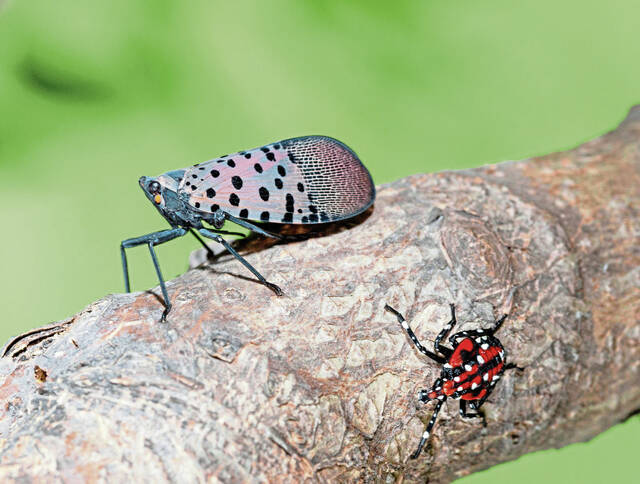
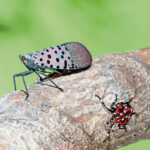
Perhaps there’s an upside. For instance, one might wonder if the freezing temperatures will kill off eggs laid by the spotted lanternfly that have dotted the Pennsylvania landscape in recent years.
Saint Vincent College professor Michelle Duennes doesn’t think the deep freeze will do it on its own.
“Extreme fluctuations in temperature can kill off some of them,” Duennes said, in an interview during the most frigid days of the cold spell. “For example, it’s in the negatives today, and it may go up as high as 40 degrees tomorrow. That’s not good for them, but they’ll still be around.”
Research conducted at the State University of New Jersey suggested minus 13 degrees is roughly the temperature at which lanternfly eggs will consistently die off. That is two degrees colder than the coldest low temperature the region experienced in January.
In addition, Duennes said, the cold temperatures are unlikely to have any measurable effect on Pennsylvania’s tick population.
“Most of the ticks we have here are native,” she said. “Not that they’re used to this kind of weather, but they’ve been here a long time, and they can generally survive what our winter throws at them.”
Blooms
The deep freeze could be bad news for flower gardeners.
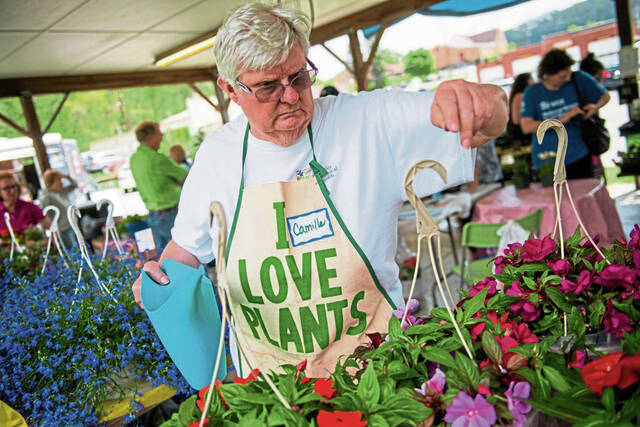
“We haven’t really had one of these (winters) for a long time,” said Camille Erb, secretary for the Murrysville Garden Club. “People who’ve been gardening for a long time probably know that you’re supposed to ‘mulch in’ your perennials during the fall.”
The writers at Fine Gardening magazine advise applying winter mulch just after the first hard frost, which can help to stabilize the temperature of the soil around the freezing mark.
Keeping the below-ground temperature consistent is key to maintaining healthy perennial plants, Erb said.
“What can end up happening is we have cold and then warm weather, and what you can get is a ‘heave’ in the ground,” she said.
Similar to the way the freeze-thaw cycle causes road and sidewalk damage, a “heave” in an uninsulated garden bed can shift plants around underground.
“If your plants are not well-rooted or well-mulched, they’ll move right along with the ground,” Erb said. “Well-established plants should be OK. And a lot of times if the earth is soft enough, you can push a plant back down, mulch it a little and it may live.”
A well-mulched garden can also be a boon to bugs, good and bad.
“Ticks and a lot of other insects — even beneficial ones — will find that mulch and use it as a shelter,” Erb said.
Pat D’Amico, owner at Pat’s Kiski Plaza Garden Center in Allegheny Township, said the deep freeze isn’t going to change his plans very much. He’s not expecting a bunch of customers looking to replace perennials that have frozen to death.
“We’ve had some very cold evenings, but the cool thing about having all this snow on the ground is it can act as an insulator for perennial plants,” he said. “As long as there’s a decent amount of snow on the ground, they’re fairly well protected.”
That means the upcoming forecast — which calls for several days with temperatures reaching into the upper 50s — could actually be more of an issue.
“If we have a few days in a row in the 50s, that could excite plants a little more into potentially starting to open up, and create a little more of a problem,” D’Amico said.
Birds
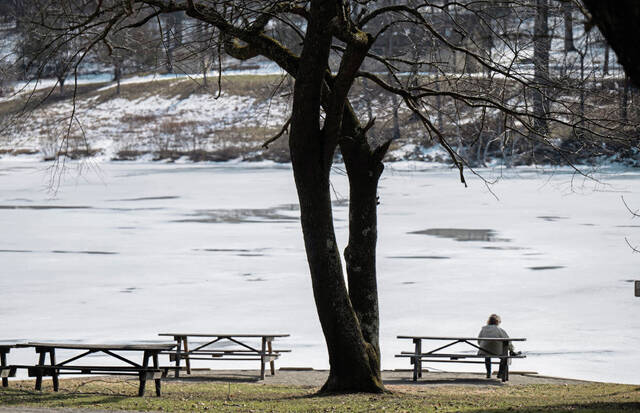
Lots of birds need open water to find their food — waterfowl and raptor species such as bald eagles in particular — and the recent deep freeze has likely forced them to relocate, at least temporarily, according to Chris Kubiak, education director for the Audubon Society of Western Pennsylvania.
“They’ll tend to move out of our area to place with no ice,” Kubiak said. “Other species that are residents often have to rely on cached food reserves. Nuthatches and various woodpecker species do a lot of food caching.”
Fruit-dependent species such as robins, bluebirds or cedar waxwings will also move and congregate where the most food sources are available, Kubiak said.
“Lastly, many of these birds have adaptations to survive long stretches of cold by fluffing up their feathers to trap heat,” he said. “They also shiver to generate heat, store extra body fat by feeding all day, reduce their metabolism and huddle in communal roosts to share body heat.”
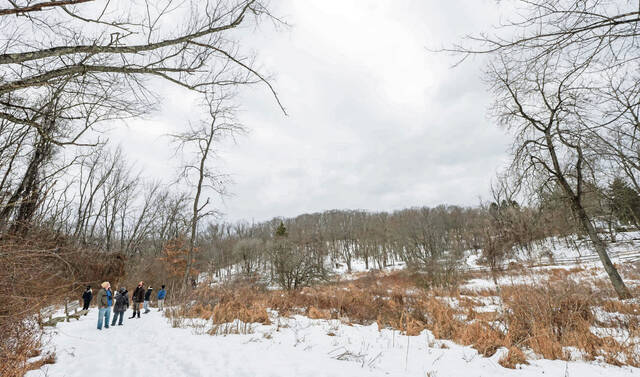
The society manages the Beechwood Farms Nature Reserve in Fox Chapel. As the region emerges from this cold snap, snow melt could start to become an issue at the 134-acre sanctuary.
“If it melts fast and we get heavy rain on top of the melting snow pack, that could present some issues,” Kubiak said. “Some areas are ‘intermittent wetlands,’ and they could become inundated with water causing erosion issues on our trails and smaller streams. It can also cause issues with recently planted trees and plants that might not be able to tolerate wet roots, which could lead to root rot.”