


Clentin Martin was found where he usually is every 56th day or so — giving blood.
“I always felt that it was an obligation to do,” Martin, 74, said while donating at the American Red Cross blood drive at St. Bruno Catholic Church in Greensburg. “It’s something that everybody needs.”
Now as much as ever.
The Red Cross is experiencing a “severe blood shortage,” the organization announced. Vitalant, which provides blood to UPMC and Allegheny Health Network hospitals, said its blood supply is half of what it should be.
“We prefer to have around a four-day supply of blood,” Vitalant spokeswoman Kristen Lane said. “This is especially important right before a holiday weekend to take care of all scheduled surgeries and in case of emergencies.”
As of Tuesday, Vitalant was down to a two-day supply of type O blood.
“When it comes to trauma, type O blood is really important and can be accepted by anyone,” Lane said.
“This is a severe shortage, and every single one of us can play a role in helping others, whether it’s a trauma victim or cancer patient,” said Lisa Landis, a Red Cross spokeswoman. “It just takes an hour of your time to make a difference.”
An insufficient blood supply can have a devastating effect on hospitals, which could struggle to properly treat trauma patients, provide blood transfusions and conduct elective surgeries, said Cletus McConville, a Red Cross team leader who oversees Westmoreland, Fayette and Armstrong counties.
The Red Cross reported a 10% increase in blood requests from trauma centers since 2019.
Several factors are working against blood centers.
First, the covid-19 pandemic has caused a sense of hesitancy among donors, according to donation centers. But, according to Vitalant and the Red Cross, it is not possible to spread or contract covid-19 through donating or receiving blood. A person is not required to be vaccinated against covid-19 to give blood.
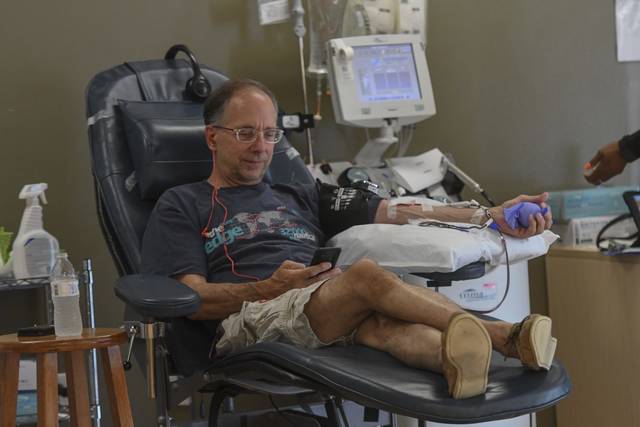
Jeffrey Hornung, of Hampton, said covid was the reason he began donating plasma. Hornung contracted covid in September and decided to donate after hearing about the benefits of covid survivors donating plasma to help covid patients.
“I got the vaccine in April,” Hornung said. “I hadn’t had a reason to go back and give again. Vitalant reached out to me asking if I was willing to donate again. They’re reaching out in need of donors. I’ll continue to donate every three to four weeks.”
Second, it’s summer. It is not uncommon for donors to decrease during the summer months. Lane said 20% to 30% of Vitalant’s donors come from high school and college students, who are not normally in session over the summer.
“Now that Allegheny, Westmoreland and other counties are opening back up (from the pandemic), people are out and about and going on vacations and not thinking to donate,” Lane said while at Vitalant’s Fox Chapel/Harmar location. “We never want to get to the point where we have to tell our hospitals that we don’t have enough blood.”
Martin said he began donating when he was in his early 20s while working as an administrator for the Central Westmoreland Career and Technology Center.
“I realize that not everybody’s able to do it,” said Martin, who serves as South Greensburg’s council president. “But it’s a good way to help fellow Americans.”
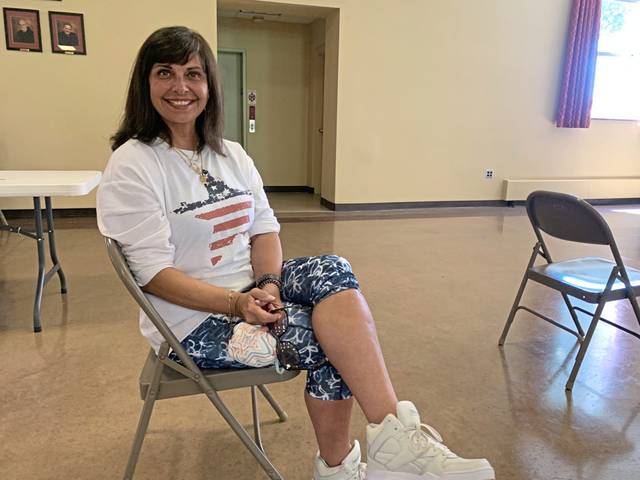
Marianne Anzovino said she has been donating for more than 30 years, having gotten her start while attending blood drives through the Greensburg Fire Department.
“I always felt good when I did it,” said Anzovino, who is general manager of the Aerobic Center at Lynch Field. “People don’t realize the clinical need for blood.”
On Tuesday, that need was demonstrated in black and white.
“When I walked in, I looked at the appointment sheets printed out for who was going to donate there that day,” Hornung said. “I was kind of shocked at how empty they were.”