
https://triblive.com/local/sewickley/coding-for-a-cure-sewickley-academy-students-research-reveals-key-differences-in-genetic-mutations/
Coding for a cure: Sewickley Academy student’s research reveals key differences in genetic mutations

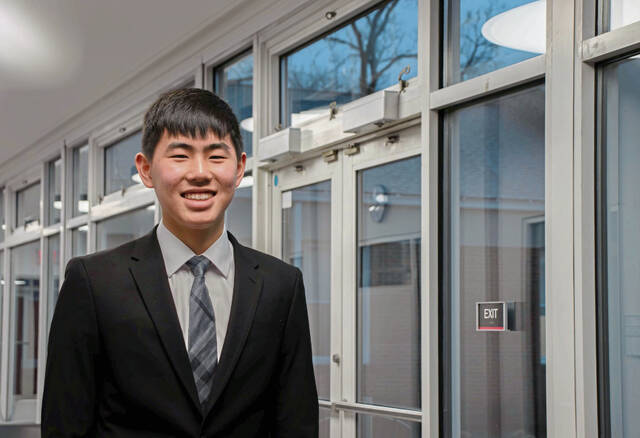
Being invited to present research at an international academic conference is an honor for any seasoned professional. But for 16-year-old Lucas Wang, it was an opportunity to kick start what he hopes will be a lifelong career in the field of bioinformatics.
A sophomore at Sewickley Academy, Wang recently presented his own research at the International Conference on Advanced Bioinformatics and Biomedical Engineering in Tokyo. His presentation — Quantitative Evaluation of Missense Mutations and Amino Acid Substitution Patterns in Cancer Data — examined how genetic mutations differ among racial and ethnic groups.
“My intellectual curiosity and drive for this project actually stemmed from Mrs. Andrea Shannon’s seventh grade science class,” Wang said. “I remember a specific analogy she made about changes — or mutations — in DNA being like a misspelling in a word. One misspelling is going to change what the word actually looks like.”
Wang decided that he wanted to study this further. How do mutations actually present themselves? Are they all different? What are the structural or functional consequences of a mutation?
That curiosity unleashed what has become a passion project for Wang. With encouragement and guidance from his father and older brother, Wang eventually began exploring opportunities to learn more about the world of scientific research. He reached out to multiple labs in Pittsburgh to request access to their research facilities. There was only one problem — he was too young to be admitted.
Fortunately for Wang, his ninth grade biology teacher, Dr. Ronald Kinser, opened his eyes to another way of conducting research.
“Dr. Kinser told me that I could try computational research, which involves accessing data from computers, writing python scripts and utilizing existing datasets that have not been analyzed in the past,” Wang said.
Armed with this new information, Wang set about investigating a critical issue that impacts how people are treated for terminal illnesses such as cancer. His goal was to understand how people from different ethnic backgrounds respond differently to genetic mutations that could lead to cancer, ultimately informing how drugs can be developed and more effectively tailored for various racial groups.
Like any new endeavor, Wang had to overcome an initial learning curve. How exactly does one go about learning how to conduct computational research?
“I had to do a lot of deep thinking about what the algorithms meant,” Wang said. “I had to read a ton of research papers and also analyze those research papers and learn how to actually conduct the algorithms.”
Wang’s older brother, Alex, played a key role in the process. A biomedical engineering student at Stony Brook University, Alex Wang guided his younger brother through the process of understanding computational techniques, how to utilize machine learning and how to write the proper coding script.
“He helped me keep a positive mindset, even when things didn’t go my way,” Wang said.
The aspiring researcher also took the initiative to reach out to experts in the field, many of whom pointed him in the right direction and shared resources, guidance and helpful tools.
“I use the AlphaFold algorithm, which is basically a way to model protein changes,” Wang said. “One of the questions I had was, ‘How am I supposed to model the protein changes after (the gene) has mutated?’ I got the chance to email back and forth with the AlphaFold creator. He won the Nobel Prize for being the first person to computationally graph and visualize mutation changes.”
That kind of initiative is what sets Wang up for success, according to Kinser.
“Lucas has ambitious goals, and he understands that meaningful research experiences will help him achieve them,” Kinser said. “He is comfortable asking for help when he encounters challenges. This, coupled with his resilience when hypotheses do not pan out or databases fail to yield clear answers, makes him exceptionally well suited for scientific research.”
Wang used many online tools to help him find and analyze the data, including the Cancer Genome Atlas, PolyPhen and SIFT scoring tools, AlphaFold protein structure database, AlphaMissense and g:Profiler analysis.
“One of my key findings from all of these data points was that out of the 12 cancers I studied, Asian Americans most predominantly used gene function for cancer development,” Wang said. “Cancer affects DNA-binding in Asian American populations more than any other racial group. For the Caucasian and African American races, cancer affects the protein binding the most.”
Now that Wang had his findings, his next step was figuring out how to share them. His father connected him to a family friend, Allen Bai, a professor at Eastern Michigan University. Bai advised Wang on how to compile and present his findings, and he encouraged him to submit his paper to the international bioinformatics conference in Japan.
Wang was the youngest person to present at the conference and the only high schooler in the room. Understandably, he had to wrestle with feelings of imposter syndrome. Yet that did not deter him from interacting with the more seasoned presenters and taking advantage of the opportunity to connect with researchers from around the world.
“I really like how global collaboration can lead to scientific innovations,” Wang said. “If we don’t have more communication or interactions with people from other countries and continents to talk about our findings, how are we supposed to develop the field of scientific innovation?”
Wang’s biggest takeaway from this research experience is one of optimism. He hopes the existing data will pave a way for personalized medicine to be introduced in cancer treatments for people of different ethic backgrounds.
“I really just want to refute the notion of medicine as a ‘one-size-fits-all’ approach,” Wang said. “It’s simply not. Modern health care has to be inclusive of every race and ethnicity. Each race differs; we don’t have to be the same. If anything, we should accept our differences, strive to incorporate everybody and promote this inclusive policy in health care.”
Copyright ©2026— Trib Total Media, LLC (TribLIVE.com)