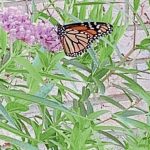
Signing the Mayor’s Monarch Pledge, a national effort to help save the monarch butterfly, has an extra special connection for Franklin Park Mayor Dennis O’Keefe.
In May, after almost 60 years of marriage, O’Keefe suffered the loss of his wife Marjorie, whom he met when she was just 7 and he was 8.
As a touching tribute to those who had passed away during the past the year, Good Samaritan Hospice of Wexford in August offered patients’ loved ones an opportunity to release butterflies into the air.
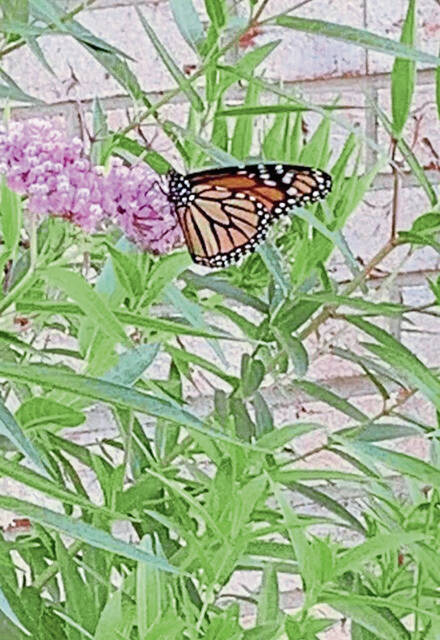
O’Keefe’s was a monarch.
“I was taken by that,” he said.
That was a touching coincidence for O’Keefe, who had signed the Mayor’s Monarch Pledge on March 29.
The National Wildlife Federation program started in 2015, asking mayors, community and tribal leaders across the nation to sign a pledge with the intent of creating habitat and pollinators for monarch butterflies.
The monarch butterfly is decreasing at a rapid rate, according to Rebeca Quiñonez-Piñón, chief monarch recovery strategist with the National Wildlife Federation.
“Monarch butterflies are instantly recognizable due to their beauty, captivating colors and unique migration journey. The steep declines of the migratory monarch population indicate the dire situation that monarchs and many other pollinators are facing due to the lack of native habitat, climate change, and excessive use of pesticides,” Quiñonez-Piñón said.
Eastern U.S. monarch populations have seen a 90 percent decline, and Western U.S. populations, a 99 percent decline in recent years, according to www.nwf.org.
As part of the pledge, mayors and community leaders are asked to take specific steps to increase the monarch population. The program provides a list of 30 action items, requiring at least three be done per year.
O’Keefe, along with Franklin Park Borough Manager Rege Ebner, already started on the process.
Ebner is passionate about the project himself, with an overall interest in protecting pollinators. He started with beehives about 15 years ago and began planting milkweed about five years ago. Bees are also pollinators.
“I have a general enjoyment of nature. Plants don’t complain,” Ebner said.
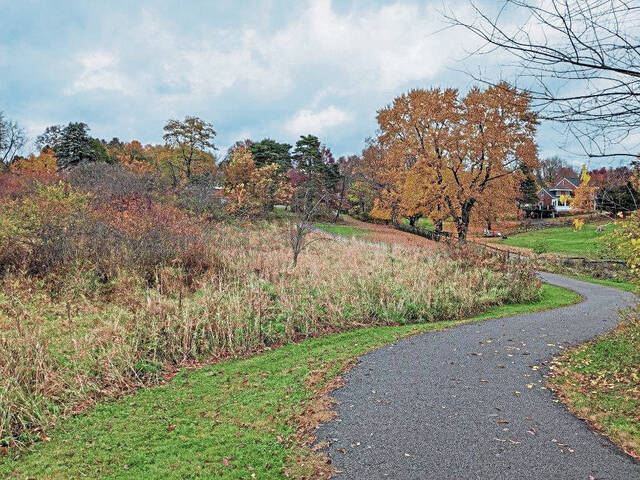
Franklin Park is ceasing grass cutting on a borough-owned, 21-acre property off of Magee Road to allow it to return to a natural meadow.
The borough’s Environmental Advisory Committee also distributed 65 packets of pollinator garden seeds at Franklin Park’s annual Festival in the Park this past summer.
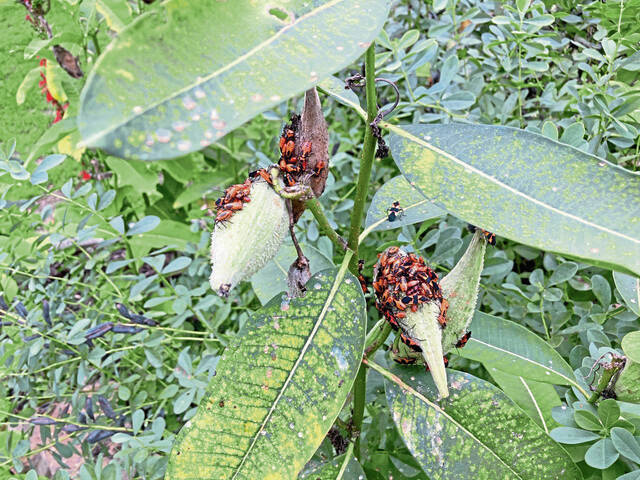
Ebner and another resident are collecting the milkweed seeds from their gardens to donate for planting in the borough. They plan to plant milkweed seeds directly outside the fence at the Community Garden located off of Big Sewickley Creek Road. Monarch caterpillars only eat milkweed.
The borough is working with the Audubon Society of Western Pennsylvania, which has identified an invasive species called canary grass in the Mel Lubert Nature Preserve, located adjacent to Wexford Run Road. It must be treated and removed so the space can be replanted as an area for pollinators and bird habitats, Ebner said.
Local Girl Scout Troop 52673, consisting of eighth-graders at Ingomar Middle School, has agreed to design a pollinator garden to be installed at the borough building as part of a Silver Award project. The scouts hope to do this next year, Ebner said.
As the borough updates the 2015 Comprehensive Recreation, Park and Open Space Plan to add properties and develop a master plan for development of park space, officials will incorporate monarch butterfly conservation.
Actions like these are right in line with the NWF’s program goals. Patrick Fitzgerald, senior director of Community Habitat at the National Wildlife Federation, said it’s an “all-hands on approach.”
“We want everyone involved,” said Fitzgerald, who has two milkweed plants growing in his driveway. “Every little bit helps.”
He suggests residents can plant wildflowers in their backyards. Or encourage city dwellers to plant on their rooftops.
Fitzgerald said the organization asks mayors to re-pledge each year to ensure the program stays active in their communities. Mayors and their municipal managers must provide a progress report. The NWF initially began with a goal of 50 mayors participating. It now has more than 1,200, with 355 mayors pledging in just 2022, Fitzgerald said.
Ebner said it’s important to educate others in the community and spread the word — and the seeds for pollinators.
Beth Palokavic has more than an acre of property in Franklin Park, and she plants the milkweed along her house. She has seen several chrysalis and caterpillars on her milkweeds. She also witnessed two emerge as butterflies.
“I never knew that this could happen in our backyard,” she said.
The lawn also isn’t treated and houses beehives with the help of their neighbor.
“It’s very educational. My grandkids love it. You see the fruits of your labor. It’s relaxing. It’s calming to see,” she said.
John Parks, Franklin Park Council president, said the council will help promote the monarch program at the public meetings. He said that St. John Neumann Catholic Church on Rochester Road is planning on installing a garden there that would attract monarchs.
O’Keefe said the key is to get others involved.
“We plan on making this a priority every year and continuing with it next year,” Ebner said.
The time to act is now, Quiñonez-Piñón said.
“Losing the monarchs is losing the one-of-a-kind migration phenomenon too, and is openly telling us the dire situation that all pollinators are facing. Pollinators are the base of our food supply and ecosystems. Pollinators like native bees ensure our food supply and that the wild plants that feed that food supply are healthy. We should work tirelessly to ensure their survival,” she said.
Those interested can contact Franklin Park Borough at email@franklinparkborough.us.
Visit www.nwf.org/MayorsMonarchPledge for more information.