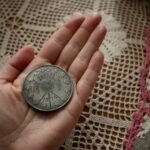

“Remember me.”
Those simple words speak volumes when they are written on a valentine or inscribed on silver by someone whose heart belongs to you.
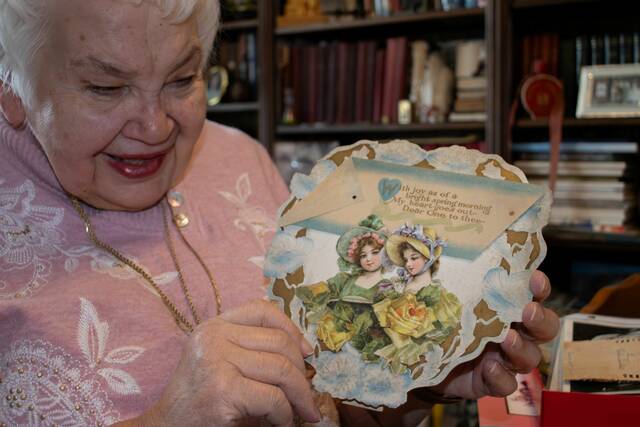
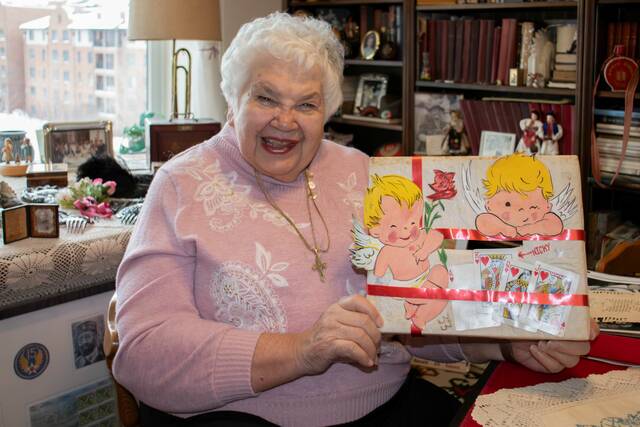
For Milana “Mim” Bizic of Sewickley, it’s a message she takes seriously. As the former national vice president of the Love Token Society, Bizic has dedicated her life to collecting and preserving historical silver coins and paper valentines filled with words of love.
“I just find them to be fascinating,” Bizic said. “I’ve been collecting valentines and love tokens since 1970 when my son was born. They speak to the universal story of love. History, heart, humanity … all in one.”
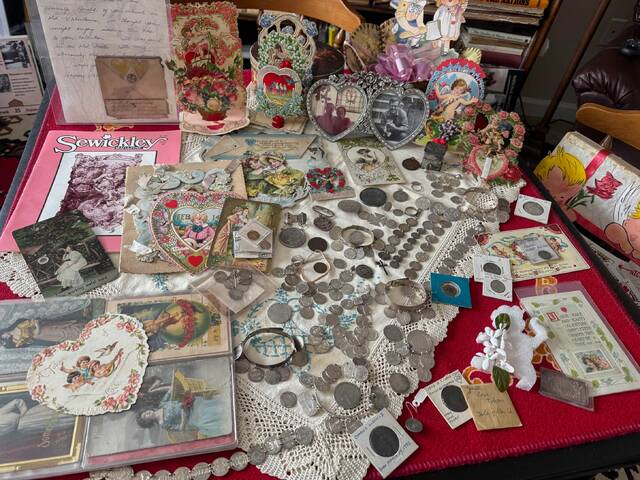
The 84-year-old collector has accumulated hundreds of antique valentines, romantic postcards, love tokens and other sentimental trinkets over the past six decades.
“I collect both romantic and funny valentines,” Bizic said. “Many of my cards are from the 1950s and ’60s, but I really love the older ones from the Victorian era. I find the handmade cards to be more beautiful.”
According to Bizic, valentines were introduced to American culture by Esther Howland in the 1840s. Considered to be the “mother of the American valentine,” Howland was inspired by early English valentines. Thanks to her, valentines became beautiful, affordable and widely shared.
Howland’s brother was a businessman who traveled frequently. He took his sister’s homemade valentines on his travels and sold them by the hundreds. They were selling so quickly, she couldn’t work fast enough to keep up with demand. Eventually, she hired a team of workers and developed an assembly line process; thus, the tradition of producing valentines en masse was born.
“We live in a throwaway society now, but valentines are meant to be kept,” Bizic said. “It always warms my heart (to receive one). It means that somebody took the time to look over the selection at the store. They picked one that they thought would suit you, and they took the time to send it. It’s not just the money they paid for the card; it’s the time and the love that went into it.”
Bizic has spent countless hours traveling all over the tri-state area in search of sentimental treasures. She found some of her favorite valentines from antique shops and flea markets in New Brighton, Beaver Falls and Mechanicsburg. But it was the love tokens that truly captured her heart.
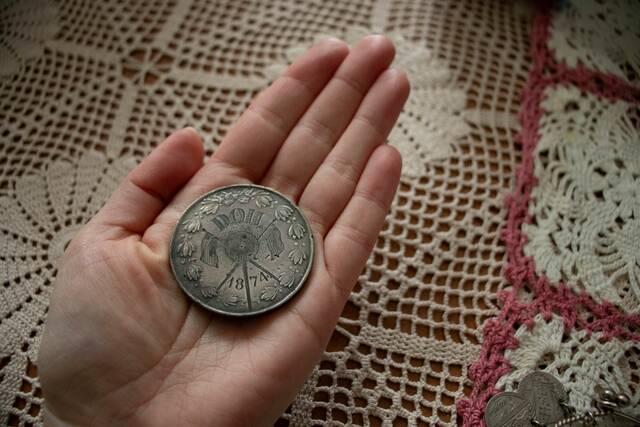
“Love tokens started over in England back in the 1700s and were very popular,” Bizic said. “Essentially, love tokens were money transformed into memory. Initials, hearts, dates and flowers acted like a private language between the giver and receiver.”
Bizic explained that a love token is an actual coin that had been in circulation but whose owner decided to engrave a symbol or message of love on the back. Their popularity really exploded in the 1840s around the same time as valentine postcards. By the 1860s, the tradition had spread to America.
The first love tokens to be introduced to the United States were very primitive. Sailors on ships would take awls and write different messages for lady friends. One such English coin in Bizic’s collection was engraved with the plea, “Remember me.” English sailors would come to America and travel from port to port distributing these tokens of love to the girls they met.
By the Civil War era, the fad had become so popular that girls began collecting multiple love tokens from different suitors and stringing them together. Bizic compared the trend to modern-day charm bracelets. It was almost like a competition to see who could accumulate the most tokens.
Bizic noted that gifted metal engravers began selling their own versions of love tokens at carnivals and fairs. They designed images such as birds or lighthouses, but they also personalized coins with names and messages.
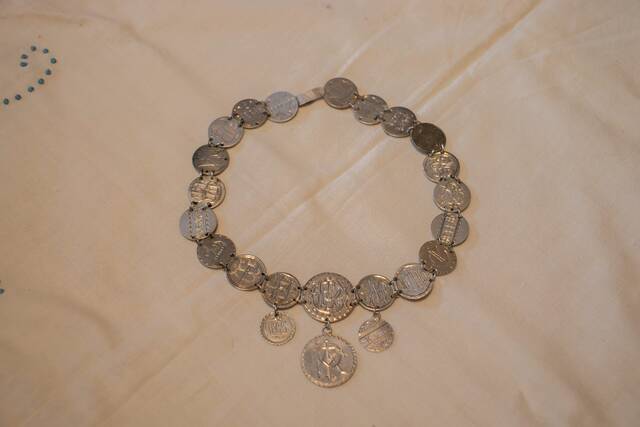
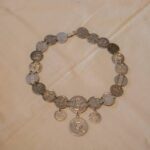
Sometimes families would engrave one coin for each member of the family and string them together on a bracelet or necklace. Bizic owns such a necklace dating back to 1863. A collection of 19 Liberty Seated Dimes, two quarters and two half dimes were strung together to form a beautiful family heirloom. Each coin was inscribed with a different name, such as Dennis, Nellie, Maggie, etc.
Bizic pointed out that Liberty Seated Dimes were — and still are — very rare and valuable, so families who turned them into ornamental pieces of jewelry would have had great wealth.
By the 1890s, so many coins were disappearing from circulation that the government had to ban the mutilation of currency.
Love tokens may be a relic of the past, but their spirit lives on in present-day traditions, like the love locks fastened to the Hot Metal Bridge or personalized keepsake photo lockets.
“What matters most is that these love tokens and valentines were never meant to be temporary,” Bizic said. “They were meant to last — just like the feelings behind them. A valentine means that you matter enough for this time, effort and expense.”
Whether you receive a valentine in the mail this year or not, Bizic wants everyone to know that the most meaningful valentines aren’t always made of paper, lace or silver.
“They are the living valentines,” Bizic said. “They are the people who knock on your door to see if you’re all right … the ones who carry in packages, fix a loose hinge or shovel a path after the snow … the friends who ask, quietly and sincerely, ‘Do you need any groceries?’
“Those are the valentines that don’t fade, don’t tarnish and don’t need saving in a box. They walk among us — and we are richer for them.”