
Fox Chapel councilwoman Mandy Steele considered it a victory when the borough became the first in the state to ban coal tar, a toxic chemical used to seal asphalt driveways.
But she’s not resting with that singular win.
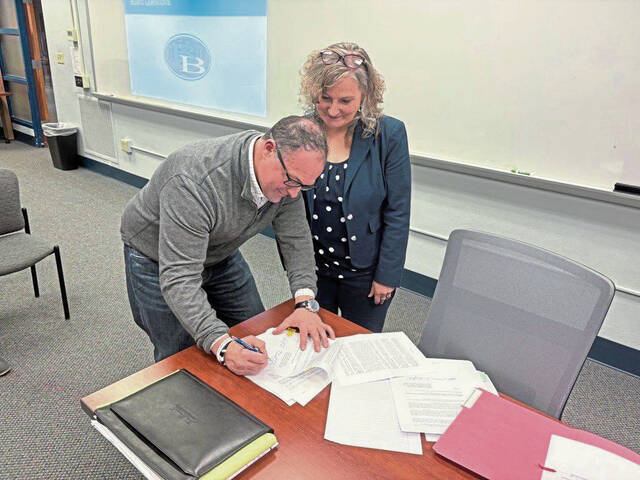
“I plan on going in front of all the councils in Allegheny County,” Steele said last week during a presentation in Sharpsburg.
“The evidence is clear that it’s very dangerous to people.”
Steele plans to lobby each municipality in the Lower Valley as a start to her countywide campaign. She began on Jan. 28 at the Sharpsburg council meeting and was expected to make similar presentations to O’Hara and Aspinwall this week.
Coal tar, Steele explained, is the black liquid frequently used on parking lots and playgrounds.
It is a potent source of Polycyclic Aromatic Hydrocarbon (PAH) contamination in the environment, according to the United States Geological Survey (USGS).
Used motor oil, for example, has 400 PAH contaminants per million particles. Coal tar sealant has 70,000.
The Environmental Protection Agency classifies PAH and similar chemicals as cancer-causing. Other side effects include irritation to the eyes, nose and throat.
Coal tar is linked largely to stomach and bladder cancer, Steele told council.
“People are having parking lots and driveways sealed and they don’t even know the level of toxicity they’re getting,” she said. “The problem is, it’s sticking to your shoes and coming into your house.”
Councilman Brad Truman asked how commonly coal tar was outlawed across the country.
Several cities have instituted a ban following an initial suit in Austin, Texas. It is also disallowed across Maine and Wisconsin, along with bans in several states at the municipal level.
Steele said there are safe alternatives to coal tar that are equally priced and last as long. One is an asphalt-based sealer.
She stressed the poisonous impact of PAHs, which are carried in the rain to the Allegheny River and local streams.
Council President Brittany Reno said she hopes to advance the topic in coming months.
“We are keepers of our mile-long stretch of the river so I appreciate the information on rainwater,” she said. “I think it’s important work for local government to protect the community.”