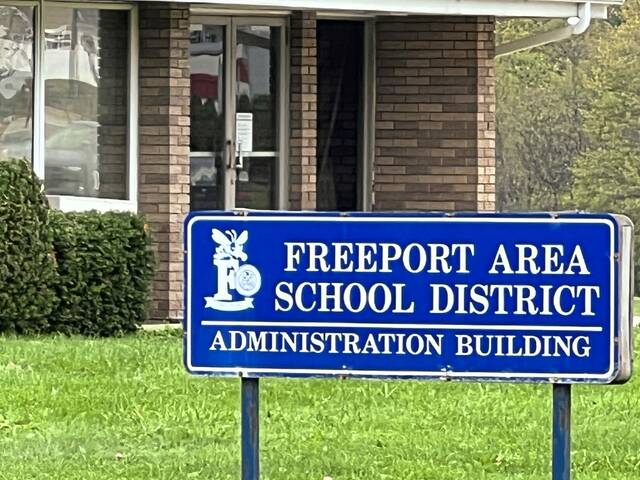
Freeport Area School District officials are looking at a possible $180,000 deficit as the June 30 budget deadline approaches.
That is the message Brad Walker, district business manager, recently delivered to the school board.
“That is based on no new local revenue to our funds,” Walker said.
The district has some leeway to add local revenue by increasing taxes up to its state-imposed Act 1 index limit of 4.6%. The inflation-based index is the percentage the district is allowed to raise taxes without seeking voter approval in a referendum.
If the board opts to go all the way to that limit, it would mean an increase of 12.41 mills in real estate taxes for the district’s Butler County residents and businesses. That would make the total millage rate 198.32 mills.
At the same time, millage for Armstrong County residents and businesses would drop from the current rate of 65.10 mills to 64.37 mills, a decrease of 0.73 mills.
The difference would be due to the rebalancing of millage rates across county lines through the state.
Across all eight millage/budget scenarios Walker presented to the board, Armstrong County taxpayers would see a reduction in taxes while Butler County residents would see an increase.
If the school board chooses to go to the index maximum, it would increase local revenue by more than $1.1 million.
Walker, however, emphasized the deficit projection is preliminary at this point.
“There’s still a lot of moving parts here,” he said.
Among the issues he cited are what the district will receive in education subsidies from the state, cyber-charter school placements and payments; Lenape Technical School enrollment, health care cost increases and the costs for new labor contracts for district teachers and support staff.
“We’re still waiting to hear about school subsidy,” Walker said. “Our health care is going to be a 13% increase but that hasn’t been finalized yet.”
Regarding the contracts, he said: “Our projections right now are for 3% across the board. That’s just an educated guess.”
There is also debt service the district will incur, through the financing of needed building projects, that has to be considered, he said.
“You’ll have a full presentation next month,” he told the board, adding that it will include more details.
When asked what he would recommend, Walker said, “I would say an increase of a couple percent rather than going to the full index increase.”
As it stands now, Walker said, the district would need less than a 1% tax increase to balance the budget. District estimates show that a 1% increase would provide $423,000.