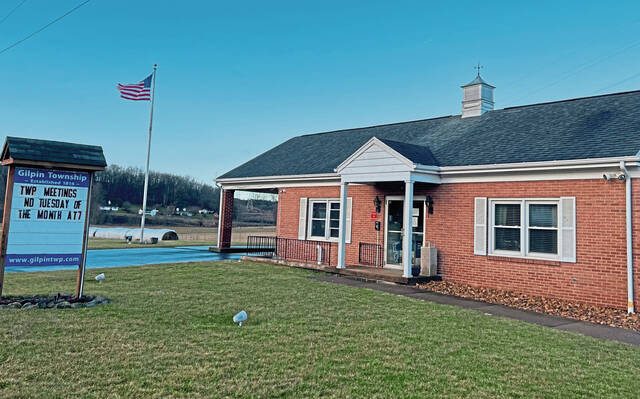
The Gilpin supervisors are discussing a tax that would affect owners of skill machines and mechanical amusement devices.
Supervisor Gary Hall said the township stands to make thousands of dollars by incorporating one.
“It’s become very common in many municipalities, in most municipalities, that they’re taxing the ‘Pennsylvania skill games’ and games of entertainment that are in these different buildings,” Hall said during Tuesday night’s supervisors meeting.
Hall used the skill games found in Sprankle’s Neighborhood Market and Cicero’s Bar & Grill in Leechburg as examples for what would be affected by the tax.
“(Communities) are taxing (machines) anywhere between $100 for a jukebox-type thing to up to $300 for the skill machines,” Hall said.
Bar owner OK with the tax
Leechburg recently increased its tax, still charging $100 per mechanical device, but skill games tax was increased to $300 a year.
Olivia Rapone, co-owner of Cicero’s Bar & Grill, said the tax hasn’t affected business. There are three skill game machines in the restaurant.
“It’s not something we’re passing along to our customers or consumers in any way,” she said. “I think it’s just one of those things that it was just a matter of time before everyone has to pay their fair share.”
Rapone said when the restaurant added so-called skill games, they simply added to its overall income. The machines help bring people into the restaurant and can get them them stay for longer, she said. She said despite paying the tax, the machines are still adding extra income to the shop.
“We pay taxes on pretty much everything, so why wouldn’t we be responsible for paying taxes on that as well,” Rapone said.
Rapone said while no one wants to pay more taxes, if the machine tax will help stave off a communitywide tax increase in the future, it becomes a positive.
Cicero’s skill machines are contracted by a third party, Rapone said.
Grocer notes concerns
On the flip side, Doug Sprankle, co-owner of Sprankle’s Neighborhood Market, called the tax a “slippery slope.”
“I understand the purpose of the tax, but like anything else there’s consequences,” Sprankle said. “What all small communities need to understand is: if you don’t do things to support your small businesses, if you continue to take from them, if you continue to pass frivolous taxes, long term, it doesn’t inspire growth. And it doesn’t inspire small communities to prosper.”
The grocer began incorporating machines skill game machines in late 2017, he said. Today, each location has six skill game machines. They’re contracted through Miele Manufacturing, an amusement machine supplier that works in partnership with Pace-O-Matic.
He said adding the machines helped stabilize the business through the covid-19 pandemic and helped them pay for crew members’ health insurance for the first time.
“Our local communities are struggling to pay the bills and they need different revenue streams,” Sprankle said.
He said there may not be longevitiy in amusement machine and skill game taxes because it could chase small businesses away. He said businesses already pay extensive taxes.
“Adding more to it, for some, is going to be a linchpin whether or not they stay or go,” Sprankle said.
Sprankle said despite contracting the skill games through a third party, the store is responsible for paying the annual tax. He said as a business owner, he hopes to see uniform regulation from the state.
Hall said he doesn’t predict the tax to cost business owners in most cases because the people who own the machines pay the tax. He said most businesses in the area don’t directly own the machines.
“The people that (have) these machines aren’t paying this out of pocket in most cases,” Hall said. “That’s a matter of how they negotiate with the owners.”
Sprankle said in some cases, the tax could directly affect nonprofits depending on how the machines are contracted.
Hall said township officials still need to inventory what type and how many machines are in the township to get an exact amount of money the tax is projected to bring in.
“Anything we can do to make an advantage to the people of the township, to lessen the burden on them,” Hall said. “I think this is a good idea for us to bring into the township. It doesn’t attack anybody individually. It will make a few thousand dollars.”
Gilpin Supervisor Charles Stull is borough manager for Ford City. He said the town has a similar tax for skill games and mechanical devices.
“(The tax) brings in about $12,000 a year and we only charge $200 for every machine,” Stull said. “And 95% of the time, the company that provides these machines pays the tax on behalf of the property or the host of the machine.”
Gilpin’s proposed ordinance calls for a $100 annual tax on coin-operated mechanical amusement devices and $250 on skill games. Jukeboxes would be exempt.
A supervisor opposes
Supervisor Jeremy Smail said he doesn’t support the tax because it could act as a barrier for small businesses. He said it may discourage businesses from setting up shop in Gilpin.
A business owner, Smail said he pays fees for machines such as ATMs and jukeboxes.
“We already have fees associated with these amenities,” Smail said. “For me, I mean, I’m obviously not going to be behind something like this because it just creates another barrier for small businesses.”
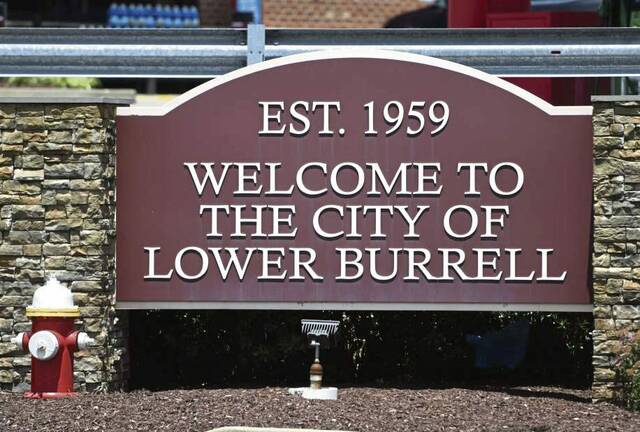
Other nearby communities with a similar tax include Lower Burrell, which raised their annual tax to $700 per machine.
A vote to advertise the ordinance passed, 4-1. Hall, Stull, Kevin Miller and Tina Thompson voted in favor, while Smail voted against the ordinance.
The supervisors will continue to discuss and edit the ordinance before voting on it.