Less than one day after the Westmoreland County Transit Authority board agreed to pay an extra $64,000 in tariffs for a new fleet of buses, the U.S. Supreme Court ruled President Trump exceeded his authority in imposing the trade duties.
The board met Thursday to authorize the payment to cover costs for 10 new commuter buses currently under construction. By Friday morning, the legal landscape had shifted, leaving the purchase price in a state of uncertainty.
Because the purchase is largely funded by federal grants dedicated solely to vehicle acquisition, the tariffs would essentially be paid by the federal government rather than local taxpayers.
“We don’t know if we have to pay it now,” transit authority Executive Director Alan Blahovec said Friday morning after learning of the court’s decision. “We won’t pay it for some time; we don’t have to pay until the buses come in.”
In September 2024, the authority signed a $7.5 million deal with California-based manufacturer Gillig to produce 10 natural gas-fueled commuter buses. The 33-seat vehicles are intended to replace older, larger coaches that no longer fit the agency’s needs after ridership plummeted following the covid-19 pandemic.
While the new buses are required to meet “Buy America” standards, the manufacturer passed along costs for Chinese-imported aluminum and engine components used in the build. Authority solicitors confirmed that these tariff-related add-on costs were authorized in the sales agreement with Gillig.
“I don’t like it, but we’re kind of stuck,” board member Woody Weissinger said of the tariffs prior to the court’s ruling.
The buses are nearing completion and are expected to be on the road by the end of March.
Ridership, future plans
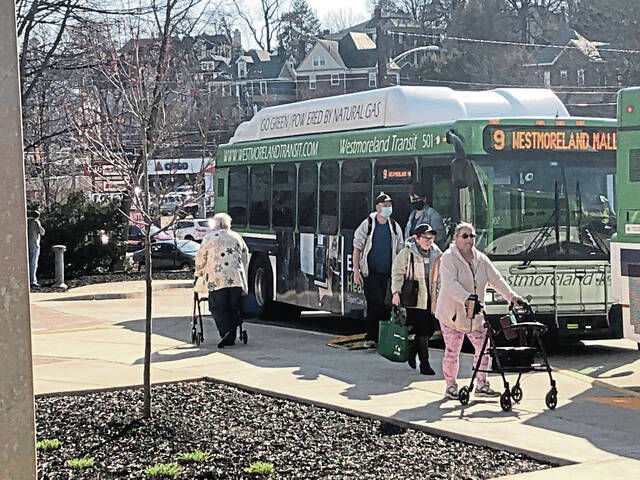
The authority currently operates 15 daily fixed routes, including commuter service into Pittsburgh and local routes throughout Westmoreland County.
While ridership has slowly rebounded, it remains significantly below the levels seen a decade ago when the agency carried more than 300,000 passengers annually. For the fiscal year ending last June, the authority saw nearly 205,000 riders. Based on current trends, ridership is projected to increase slightly during the current fiscal year.
Minor schedule changes could be implemented this fall, but more ambitious alterations — including a “micro-transit” pilot project — have been delayed.
The micro-transit initiative, designed to mimic ride-sharing services such as Uber and Lyft, was originally planned for the New Kensington and Arnold areas near the Penn State New Kensington campus. With that campus now slated for closure, the authority is searching for a new location for the pilot.
However, Blahovec noted the project is currently stalled due to a lack of resources.
“We can’t do it with the funding we have now,” he said.
The authority continues to operate Go Westmoreland, its subsidized paratransit program providing curb-to-curb service for seniors and social service participants.