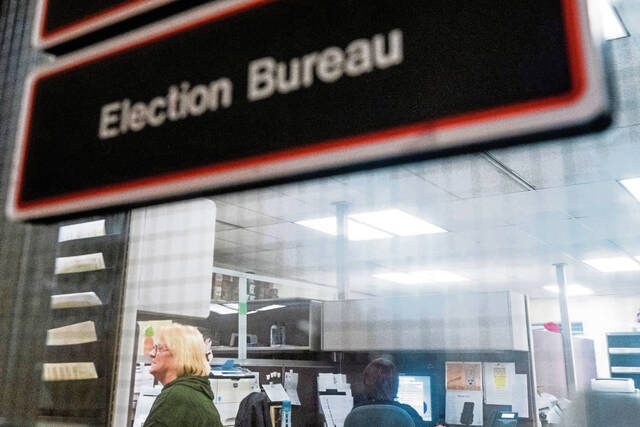
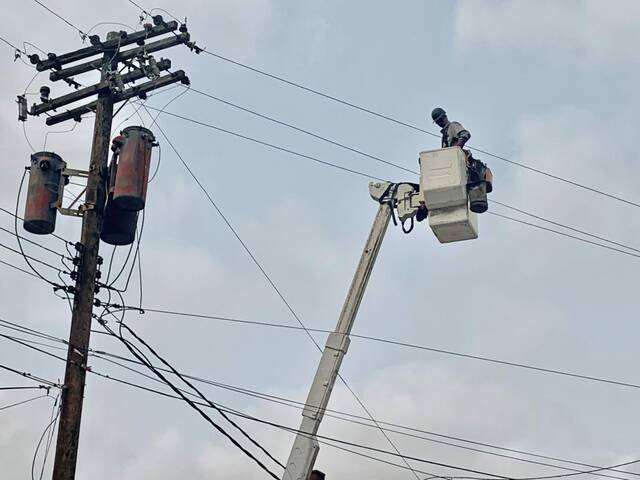
Tarentum Council has approved agreements with two power generators in an effort to mitigate the skyrocketing costs of obtaining electricity.
The agreements will help ensure capacity for the borough-owned power grid while trying to steady the cost to consumers, Borough Manager Dwight Boddorf said.
He said that capacity is defined as the ability to meet the demand for electricity as it happens.
“We’re going to buy a portion of the capacity before the price goes up,” Boddorf said.
That is expected to happen next year.
Tarentum’s agreements are with the Potomac Energy Center, which operates a generating plant in Loudon County, Va., and Bright Mountain Solar, which has a solar generating operation in Perry County, Ky.
Under the agreement with Potomac Energy, the borough will reserve 600 kilowatt hours of capacity for a period of 15 years.
The Bright Mountain pact will provide 1.5 megawatt hours for up to 25 years.
Boddorf said it amounts to around 10 percent of the borough’s annual power needs of about 32,000 megawatt hours.
He stressed the importance of making such moves now rather than waiting for price increases to take effect and then reacting.
According to Boddorf, a reason why the borough had raised electricity rates in previous years was to build up reserve funds that could be used to help offset future increases by suppliers without having to approve bigger increases to cover spikes in the price.
No prices are specified in the two ordinances that set up the agreements.
“The agreements reserve a portion of generation capacity and energy for the borough, but the exact cost impact depends on several variables that change over time in the regional electric market,” Boddorf said.
He said those variables can include: energy cost — the electricity actually used by customers measured in kilowatt hours; capacity — paying to ensure enough generation is available during peak demand; transmission of electricity across the regional grid; and distribution and local system costs.
However, Boddorf said, the capacity cost a year ago was $28 per megawatt hour. Now, he said, it is $325 per megawatt hour. That’s a difference of $297, which amounts to an increase of more than 1,000%.
Prices are controlled by PJM Interconnection, a regional transmission organization that coordinates the movement of wholesale electricity in all or parts of 13 states and the District of Columbia.
The organization takes its name from the initials of the three states that founded it: Pennsylvania, New Jersey and Maryland.
“Because capacity prices are set through PJM’s regional market and change from year to year, the agreements don’t create a single, fixed annual dollar cost that can be quoted today,” Boddorf said. “Instead, they lock in a portion of the borough’s supply portfolio so we are less exposed to the volatility of future capacity auctions.”
Boddorf said PJM held off on raising rates further after Gov. Josh Shapiro filed a complaint with the Federal Energy Regulatory Commission.
He said much of the fluctuation in prices appears to be related to the recent proliferation of data centers which use huge amounts of electricity.
In a news release on its website, PJM cited the data center factor, as well as state and federal policy decisions that resulted in what it said was the premature retirement of generators.
It said that has resulted in the warnings it has issued about the power grid running short of electricity during high demand periods.