
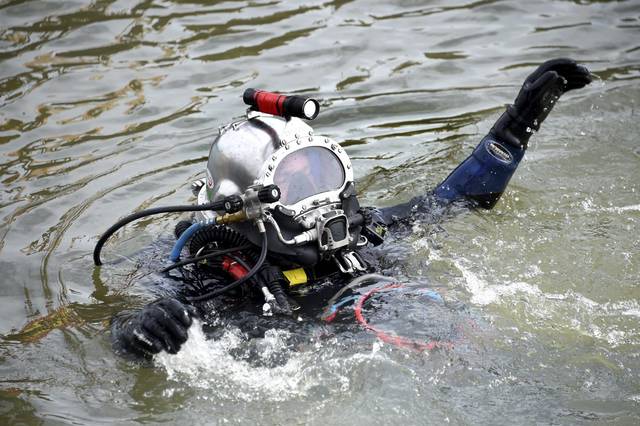
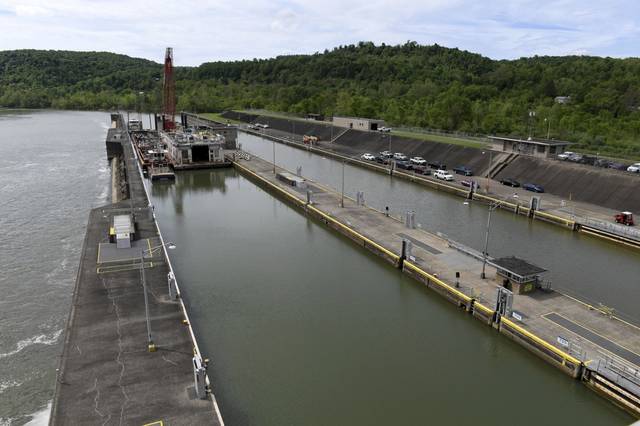
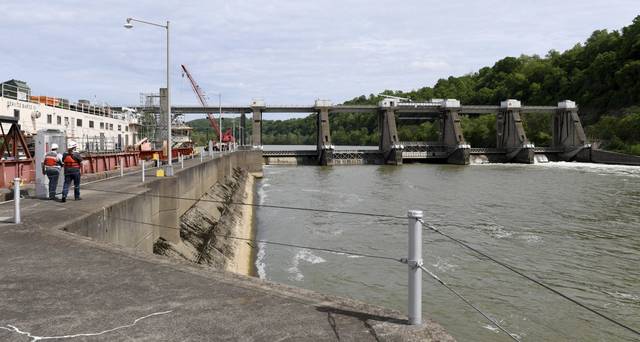
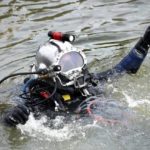
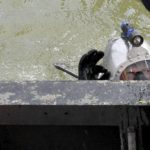
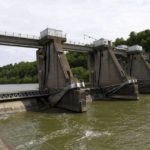
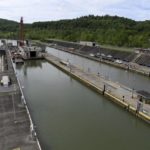
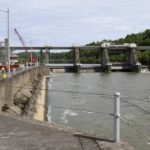
Thirty-one feet below the surface with near zero visibility, a small group of divers are doing painstaking work at the bottom of the Monongahela River to replace rusty bars and beams on 14-foot-high intakes that feed water into locks at a dam near Brownsville.
“Diving is inherently dangerous. You just don’t know what’s down there, until you get there,” said Jay Kochuga, diving program coordinator for the U.S. Army Corps of Engineers Pittsburgh District, as he watched two of his men prepare to install new intake bars and beams in the upstream guide walls at Maxwell Locks and Dam.
The divers are trying to avoid any industrial or natural debris that has likely been swept down the river and deposited at the upstream end of the locks as they remove the “guts” of intakes, as well as anything that may have got stuck inside the intakes. Eight of the intakes in the lockwall feed one valve, Kochuga said.
“It’s just the unknown. … It is a lot of feeling around and taking your time, trying to figure out what to do,” said Kochuga, who has been with the team for 12 years.
The challenge is the same whether they are working at Maxwell that allows for the movement of coal-laden barges up and down the river, or the Loyalhanna Dam in Westmoreland County, the Youghiogheny River Dam in Fayette County or any Corps reservoirs in the region, Kochuga said. And not all of the dives are sunny days in May. They also dive in the winter, when necessary, working in icy cold water.
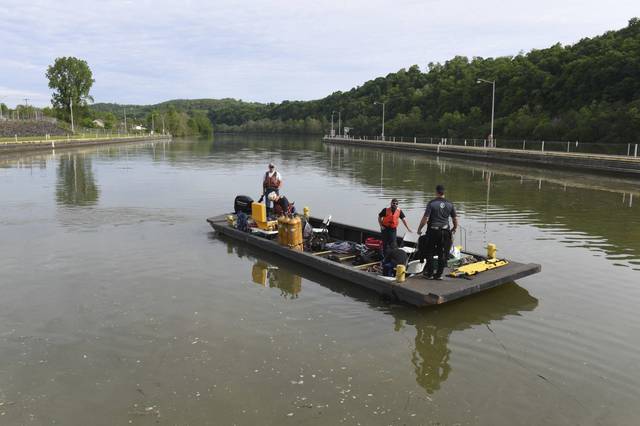
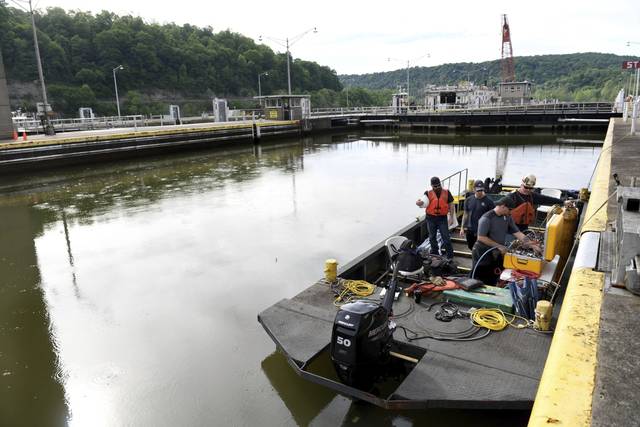
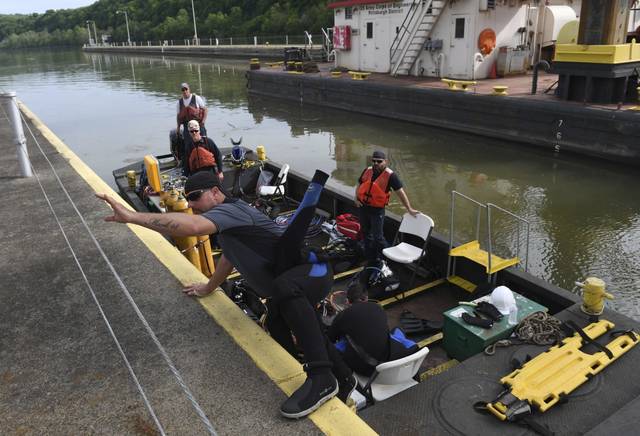
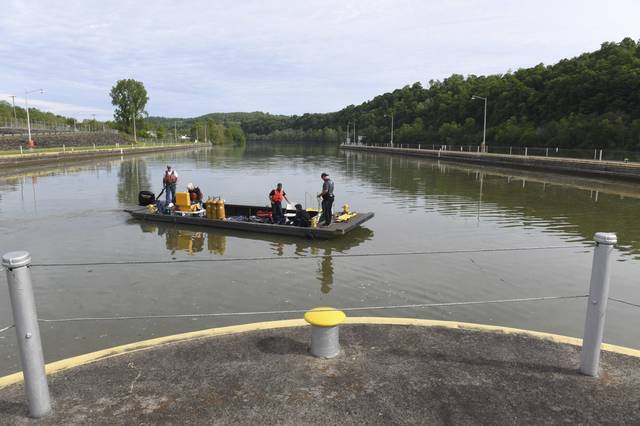
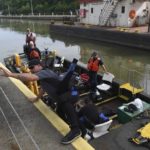
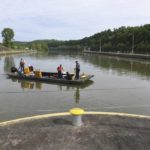
Working the past two weeks some 61 river miles from the confluence of the Monongahela and Allegheny rivers at The Point in Pittsburgh, the dive team hauls its considerable gear in a trailer and works off a flat-bottom dive boat.
All the while, layers of safety are emphasized. The team is trained in cardiopulmonary resuscitation, first aid and medical oxygen, Kochuga said. A person is appointed to contact the local 911 and the location of the nearest emergency hyperbaric chamber, used to treat decompression sickness, which occurs when a diver ascends too quickly.
“Safety is our ultimate priority,” Kochuga said.
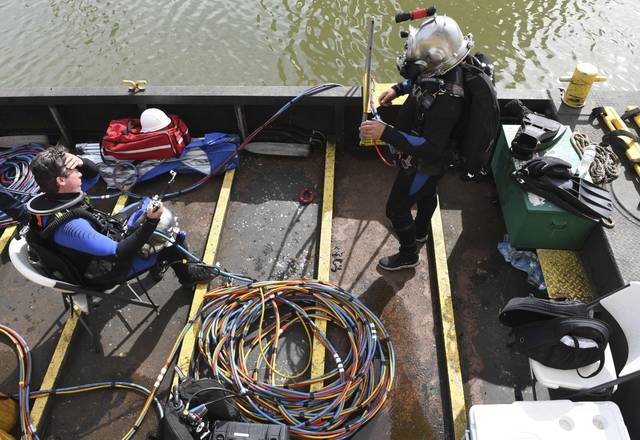
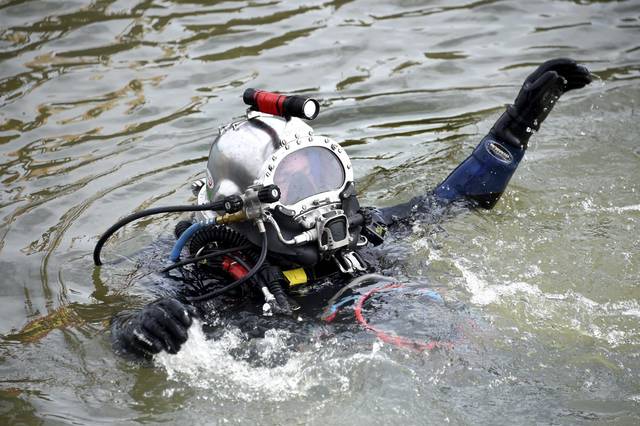
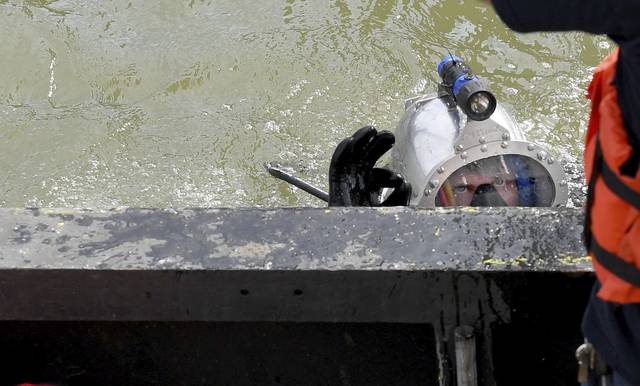
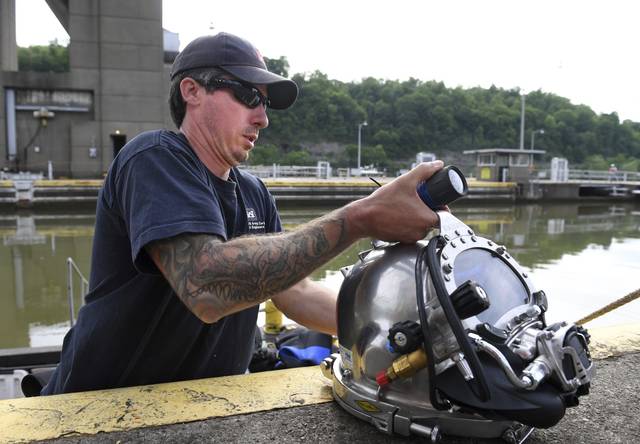
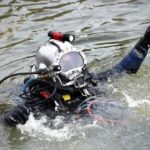
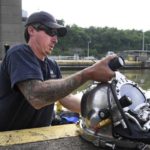
While two divers are under water for repairs, two dive tenders remain on the boat. One tender operates a control box to feeds air to the diver through through two hoses hoses attached to a scuba helmet — one for the primary air and one for the auxiliary air. A communications line allows the diver to talk with those on the boat and a fellow diver. A special gauge measures the pressure of the air pumped down to the diver and the water pressure that indicates the diver’s depth, Kochuga said.
Another tender feeds the diver his lifelines marked at one-foot intervals so they know how far he has gone.
Working at a depth of about 30 feet, Kochuga said they follow Navy dive rules, which permit them to be beneath the surface for a maximum of 232 minutes. In this case, they work no more than three hours, Kochuga said.
The divers carry a knife to free them of any entanglements. A buoyancy control device allows them to hover in front of the intake values slightly above the bottom of the river, but without having to move their flippers to keep afloat.
In the case of an emergency — a loss of air, lightning or anything hazardous — “we give four quick pulls” of the line and the dive is finished, Kochuga said.
All of the divers are volunteers, pulled off their primary duties when needed for a project at a dam or reservoir, Kochuga said. They are required to have their certifications in diving, first aid and cardioplumonary resuscitation.
A three-week training course at a neutral buoyancy lab in Texas helps divers get a feel for what they are facing. The training includes a dive in a 40-foot-deep lake where they face “the same kind of scenario you run into here,” Kochuga said.
As a 400-pound beam used in the intakes is slowly lowered into the water by a crane on nearby a boat, the divers remain on board theirs until the beam reaches the bottom. Then they set off for their work deep below the surface.
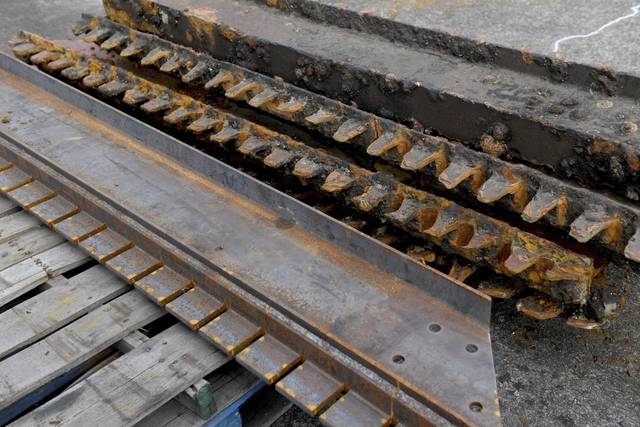
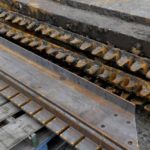
Standing among the old rusted bars and screens pulled to the surface after 55 years, Kochuga said there is no other way to do that kind of maintenance to replace 16 intakes.
“This is one of the those jobs that can only be done by diving,” he said.