A suicidal child or teenager may never talk of taking their life. Parents, peers and teachers might not even know they’re living with mental illness.
Despite younger generations showing greater openness to discussing mental health struggles, fears of punishment or social exclusion remain, experts say. Even at medical appointments, minors contemplating suicide can downplay their issues.
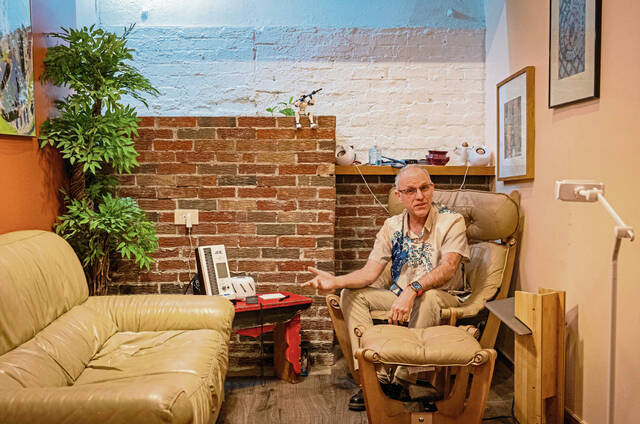
“I don’t think any of them are forthcoming,” said Dr. Michael Blastos, chief of psychiatry at Independence Health System.
With these challenges in mind, hospital networks, health care professionals and advocacy groups are taking an increasingly proactive approach to youth suicide that doesn’t wait for a crisis. They’re prioritizing early intervention, open communication and support networks extending beyond the home.
Related
• After a Franklin Regional senior’s death, a family navigates life in the wake of loss“If we wait to have conversations until we have folks experiencing thoughts of suicide, it’s a really hard conversation to jump into,” said Annie Slease, co-founder and CEO of the Delaware-based Mental Health Literacy Collaborative.
The stakes of improving suicide prevention for minors are as profound as the challenges.
More than 2,600 Americans under 19 died by suicide in 2023, according to the Centers for Disease Control and Prevention. It was the second-leading cause of death for ages 10-14 and the third-leading cause for ages 15-19.
Mind and body
Mental health professionals tend to speak in analogies to physical health.
A parent would take their child to the emergency room right away for a broken leg but may dismiss serious mental health challenges, one told TribLive. Another compared suicidal ideation to cancer: There’s no one-size-fits-all treatment.
The mind is often viewed through a different lens than the body to the detriment of patients, they said. For instance, children are supposed to get annual physicals, but there’s no such thing as a routine mental health checkup.
Still, doctor’s offices have become better at incorporating mental health into examinations.
The American Academy of Pediatrics recommends annual suicide risk screenings for patients 12 and older. These tools can be used on patients as young as 8 if doctors see a need, the association says.
Dr. Tony Mannarino, chair of Allegheny Health Network’s Psychiatry and Behavioral Health Institute, said his organization is embedding mental health professionals into some pediatrics practices.
Self-reported screenings are helpful but not sufficient on their own, according to Dr. Jessica Pierce, a youth psychiatrist and University of Michigan professor.
“A lot of times the highest-risk folks for suicide will tell you, ‘No, I’m not thinking of suicide,’ ” she said. “Because, if they really want to do that, they know that saying that might trigger suicide prevention efforts.”
In the schools
More than ever, schools have become an entry point for mental health care.
Allegheny Health Network’s Chill Project has brought mindfulness rooms and drop-in behavioral health services to at least 50 school districts in Western Pennsylvania, including many in Allegheny and Washington counties. Students also can schedule therapy appointments.
The program relies on insurance billing as well as philanthropic support and school district contributions.
“The great part of it is you’re providing these services where kids are every day and nobody has to drag them to psychologists,” Mannarino said.
Independence has therapists working at seven school districts in Westmoreland County: Derry Area, Greater Latrobe, Hempfield Area, Jeannette City, Ligonier Valley, Mount Pleasant Area and Southmoreland. Each district gets at least one therapist who rotates among buildings. The program, which is funded primarily through insurance, is in high demand.
“I have school districts contacting me asking if we can bring people in, and we just don’t have the staff,” said Richard King, manager of outpatient behavioral health at Independence. The health system is set to join deep-pocketed West Virginia University Medicine this year.
“But we would love to expand,” King added.
Kate Fox, associate director of mental health policy at Philadelphia-based Children First, can rattle off a list mental health programs used in Pennsylvania schools. One of her favorites is a national organization called Sources of Strength, which trains students to change their school’s culture and help prevent suicide, bullying and substance abuse.
A study published last year in the American Journal of Preventative Medicine found suicide attempts fell 29% in middle and high schools where Source of Strength operates. The group is paid by school districts and other partners, which rely on federal Substance Abuse and Mental Health Services Administration grants to make these payments.
The Trump administration broadly canceled the grants in January. It quickly reversed the move, but the episode underscored the fragility of funding for youth mental health initiatives, Fox said.
“They do such great work, but they might be there one day and gone the next,” she said.
Family dynamics
Pierce focuses on the role of peers in a young person’s support network. A child or teenager experiencing a mental health crisis should alert an adult, she said. But that’s not always how it goes.
Sometimes, distress signals are sent to friends over text or social media. The people on the other end — who are often the same age — can find themselves unprepared to react to a suicide threat.
Pierce tells parents to have frank conversations with their kids about suicide, a strategy that’s shown to reduce stigma and save lives. Within those conversations, parents should assure their children that they want to know if a peer is in trouble.
“We have to sort of teach them to recognize their Spidey sense,” Pierce said.
In Pennsylvania, anyone 14 and older can be treated for mental illness without parental consent. This includes outpatient services, inpatient hospital stays and, unlike in some states, psychotropic medication. Minors can’t refuse mental health treatment approved by a parent, however.
Being able to legally seek care is one thing. Receiving it is another.
Without reliable transportation or family buy-in, it can be challenging for kids to get care, Pierce said.
Pennsylvania law helps teenagers access care, even when their families aren’t concerned. It’s also possible for parents to go too far in the other direction, said Vint Blackburn, a private practice psychiatrist in Millvale and professor of psychiatry at the University of Pittsburgh.
Imminent risk of a suicide attempt merits a trip to the emergency department. But when an adult overreacts to less urgent mental health issues — even if they do demand professional treatment — minors may be less likely to talk about them in the future.
“Any time a kid comes to us, they’re taking a risk,” Blackburn said. “If they expect we’re going to go ballistic … they learn not to bring that stuff up.”
It’s a fine line. Psychiatrists generally advise parents to err on the side of caution.
“You’ll never regret taking your kid to a mental health professional too early,” Mannarino said.