








Environmental regulators should revise a draft permit for a natural gas-fired power plant to operate in South Huntingdon to make the plant comply with air pollution regulations or reject the permit.
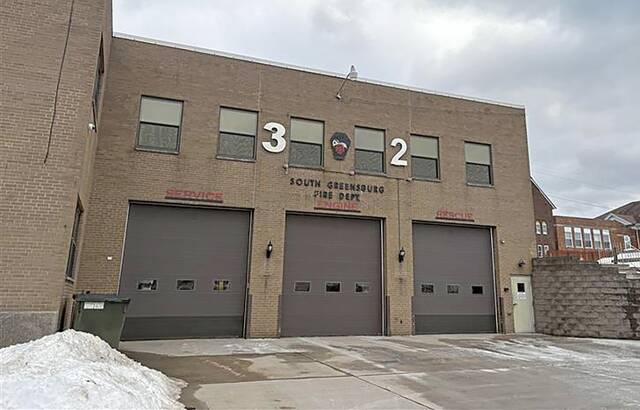
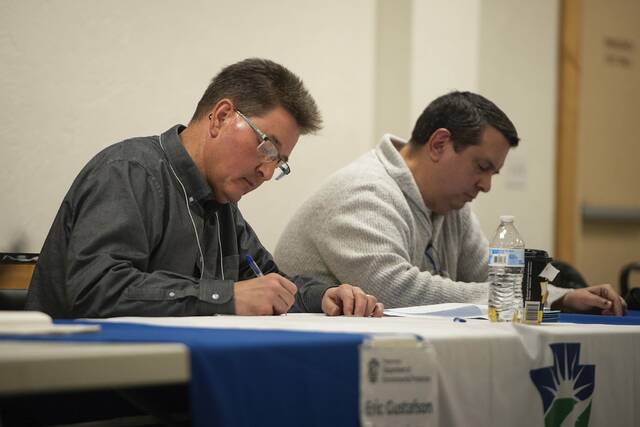
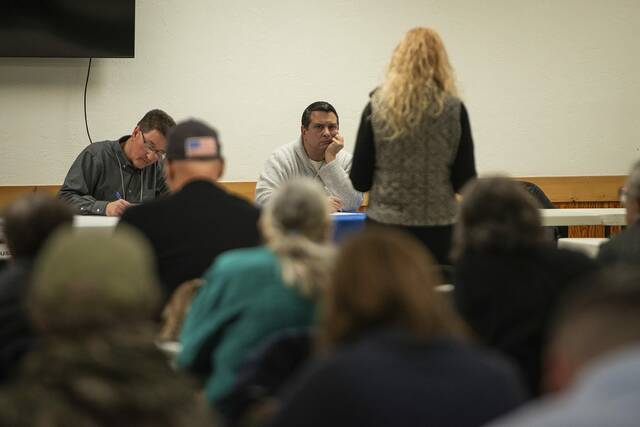
That’s what a group of residents and environmentalists told state officials Wednesday. The 90-minute hearing attracted about 60 people to the Turkeytown Fire Department social hall.
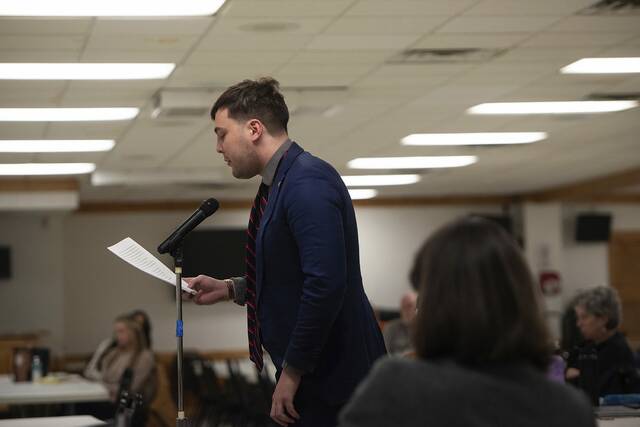
About a dozen speakers at the Department of Environmental Protection hearing on Tenaska Pennsylvania Partners LLC’s application for an air quality permit for the plant repeatedly told the state officials that more monitoring is necessary and more frequent testing of air pollution emitted from the plant outside Smithton must be required before the air quality plan is approved.
“This facility has been out of compliance for the past 12 quarters for carbon monoxide, nitrogen oxide and volatile organic compounds,” all of which the Environmental Protection Agency’s database labels high-priority violations, said Lisa Graves Marcucci, an outreach coordinator for the Environmental Integrity Project.
Marcucci said the draft permit that the DEP is considering fails to include a schedule for when Nebraska-based Tenaska will be in compliance with air pollution standards and how it will achieve compliance.
The air quality permit that Tenaska seeks will place all of the requirements for plant operations in one document but does not reevaluate the emission requirements for the plant, said Thomas Joseph, DEP’s air quality engineering group manager in Pittsburgh, who leads the team reviewing the application. Tenaska, along with its Japanese business partners, applied for the air quality permit in July 2024.
The DEP has about a year to make a decision on the air quality plan. Tenaska has been operating the plant since March 2018 on a permit that had modifications issued in 2015, Joseph said.
Issuing a permit with no revisions “fails to meet basic standards,” said Dylan Basescu, an attorney representing Protect PT, a Penn Township-based environmental organization. DEP can fix its mistakes on the draft permit, Basescu said.
Nancy Ivan of West Newton called the draft permit “a hollow document” because it fails to call for site specific monitoring.
The West Newton Valley, about 5 miles from the plant, is in a basin where the particulates from the plant accumulate and are trapped at ground level where children play, Ivan said.
“Deny the permit,” Ivan urged the DEP officials.
Substantative changes to the permit are needed, particularly more frequent monitoring, Ivan said.
Joanne Hall of West Newton said her husband suffers from pulmonary fibrosis, a lung disease, that is exacerbated by air pollution.
Without monitoring the plant emissions, her husband’s condition could get worse, Hall said.
Austin Zigler, an environmental program manager for Omaha-based Tenaska, pushed back on criticism of the plant operations. His remarks were the only ones given Wednesday in support of the permit approval.
Zigler, in his comments, said there has been misinformation about the plant operations and the monitoring of the plant’s emissions.
The plant’s actual emissions for the pollutants being monitored are less than one-third of what it is allowed to emit, Zigler said. That’s from a plant that has been operating at about 90% of its capacity the past three years.
The plant has 66 pages of requirements that it must meet, with the staff of the plant monitoring and logging the emissions, Zigler said.
The plant can produce about 940 megawatts of power, which is capable of providing electricity to about 940,000 homes.
Zigler, however, did not rebut the claims that Tenaska’s power plant has been in violation of the Clean Air Act emission standards for the past 12 quarters — the equilvalent of three years. After the meeting, Zigler declined to comment on those violations.
Eric Harder, the Youghiogheny riverkeeper for the environmental organization Mountain Watershed Association of Melcroft, said the opponents are not trying to falsify information about the plant, but are using the best available public information about the operations.
Harder called on a group of Tenaska representatives at the meeting to be transparent and voluntarily provide monitoring information to the DEP so it becomes available to the public.
Without that information about the plant and the record of noncompliance with Clean Air Act standards, Harder said, “it doesn’t really provide any confidence to the public.”
The Tenaska representatives did not respond to Harder’s request for publicly available information about the emissions.
The comments from the hearing will be reviewed, DEP officials said.