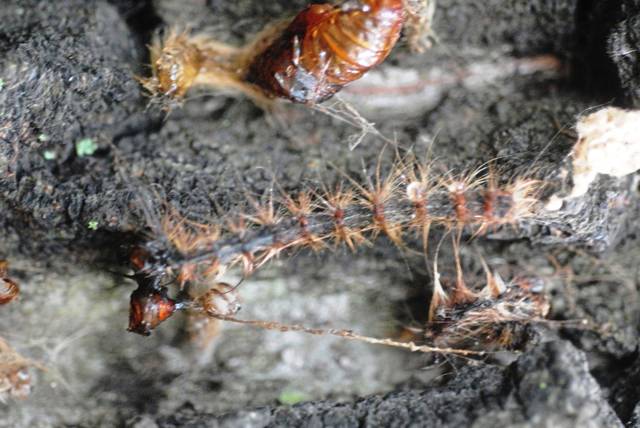
Parts of a 2,472-acre piece of game lands in eastern Westmoreland County likely will be sprayed sometime between the middle-to-the-end of next week to prevent the infestation of leaf-eating gypsy moths, which damage trees and impact wildlife habitat, the state said Monday.
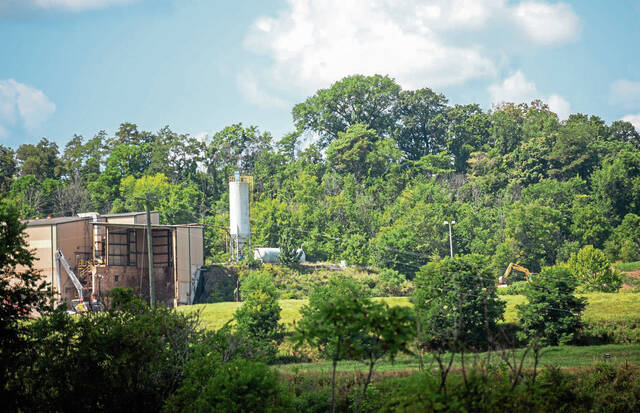
The Pennsylvania Game Commission is targeting blocks of forest within state Game Lands No. 42 as one of the state’s 25 game lands spreading across 50,000 acres that are to be sprayed, according to the state Department of Conservation and Natural Resources. Game Lands No. 42 covers a 16-mile-long swath of forest land stretching from the Laurel Summit north of Route 30 in Ligonier Township, all the way to the Conemaugh River in St. Clair Township, and bordered by Cambria County.
An interactive map on the conservation and natural resources website at www.gis.dcnr.state.pa.us/gypsymoth/ shows a block of game lands to be sprayed in St. Clair and Fairfield townships.
The state has not sprayed those game lands, or any game lands in Southwestern Pennsylvania, “for as far back as I have records,” said David Gustafson, game commission chief forester.
“We are trying to be more proactive than ever before,” Gustafson said.
The state likely would only know a day or so before the spraying occurs because they are studying development of the foliage and larvae, as well as checking to see that the weather is conducive to spraying an area, said Donald Eggen, chief of the forest health division for the forest health department. They need the gypsy moth in the caterpillar stage and the leaves developed enough to catch the spray because the gypsy moth must ingest the insecticide to be effective.
The spraying will occur by helicopter or airplane over sections of the popular 70-mile Laurel Highlands Hiking Trail. A Facebook posting said that notices have been posted on northern sections of the trail, alerting users that spraying will occur.
“The population is building and potentially killing trees,” said Brandon Hosselrode, forester for Forbes State Forest, which includes Game Lands No. 42.
The gypsy moth is not a picky eater. It will feed on more than 200 species of plants, including the Eastern hemlock that grows along trout streams, Eggen said.
Game Lands No. 42 is home to the headwaters of Mill Creek, which flows down through Ligonier, and is “an exceptional value self-reproducing brook trout stream,” said Monte Murty, former president of the region’s Trout Unlimited Forbes Trail Chapter
Larry D. Myers, president of the Forbes Trail Chapter, said he is not aware of any problems that spraying for gypsy moths would create for aquatic life and bugs they feed upon.
“They (spraying) hit the trout streams a lot,” Myers said.
The spraying may temporarily affect hunting in game lands, “but disturbances are brief and only temporary,” Gustafson said. Most of the blocks of forest to be sprayed can be treated within one day, often within only a few hours.
The insecticide, considered safe to humans, does not hurt bees, mammals or aquatic life or the bugs they eat, Eggen said. It helps trout streams by preventing the gypsy moths from eating the leaves that provide the streams with protection from sunlight, which would warm the water, Eggen said.
Previous gypsy-moth infestations caused forests on state game lands to transition from mast-producing mixed-oak stands to stands dominated by birch and maple, which are not nearly as beneficial to wildlife, Gustafson said.
Based on the value of state game lands oaks for all wildlife, the agency simply can’t afford to forgo spraying this year, said Peter Sussenbach, director of the agency’s Bureau of Wildlife Habitat Management. Squirrel populations fluctuate with acorn crops and when acorn production is low, bears will den earlier, weigh less, produce fewer and smaller cubs and get into more nuisance situations, Sussenbach said.