

Westmoreland

Thinning the herd: East Huntingdon farm family auctions Brown Swiss, Ayrshire cows

Patrick Varine
By Patrick Varine
4 Min Read April 13, 2023 | 3 years Ago
Go Ad-Free today

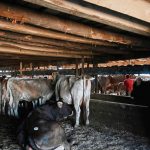
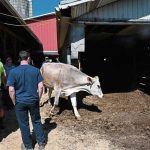
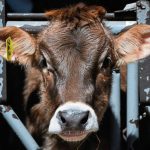
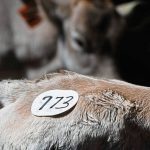
Susan Spadaro wasn’t expecting to get emotional about auctioning off 100 of her family’s Brown Swiss and 25 Ayrshire cows on Thursday.

“We’ve just always had a passion and love for these animals and the dairy industry,” said Spadaro, the fifth generation of the Miller and Love families, which have owned and operated the same farm on Scottdale-Smithton Road in East Huntingdon since 1902.

“I have a lot of great memories from 4-H,” Spadaro said as her voice trembled slightly. “As a kid we made tons of friends going to the fairs, and I’ve had a chance to watch my kids experience some of that as well.”

Spadaro’s father, Richard Love, is going into semi-retirement.

“He’s 75 years old, and it’s just getting to be a little much for him at that age,” she said.

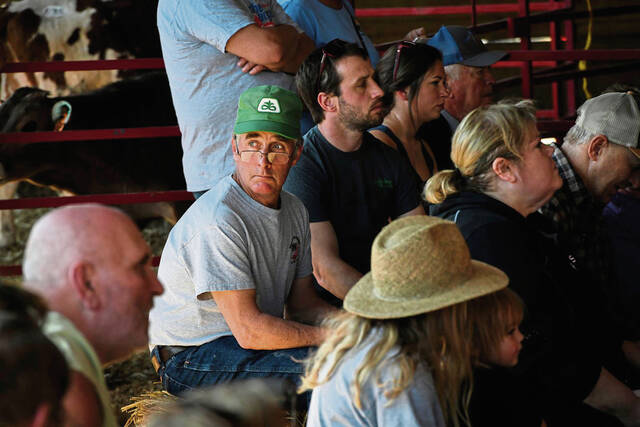
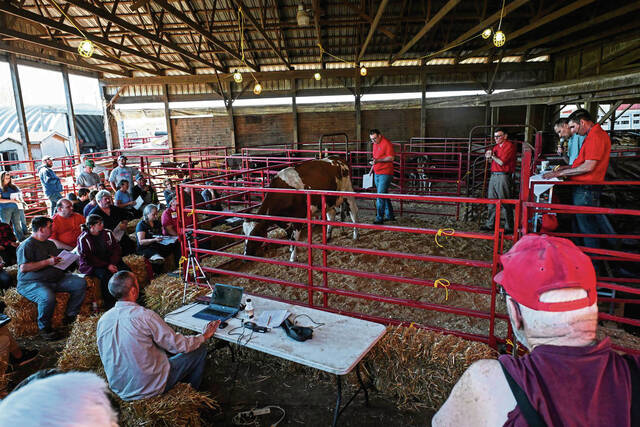
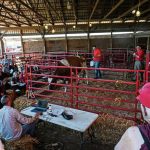
The family is keeping a handful of cattle, but most of their herd went up for auction Thursday morning. Folks like Esther Primel of Johnstown and her husband were among the roughly 50 to 60 bidders.

“We have a small herd, and we’ve always had Brown Swiss, but we don’t have a lot right now,” Primel said. “Their temperament is really good — a little bit aloof but not mean. Even the bulls we have aren’t too aggressive.”

Love Haven Farm was purchased at the turn of the 20th century by Love’s great-grandfather John Miller. It was inherited by his grandparents Martin and Nanny Love, and then went to their only son, Olen.

“As a child I can remember my dad always loving the ‘Big Brown Cow,’ ” Love writes in a history of the farm sent out in auction catalogs. “I clearly remember there was always a Brown Swiss cow on the farm.”

When his father was diagnosed with amyotrophic lateral sclerosis, or ALS, and died in the mid-1960s, a teenage Love took over the family business during his senior year of high school.

When he and Sharon were married in 1971, they officially established the Love Haven Farm name. Spadaro and her brother Richard both spent years showing Brown Swiss and Ayrshire cattle and brought home plenty of fair ribbons.

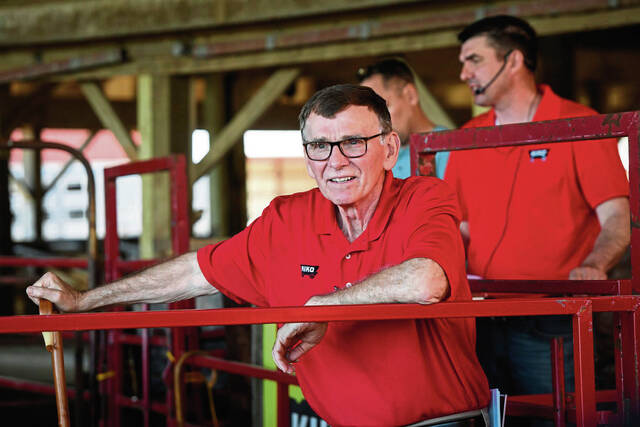
Ohio auctioneer Rudy Kiko said he got a good deal of interest in the auction.

“In addition to western and central Pennsylvania, I’ve gotten calls from where I’m at in Northeast Ohio, and we sent catalogs to eastern Pa., Maryland, Ohio and even talked to some folks in New York,” Kiko said.

Part of the interest is because of the breeds, he said.

“Most dairy farms are Holstein or Jersey breeds,” Kiko said. “You don’t usually find this many Brown Swiss cows in one location.”

There are about 5,000 dairy farms in Pennsylvania, according to the nonprofit Center for Dairy Excellence. That figure is down from previous years, but the state’s farms still represent more than 17% of the U.S. dairy industry. In 2021, Pennsylvania cows produced 10.1 billion pounds of milk, down 1.6% from 2020.

Over a longer period, farmland acreage in Pennsylvania is becoming more scarce.

According to the U.S. Department of Agriculture, the total number of farms in Pennsylvania decreased by about 15%, or 10,000 farms, between 2007 and 2017 — from about 63,000 to 53,000. The USDA estimated the state had about 52,700 farms in 2021. Milk from Westmoreland County dairy farms generates more than $13 million in annual sales, according to the USDA’s 2017 Census of Agriculture.

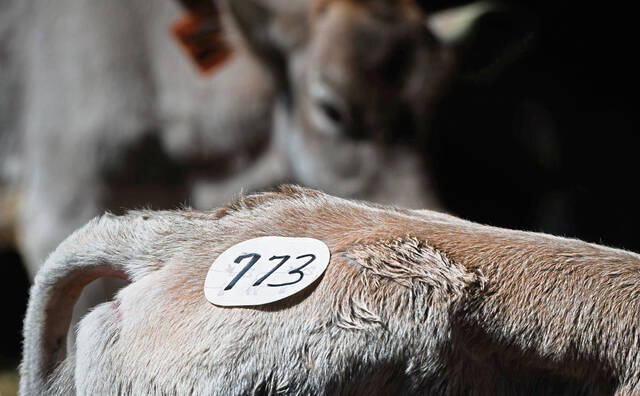
Buyers at Love Haven Farm on Thursday were definitely interested in growing their herds. The first cow auctioned, a Brown Swiss, sold for $1,600, with the first Ayrshire topping $2,000.

Dairy farmer Jeff Kennedy of Butler had his eye on some of the Brown Swiss cows to add to his fifth-generation farm.

“They’re a big, docile cow that provides milk with a lot of protein and a lot of butterfat,” Kennedy said.

According to the American Dairy Association, about 94% of America’s more than 29,000 dairy farms are family-owned. Most dairy cows are milked two to three times per day and on average will produce 6-10 gallons of milk daily.

Spadaro said her family has always enjoyed the cows.

“The Brown Swiss especially just have a different personality to them,” she said. “I think they’re more lovable. They love being touched and scratched, and they’re interested in what you’re doing. But sometimes they’re also stubborn as can be.”

Share

Categories:

Tags:

About the Writers

Patrick Varine is a TribLive reporter covering Delmont, Export and Murrysville. He is a Western Pennsylvania native and joined the Trib in 2010 after working as a reporter and editor with the former Dover Post Co. in Delaware. He can be reached at pvarine@triblive.com.

Article Details

Types of dairy cattle In the U.S., there are seven major breeds of dairy cows — Ayrshire, Brown Swiss, Guernsey,…

Types of dairy cattle
In the U.S., there are seven major breeds of dairy cows — Ayrshire, Brown Swiss, Guernsey, Holstein, Jersey, milking shorthorn and red and white Holstein.
Ayrshire
Ayrshires range in color from light to deep cherry red, mahogany, brown or a combination of these colors with white. The breed, which came to the U.S. from the County of Ayr in Scotland in 1822, is widely known for its “vigorous personality.”
Brown Swiss
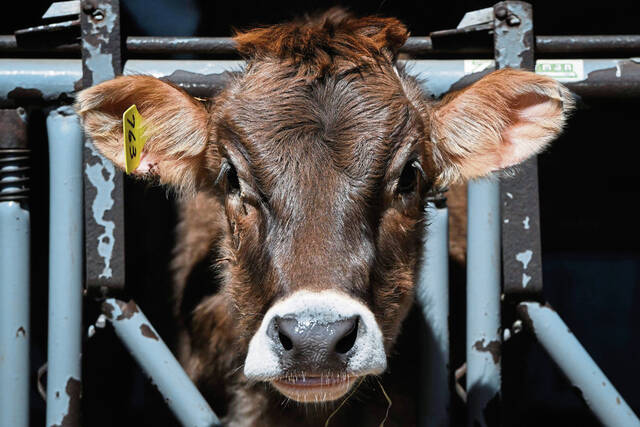
Brown Swiss cows are typically solid brown, varying from very light to dark and are easy to spot with their large, floppy ears. These docile giants around 1,500 pounds, making them one of the largest dairy breeds. They are known for their longevity and calm temperament. Brown Swiss came to the U.S. from the mountains of Switzerland in 1869. Many historians consider it the oldest cattle breed in existence, with records dating back to 400 B.C.
Guernsey
Guernseys are fawn and white in color and are known for their gentle disposition. Weighing around 1,200 pounds when full grown, Guernseys are about 3/5 the size of Holsteins, which is the largest breed of dairy cow. Guernseys are called the “royal breed” because their milk looks golden and is high in butterfat, protein and betacarotene.
Holstein
Holsteins are easily recognized by their distinctive black and white coloring. In fact, they are the most popular breed of dairy cattle in the U.S. Holsteins are one of the largest dairy cow breeds, weighing around 1,500 pounds and measuring almost 5 feet tall at the shoulder. They are known for their high milk production and originated in Europe and before being imported to America from Holland in the mid 1800s.
Jersey
Jerseys are the second most popular breed of dairy cattle in the U.S. and often stand out with their fawn-color coat, prominent eyes and long eye lashes. Jerseys are the smallest dairy breed and considered the most efficient, weighing around 900 pounds when fully grown. They produce milk with higher percentages of protein and butterfat, perfect for making cheese and ice cream. The first Jerseys were brought to the U.S. in 1850 from the small British island of Jersey.
Milking shorthorn
Milking shorthorns are considered the most versatile of all the breeds and are red, red and white, white or roan in color. They are average in size, weighing about 1,400 pounds when fully grown. Originally, they were imported to the U.S. as a dual-purpose breed used for both milk and beef. The milking shorthorn originated in northeastern England and arrived in the U.S. in 1783, providing early settlers with not only milk, but meat and strength to pull wagons.
Red and white Holstein
Red and white Holsteins are known for their red and white spots. They are primarily Holstein cows, but may contain genetics from other breeds that have red coloring, such as Ayrshire or milking shorthorns. A larger dairy cow breed, adults usually weigh just shy of about 1,400 pounds and are known for high milk production. Originating in the U.S. and Canada through selective breeding, they and are the “youngest” cow breed, becoming recognized in 1964.
Source: American Dairy Association/Midwest

Push Notifications

Get news alerts first, right in your browser.

Enable Notifications

Content you may have missed

Enjoy TribLIVE, Uninterrupted.

Support our journalism and get an ad-free experience on all your devices.

  • TribLIVE AdFree Monthly

    • Unlimited ad-free articles
    • Pay just $4.99 for your first month
  • TribLIVE AdFree Annually BEST VALUE

    • Unlimited ad-free articles
    • Billed annually, $49.99 for the first year
    • Save 50% on your first year
Get Ad-Free Access Now View other subscription options