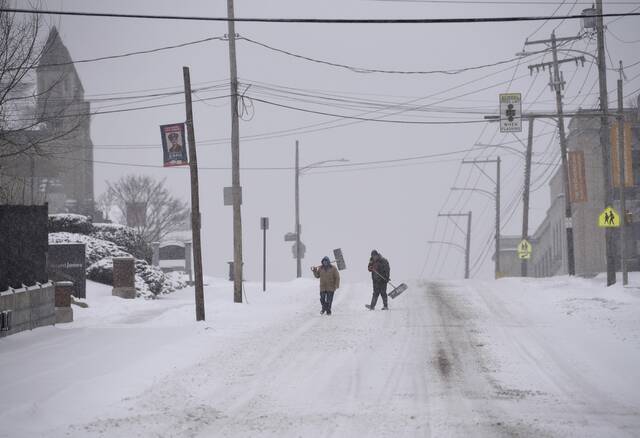
Arctic winter conditions that set upon Western Pennsylvania over the past month have the Municipal Authority of Westmoreland County working overtime.
Snow and freezing temperatures in late January and early February resulted in hundreds of water line breaks, leaks, frozen pipes and longer work hours for the crews assigned to make repairs, authority officials said Wednesday.
January saw 265 main line leaks and more than 500 calls from customers seeking help for frozen pipes.
The harsh conditions led to a 60% increase in water main breaks and leaks from last January, officials said.
“Our guys have been working nonstop, and it still hasn’t slowed down,” said Brian Hohman, authority business manager.
The water authority serves 123,000 customers in Westmoreland, Allegheny, Armstrong, Fayette and Indiana counties.
A late January storm dumped more than a foot of snow in some areas and was followed by a two-week cold snap.
The drop to below-zero temperatures played havoc on the water system, with weather-related repairs likely to exceed $100,000.
Officials said authority employees worked nearly 600 hours of overtime in January and early February.
“We had some guys out there for 24 hours a day,” said Michael Kukura, authority manager.
This week’s thaw brings new concerns. As temperatures rise, the risk of additional leaks grows.
Officials are monitoring the iced-over Youghiogheny River, which feeds the Indian Creek plant serving the authority’s southern customers. They are also watching the Monongahela River, the primary water source for the McKeesport treatment plant.
Kukura said there are concerns the jump in temperature will cause ice on the rivers to break off and jam intake systems.
Meanwhile, last month’s heavy snowfall is not expected to immediately impact water levels at the Beaver Run Reservoir in Bell Township that services the northern half of the customer base. Kukura said because the dry fall and early winter conditions left the ground near the reservoir dry, the snowmelt is expected to seep into the ground rather than run off into the reservoir.
The reservoir’s water level at the end of January was just less than 1,039 feet — about 5 feet below average for this time of year, officials said.