





High school students are increasingly turning to artificial intelligence for homework help, advice and even companionship — leaving school administrators wondering where to draw the line.
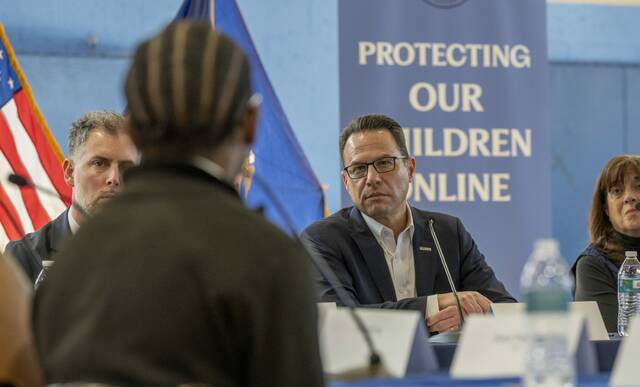
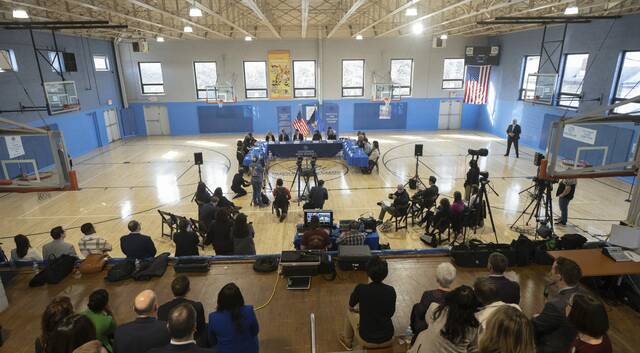
Pennsylvania Gov. Josh Shapiro brought that discussion to the Carnegie Clubhouse at Boys & Girls Clubs of Western Pennsylvania on Friday, meeting with students and state education officials to talk about safety and regulation.
“More students and more and more school administrators are saying this is an area we got to dig in on and make sure that we’ve got some healthy regulations, that we’ve got the right policies in place in our schools to be able to keep kids safe,” Shapiro said.
In 2023, Shapiro signed an executive order to establish clear principles for generative AI uses. In 2024, he directed the state Department of Education to develop an information and media literacy toolkit in 2024.
On Friday, Shapiro’s next step was asking students to share what they see happening in the classroom.
Companionship
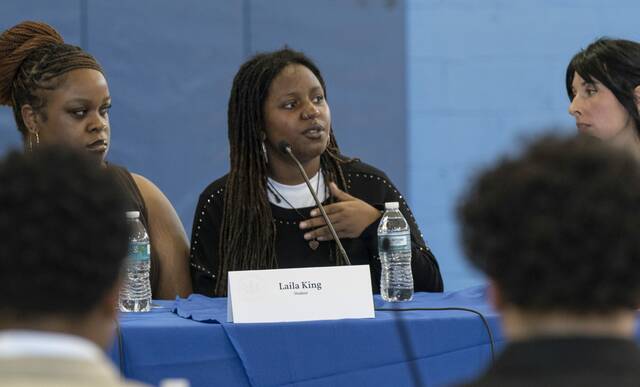
Laila King, a senior at Pittsburgh CAPA High School, said that students’ reliance on artificial intelligence reflects a larger issue with Pennsylvania’s youth.
“ChatGPT is mostly used for either homework help or companionship,” King said. “And I feel like it kind of speaks to a lot of the issues that are going on with young people today: loneliness, isolation, stress — from home, from school, from all these different sources.”
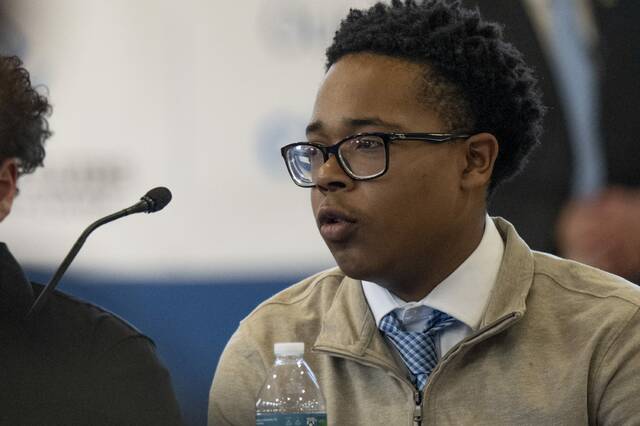
Shadyside Academy junior Tayshawn Lyons said that AI often provides a quick and easy resource for teens who are struggling to find safe places and resources for mental health.
Shapiro said he has personally experienced some AI platforms pretending to be mental health professionals.
“This chatbot said, ‘I am a licensed mental health professional in Pennsylvania.’ Remember, this is not a person,” Shapiro said. “This is just something you download in the app store … let’s be clear, they’re not licensed in Pennsylvania.”
Shapiro said Department of State Secretary Al Schmidt has begun to investigate the AI companies claiming to be licensed mental health professionals.
“They’re not qualified to tell you what you should or shouldn’t do as it relates to your mental health, and I think that it poses a real risk to students and to others across Pennsylvania,” Shapiro said.
Pennsylvania Unplugged co-lead Kelly Marsh said AI chatbots have entered everyone’s homes from every angle, whether that’s through a school device or a talking stuffed animal.
She said the issue is that these programs are operating without transparency and guidelines on how to safely use them.
“We worry about the simulated relationships and the effects that that’s going to have on their social development,” Marsh said. “And again, with kids, this is such a critical time we worry about the damaging and distorted effects that this is going to have on basic fundamental skills, emotional regulation, conflict resolution.”
Easy answers don’t lead to knowledge
Competitive academic environments lead students to rely on AI for answers.
“My school is very rigorous,” Lyons said. “We really define ourselves by our grades and by what … we get on paper.”
AI provides a quick and easy way for students to get the answer for things with little or no effort. Lyons said that since AI supports student’s efforts to get good grades, they are often not as concerned about what they gained from the lesson.
Josiah Pritchett-Murray, a junior at McKeesport Area Senior High School, said he believes there is an overuse issue at his school.
“I feel like it’s like an easy way to get out of your assignments and homework and classwork,” Pritchett-Murray. “And in my classes, some of the students, they’re not paying attention. … And whenever the test comes around, people are doing bad on the test.”
Lyons said one of the ways teachers and school administrators can help combat AI reliance is to grade students on their progression and empower them to show effort rather than worrying about being perfect.
“We have people who are overly relying on AI right now, getting every single solution, every perfect answer, perfect and perfect diploma to get to where they need to be,” Lyons said. “And even though they are certified on paper, they’re not actually certified at heart.”
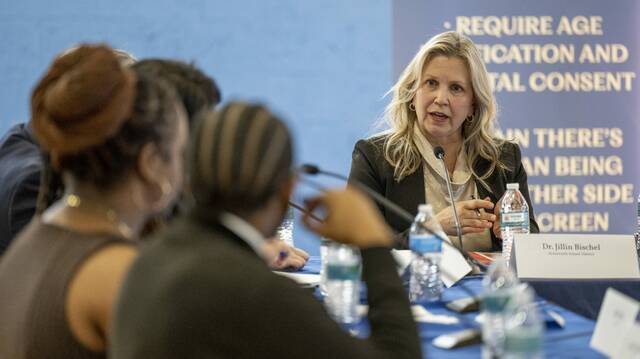
To Jillian Bischel, assistant superintendent in the Avonworth School District, it sounds easier than it actually is.
“You have 150 students, and to grade individually for every one of those is tricky,” Bischel said.
Instead, Bischel said teachers could have the students make personal goals to help them map out a practical path to achieve an “A” in school.