
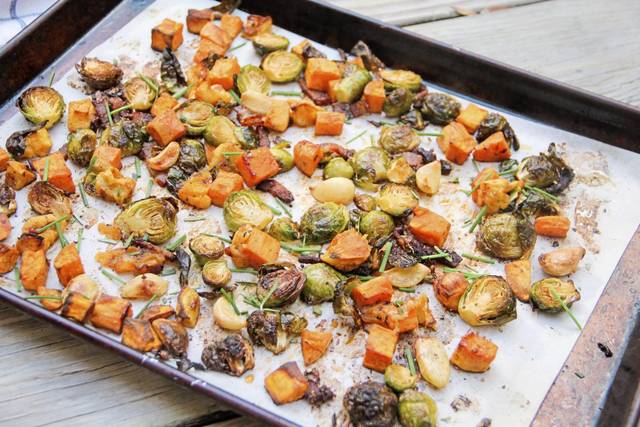
We tend to classify them all together, but winter vegetables are not always the same as root vegetables. Nevertheless, these veggies deserve our attention during these cold winter months.
Take Brussels sprouts, a veggie you either adore or abhor. These hardy vegetables that look like baby cabbages on stalks belong to the cruciferous family — best known for their anti-inflammatory and cancer-fighting effects. Brussels sprouts are extremely low in calories (about 25 per ½ cup) and are rich in antioxidant vitamins A and C. Brussels sprouts also provide vitamin K which benefits our bones and keeps our heart happy.
One holiday, my sister-in-law cut them in half, tossed them in a little olive oil, seasoned and roasted them in the oven until they were brown and crispy around the edges. When I saw how everyone gobbled them up (even the kids), this has been my go-to recipe for Brussels sprouts.
Potatoes and sweet potatoes are root and winter vegetables — they grow underground and they are more available this time of year. Potatoes and sweet potatoes are also starchy vegetables; they provide more carbohydrates and calories than non-starchy veggies. But that does not mean they are completely off the table for people with diabetes. Small servings of baked or roasted potatoes with the skin are healthful choices.
Potatoes also contain more nutrients than we may realize … if we enjoy them as close to their whole state as possible. White potatoes, for example, provide protein, iron, vitamin C and potassium. And they contain resistant starch which feeds the good bacteria in our guts that can help control blood sugars. By virtue of their dark orange flesh, sweet potatoes are rich in antioxidant nutrients that help fight off all the ills of modern society or at least certain chronic diseases.
Finally there’s winter squash which differs from summer squash in that it has a hard outer shell that opens to vibrant yellow or orange flesh. Two of my favorites are butternut and spaghetti squash.
Rich in dietary fiber and antioxidant nutrients, winter squash is sooo yummy when baked or roasted. Hardest thing about these vegetables is how to cut through the hard shell without cutting off your hand. Try this: Trim off the ends of the shell and place the whole squash in the microwave for about 2 to 3 minutes to soften the shell before you start to cut.