Regional grid operator PJM Interconnection says people in Pennsylvania and 12 other states may face increased blackout risks as data centers soak up electricity.
In its annual generation capacity auction, PJM asked power producers to guarantee more than 152,000 megawatts of electricity could be available at one time from June 2027 to May 2028.
This figure reflects peak demand, plus a 20% cushion.
It was able to secure just shy of 146,000 megawatts.
The auction lasted Dec. 4 to 10, and results were made public Dec. 17.
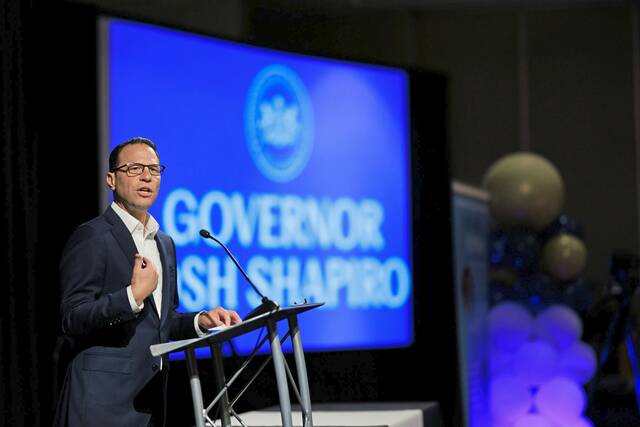
The price PJM will pay power producers came in at about $333 per megawatt per day. That’s almost unchanged from the last auction and the highest allowed under an April settlement between the organization and Gov. Josh Shapiro.
To recoup its costs, PJM charges utilities such as Duquesne Light and West Penn Power to access the reserved electricity. Consumers ultimately see the impact under the “capacity costs” section of their bills, which should hold steady given the auction results.
The 6,000-megawatt shortfall marks the first time PJM has failed to hit its reliability target. This is set to ensure an average of no more than one unplanned outage per decade.
The gap could close over the next year and a half for several reasons, according to PJM, including planned power plant retirements possibly getting delayed.
“But this auction leaves no doubt that data centers’ demand for electricity continues to far outstrip new supply,” Stu Bresler, executive vice president of market services and strategy for PJM, said in a statement.
PJM is anticipating roughly 5,250 megawatts of new demand during the delivery year. Of that, 5,100 megawatts are expected to come from data centers stuffed with energy-intensive computer chips and cooling equipment.
Only 1,000 or so megawatts of new capacity are poised to offset this.
In theory, PJM is supposed to raise payouts for capacity guarantees in response to supply shortfalls, but it was limited this year because of the settlement.
Shapiro filed a complaint with the Federal Energy Regulatory Commission in December 2024 after an auction weeks earlier saw capacity prices jump from $29 per megawatt per day to $270 per megawatt per day. He claimed soaring costs hurt consumers without producing a substantial improvement in reliability.
The governor’s office said prices at the latest auction would have hit $529 per megawatt per day without the settlement, spiking electric bills.
Even so, the current situation amounts to “throwing money in a hole,” Tom Rutigliano, senior advocate for climate and energy at the Natural Resources Defense Council, said in a statement.
Supply chain issues, barriers to establishing renewable energy sites and delays in PJM’s process for connecting new power generators to the grid have made adding more capacity difficult, regardless of what PJM is offering at auction, he argued.
Shapiro, along with Maryland Gov. Wes Moore, New Jersey Gov. Phil Murphy and Virginia Gov. Glenn Youngkin, agree with the need for reform.
They’ve called on PJM to speed up power plant approvals and extend the price cap another year.