Spotlight PA is an independent, nonpartisan, and nonprofit newsroom producing investigative and public-service journalism that holds power to account and drives positive change in Pennsylvania. Sign up for our free newsletters.
HARRISBURG — Democratic Gov. Josh Shapiro wants to incentivize data center developers to follow stricter environmental and transparency standards in Pennsylvania by offering them an expedited permitting process.
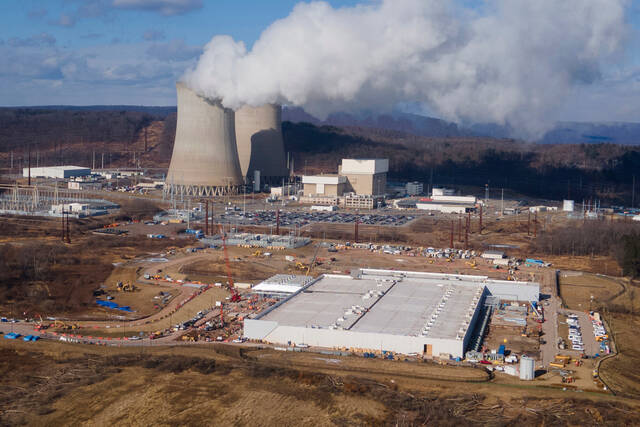
As massive data center projects pop up across Pennsylvania to feed artificial intelligence’s computing needs and cloud storage demand, the governor has said he wants to prevent developers from negatively affecting energy prices and water supplies, make sure they don’t pollute the environment, and urge them to hire locally and be transparent with the communities where they’re building.
One thing Shapiro can do unilaterally? Flex some control over the permitting process to urge developers to conform to his ideal standards.
Shapiro is calling these standards GRID — the Governor’s Responsible Infrastructure Development standards, and he outlined them in his budget address last month.
The administration hasn’t said much publicly about how permitting incentives for data centers
would work.
However, during a budget hearing last week, state Department of Environmental Protection Secretary Jessica Shirley said under Shapiro’s proposed initiative, developers “using the highest standards that are available” will get access to Fast Track. The program was created by Shapiro in 2024 via executive order and ensures quicker state attention and faster permitting for projects of particular significance.
Environmental advocates concerned about data center development said Shapiro’s work on the issue is welcome. But they also said the governor’s incentives can only do so much without real enforcement mechanisms.
To add teeth, Shapiro would need cooperation from the state Democrat-led House and GOP-controlled Senate.
Asked whether he’d support adding any enforcement mechanisms to govern data centers’ energy and water usage or effects on local communities, Senate Majority Leader Joe Pittman, R-Indiana, said via a spokesperson that energy grid accessibility and affordability for Pennsylvanians “must be at the forefront” of policy discussions, and that his caucus is focused on passing energy policies that balance the “development of our God-given natural resources with environmental needs.”
Pittman added that data centers are a significant economic opportunity, but that their effects will vary from place to place and “we also need to be mindful that any community impacts as a result are addressed.”
Environmental advocates told Spotlight PA they’re waiting for more details.
“There are just a lot of open questions,” said Emma Bast, a lawyer at environmental nonprofit PennFuture. “Incentives … can work really well, but requirements are usually a more enforceable way to protect communities in the environment.”
During Shapiro’s budget address, he outlined that developers must “commit to bringing their own power generation” or pay for new generation they’ll need — a principle designed to assuage local concerns that data centers will siphon too much electricity from the grid and lead to higher costs and instability.
He also said developers must commit to “strict transparency standards and direct community engagement,” hire and train local workers, and “commit to the highest standards of environmental protection,” singling out water conservation. These are all concerns that have been raised by residents of the many communities where data centers are being planned.
In DEP’s budget hearing, Shirley said, for instance, that because Pennsylvania has “a lot of abandoned mine lands … that is one of those things that I think is going to be on our list of enhanced environmental targets, that if you are redeveloping a brown field or other area, that would bring you up to that standard of having expedited permitting” via Fast Track.
Two Amazon data centers in Salem Township, located in Northeastern Pennsylvania, and Falls Township, a Philadelphia suburb, are currently in the Fast Track program.
The administration hasn’t publicly specified how it would measure if developers met environmental and other goals, nor has it outlined who would make those assessments.
Rob Routh, an advocate and lawyer for the Natural Resources Defense Council, said the effectiveness of GRID will depend on what standards Shapiro sets and who is in charge of ensuring developers keep those promises. Developers could “technically be consistent” with GRID principles, while still failing to fulfill the standards Shapiro laid out.
For example, he pointed to the idea that new data centers will be required to bring their own power or pay for new generation.
Routh noted that multiple data centers have made deals with existing power plants to purchase electricity, and others plan to draw power directly from the grid. Any energy being routed to data centers that was already serving Pennsylvania ratepayers, he said, results in higher costs for consumers and requires backfilling, likely with fossil fuels.
“If a data center does not bring its own additional zero-carbon electricity to power its operations, inherently, the results are going to be increased pollution, increased strain on the grid, and a financial blow to residential rate payers,” Routh said.
Bast, the lawyer at PennFuture, also noted that some of the GRID standards, such as community benefits agreements or responsible water usage, will unfold over many years, whereas many of the permits that developers need are required to begin construction.
“The developer gets all the benefits on the front end and bears none of the risk, and if the developer doesn’t follow through on the voluntary things, there are not a lot of options for the state,” Bast said.
Katie Blume, legislative director for Conservation Voters of Pennsylvania, said she wants to see GRID require data centers to run on clean energy. But she also thinks the program likely won’t succeed if Shapiro only offers a carrot for data center developers to follow higher standards. There needs to be a stick, she said — guardrails and enforcement.
“If they are coming, we must have appropriate environmental regulations to protect our air quality, to protect our water sources, and to make sure that we’re using Pennsylvania workers,” Blume said. “There’s not a lot that a governor can do through executive order on some of these things; we will need to have legislation.”
BEFORE YOU GO … If you learned something from this article, pay it forward and contribute to Spotlight PA at spotlightpa.org/donate. Spotlight PA is funded by foundations and readers like you who are committed to accountability journalism that gets results.