HARRISBURG, Pa. — Gov. Tom Wolf and Republican state lawmakers remained at odds Thursday over how to update Pennsylvania’s voting laws to handle an expected avalanche of mail-in ballots in November’s presidential election in the battleground state, even as Philadelphia moved ahead with an ambitious election plan.
Wolf, a Democrat, laid down several markers for what he is seeking, following a June 2 primary election that saw thousands of mailed-in ballots arrive after the Election Day-deadline and counting in some areas drag on for days, if not more than a week.
With partisans suing to win favorable court-ordered changes, Wolf and Republicans who control the Legislature are clashing over how to prevent vast numbers of ballots from being discarded and how to head off the specter of a presidential election result hanging in limbo on a drawn-out vote count in Pennsylvania.
In part, Wolf called for lawmakers to allow counties to begin processing mail-in ballots three weeks before the election and to require them to count ballots that arrive up to three days after the Nov. 3 election, as long as they are postmarked by Election Day.
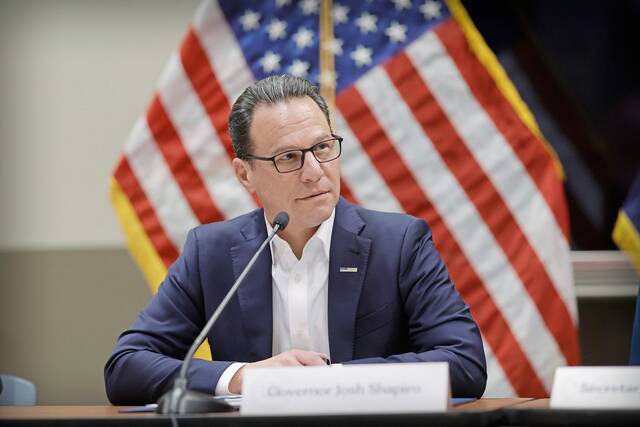
“There’s a lot of things we have to talk about and discuss,” Wolf said at a news conference in a Harrisburg-area church. “Everything we do, Republicans, Democrats, everything we do should be focused on increasing access to the vote, whether it be making it easier for people to vote, making sure it’s secure, making sure it’s safe.”
Republicans, for now, oppose counting mail-in ballots that arrive after the election. To minimize late-arriving ballots, Senate Republicans are seeking to shorten the deadline to request a mail-in ballot, from one week to 15 days before the election. Democrats oppose that.
Instead of allowing ballot processing to start 21 days before the election, Senate Republicans support a three-day head start. House Republicans said they will take action on yet-to-be published legislation next week that bears similarities to a Senate GOP bill introduced Monday.
Without action, courts may settle some of these issues.
But the Senate GOP’s legislation also carries other poison pills for Democrats.
In line with what President Donald Trump’s campaign is seeking in court, it lifts the county residency restriction on who may observe at the polls. But Democrats say that opens the door to voter intimidation at the polls.
It also limits the locations where voters can deliver mail-in ballots by hand to a county courthouse, permanent election offices and polling places, which is at odds with what Philadelphia, Delaware County and other counties are planning.
Time for an agreement is ticking down: mail-in ballots could become available by mid-September and lawmakers say they want legislation on Wolf’s desk by then to give counties time to adjust before the Nov. 3 election.
In the meantime, Philadelphia, home to one-in-five of the state’s Democratic voters, on Thursday accepted a $10 million grant to help it advance an ambitious election plan.
The grant is from the Chicago-based Center for Tech and Civic Life, whose donors include Facebook and Google.
Part of the grant will help the city buy counting equipment to speed up vote tabulation and to recruit enough workers to open more than 800 fully-staffed polling places, about the usual number, after it consolidated down to 190 in the primary election.
However, Philadelphia’s other plans to use the money could trigger a partisan fight.
Its plans include setting up 15 satellite election offices and 15 round-the-clock drop boxes to help absorb growing demand for voting by mail in November.
Already, Trump’s campaign is suing to outlaw drop boxes. They were used in the primary in Philadelphia and its suburban counties where Trump lost badly in 2016’s election despite prevailing in Pennsylvania.
Republicans say state law does not authorize satellite election offices or drop boxes. Wolf’s administration acknowledges that state law is silent on drop boxes, but maintains that satellite election offices are allowed.